I Bond Rate November 2026 Is 5.51% With a 1.40% Fixed Rate: When Your Rate Changes
Series I savings bonds (I bonds) issued Nov. 1, 2026 to April 30, 2027 earn 5.51%, with a 1.40% fixed rate, TreasuryDirect says. See the math and reset months.

Published 4 min read

Key dates
In this article
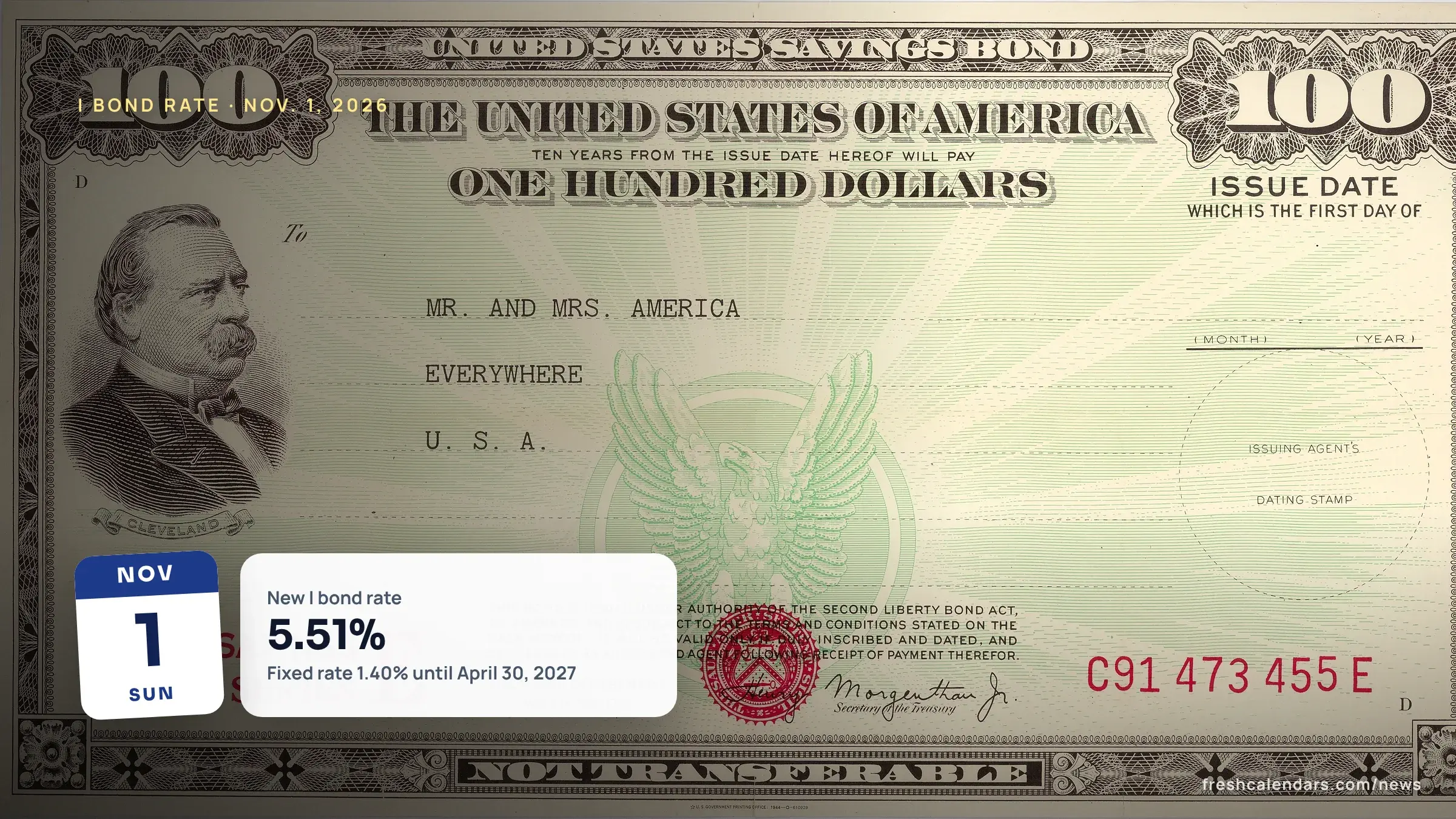
The U.S. Treasury’s TreasuryDirect lists a 5.51% rate for Series I savings bonds (I bonds) issued from Sunday, Nov. 1, 2026 to April 30, 2027. The rate includes a fixed rate of 1.40%, which stays with each bond issued in that window for its life. Below are the math, the fixed-rate history, the months when a bond’s rate resets and a printable tracker.
How the 5.51% is built
TreasuryDirect, part of the Treasury’s Bureau of the Fiscal Service, sets the combined rate from a fixed rate and an inflation rate. It bases the inflation rate on changes in the non-seasonally adjusted Consumer Price Index for All Urban Consumers (CPI-U), all items, including food and energy. The semiannual inflation rate announced for Nov. 1, 2026 is 2.04%.
The Treasury’s formula is: fixed rate + (2 x semiannual inflation rate) + (fixed rate x semiannual inflation rate).
| Step | Math | Result |
|---|---|---|
| Fixed rate | Set Nov. 1, 2026 | 1.40% |
| Two times the semiannual inflation rate | 2 x 2.04% | 4.08% |
| Fixed rate times the inflation rate | 1.40% x 2.04% | 0.0286% |
| Combined rate | 1.40 + 4.08 + 0.0286 | 5.51% (rounded) |
The previous rate, for bonds issued May 1 to Oct. 31, 2026, was 4.26% with a 0.90% fixed rate, per the Treasury’s rate chart “Series I Savings Bond Earnings Rates Effective May 1, 2026”. The new-bond rate rose by 1.25 percentage points. The page lists the inflation rate for May 1, 2026 as 1.67%.
What is the fixed rate history?
TreasuryDirect announces the fixed rate every May 1 and Nov. 1, and it applies for the life of the bond to every I bond issued over the next six months. The page’s list goes back to September 1998.
| Date the fixed rate was set | Fixed rate |
|---|---|
| Nov. 1, 2026 | 1.40% |
| May 1, 2026 | 0.90% |
| Nov. 1, 2025 | 0.90% |
| May 1, 2025 | 1.10% |
| Nov. 1, 2024 | 1.20% |
| May 1, 2024 | 1.30% |
| Nov. 1, 2023 | 1.30% |
| May 1, 2023 | 0.90% |
| Nov. 1, 2022 | 0.40% |
| May 1, 2020 to May 1, 2022 | 0.00% |
The 1.40% rate matches the rate set on Nov. 1, 2006, and every rate set between those two dates is lower, per the same list.
What rate does my existing bond earn?
An existing bond keeps its own fixed rate. TreasuryDirect says the date the rate changes for your bond is every six months from its issue date, so the new 2.04% inflation rate reaches an older bond only when its own change date comes. When it does, the same formula applies. This table shows the combined rate for six months at each fixed rate from the page’s list, using the 2.04% inflation rate:
| Fixed rate | Math | Six-month rate |
|---|---|---|
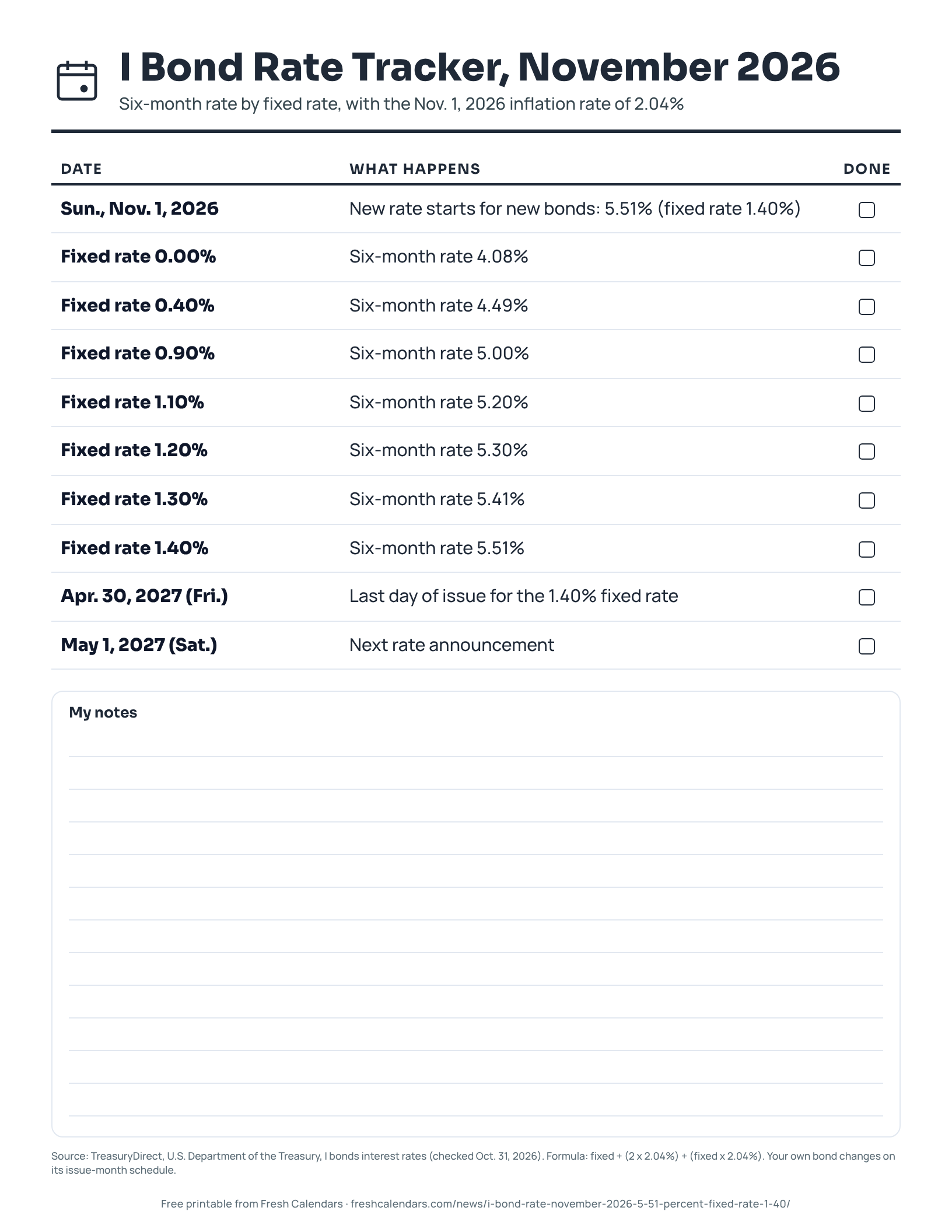
| 0.00% | 0.00 + 4.08 + 0 | 4.08% |
| 0.40% | 0.40 + 4.08 + 0.0082 | 4.49% |
| 0.90% | 0.90 + 4.08 + 0.0184 | 5.00% |
| 1.10% | 1.10 + 4.08 + 0.0224 | 5.20% |
| 1.20% | 1.20 + 4.08 + 0.0245 | 5.30% |
| 1.30% | 1.30 + 4.08 + 0.0265 | 5.41% |
| 1.40% | 1.40 + 4.08 + 0.0286 | 5.51% |
The figures are our calculation from the Treasury formula, rounded to two decimals, not a Treasury table.
When does my I bond rate change?
TreasuryDirect says the new rates are announced in May and November, but the rate on your bond changes every six months from the month it was issued.
| Issue month | Rate changes on |
|---|---|
| January | July 1 and January 1 |
| February | August 1 and February 1 |
| March | September 1 and March 1 |
| April | October 1 and April 1 |
| May | November 1 and May 1 |
| June | December 1 and June 1 |
| July | January 1 and July 1 |
| August | February 1 and August 1 |
| September | March 1 and September 1 |
| October | April 1 and October 1 |
| November | May 1 and November 1 |
| December | June 1 and December 1 |
What are the other I bond rules?
TreasuryDirect’s I bond pages state these rules:
- I bonds earn interest from the first day of the month they are bought, and the interest compounds twice a year.
- They earn interest until the bond is cashed or reaches 30 years old.
- A bond can be cashed after 12 months. Before 5 years, the last 3 months of interest are lost.
- In a calendar year, one Social Security Number or one Employer Identification Number may buy up to $10,000 in electronic I bonds.
- The combined rate can fall when inflation falls, but the Treasury stops it at zero.
Dates to mark for I bond rates
| Date | What happens |
|---|---|
| Sunday, Nov. 1, 2026 | New 5.51% rate starts for bonds issued Nov. 1, 2026 to April 30, 2027 |
| Friday, April 30, 2027 | Last day of issue at the 1.40% fixed rate |
| Saturday, May 1, 2027 | Next fixed rate and inflation rate announcement |
Circle Nov. 1 on the November 2026 printable calendar and May 1 on the May printable calendar, or keep both on a 2027 printable yearly calendar.
Other money numbers for 2027 are in the Social Security 2027 cost-of-living adjustment, the 2027 tax brackets and contribution limits and the year-end money deadlines.
Free printable downloads
Every template is free, needs no sign-up and prints on US Letter paper. Choose PDF for printing or PNG for screens and documents.
I Bond Rate Tracker printables
-
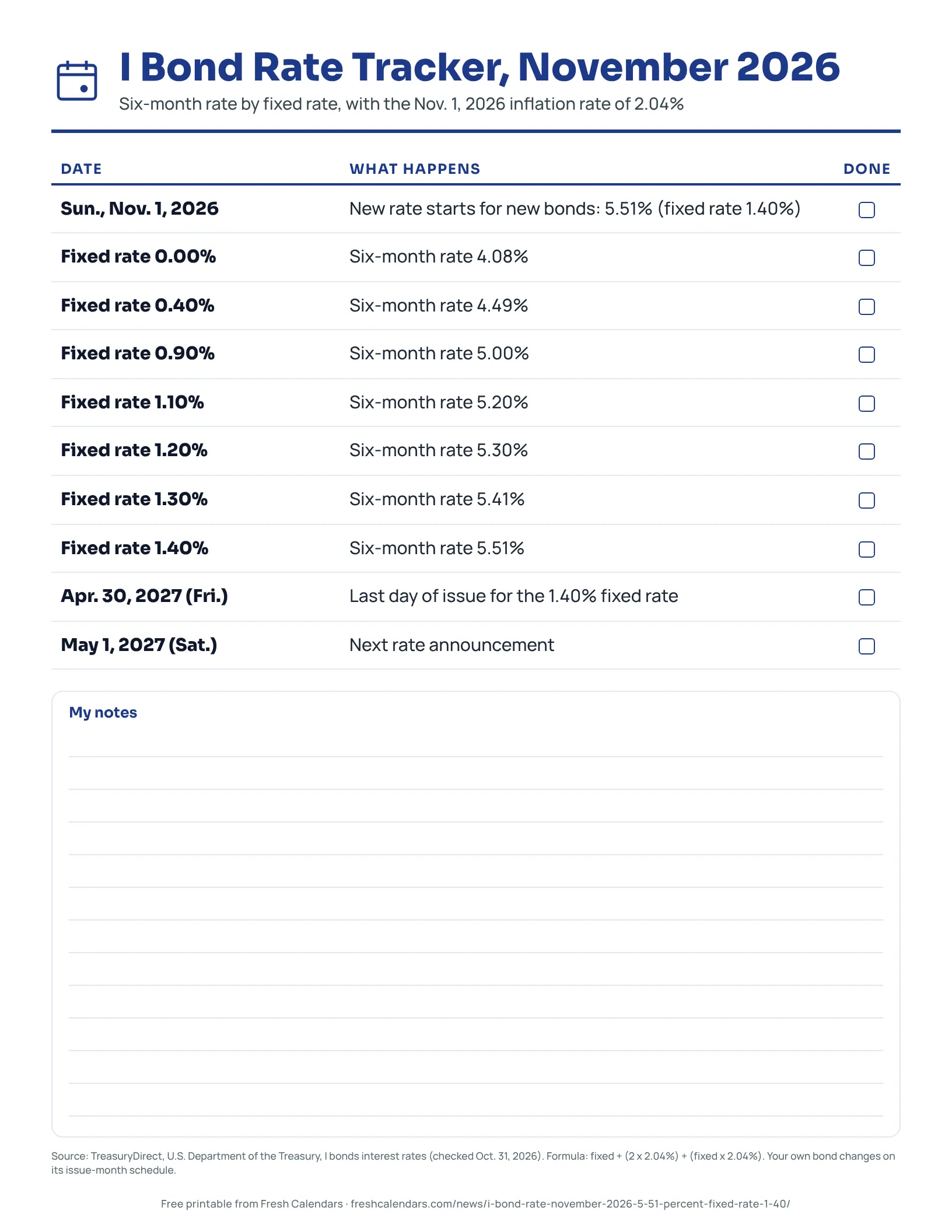
I Bond Rate Tracker, November 2026
One-page tracker of the six-month I bond rate for each fixed rate, with the Nov. 1, 2026 and May 1, 2027 dates.
-
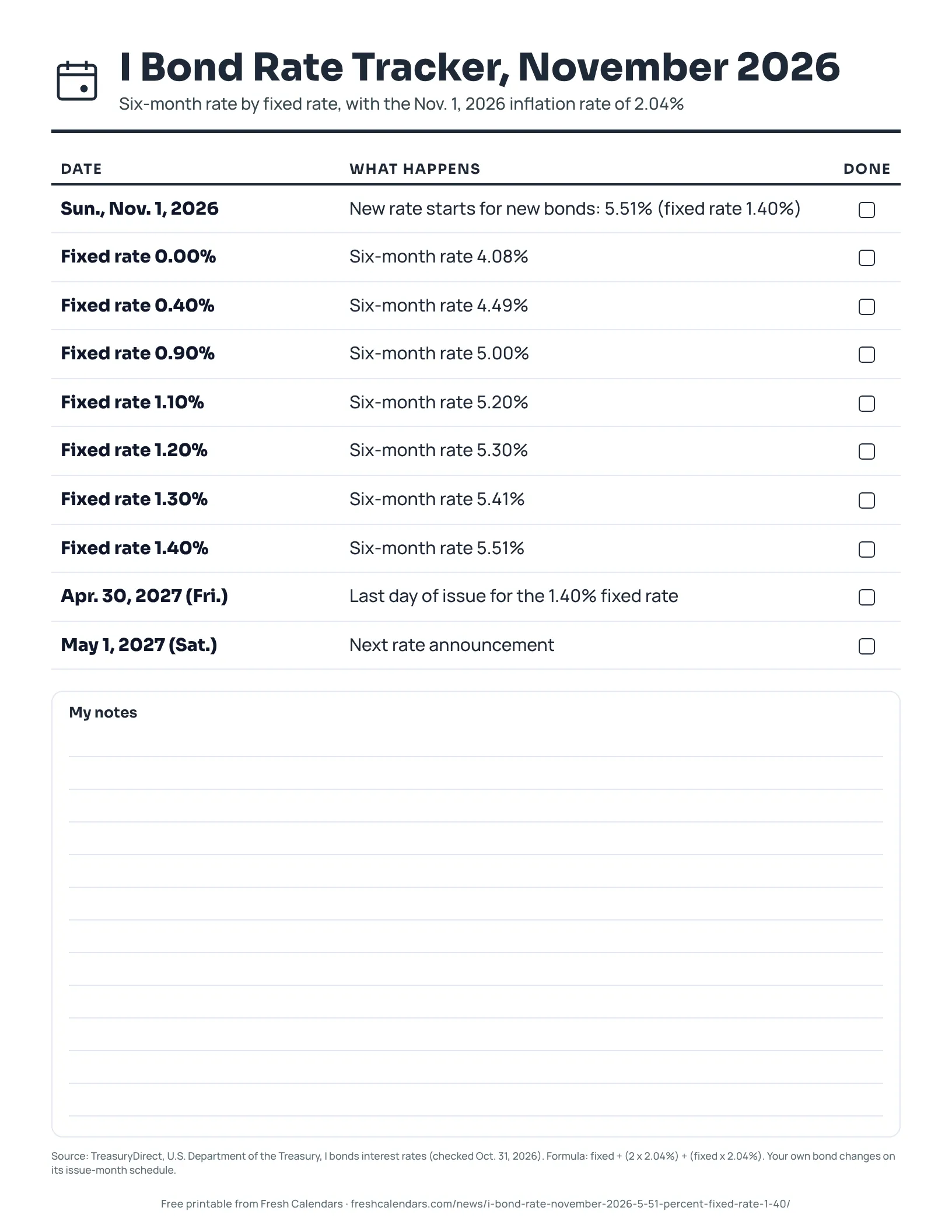
I Bond Rate Tracker, November 2026 (ink saver)
One-page tracker of the six-month I bond rate for each fixed rate, with the Nov. 1, 2026 and May 1, 2027 dates. Ink-saver version.
Frequently asked questions
What is the new I bond rate for November 2026?
5.51% for I bonds issued Nov. 1, 2026 to April 30, 2027, according to TreasuryDirect. It includes a fixed rate of 1.40%.
Does the 1.40% fixed rate ever change?
No. TreasuryDirect says the fixed rate never changes and applies for the life of the bond. The 1.40% applies to bonds issued in the next six months.
When does my I bond rate change?
Every six months from the issue date of your bond. A bond issued in May, for example, changes on Nov. 1 and May 1; the full month table is in this story.
Can the I bond rate go below zero?
No. TreasuryDirect says deflation can lower the combined rate, but if it would fall below zero, the Treasury stops at zero.
How much can I buy in electronic I bonds?
TreasuryDirect says one Social Security Number or one Employer Identification Number may buy up to $10,000 in electronic I bonds in a calendar year.
Sources
- I bonds interest rates (TreasuryDirect, U.S. Department of the Treasury, Bureau of the Fiscal Service, 2026-10-31)
- I bonds (TreasuryDirect, U.S. Department of the Treasury, Bureau of the Fiscal Service, 2026-10-31)
- Series I Savings Bond Earnings Rates Effective May 1, 2026 (TreasuryDirect, U.S. Department of the Treasury, Bureau of the Fiscal Service)
Related news
-
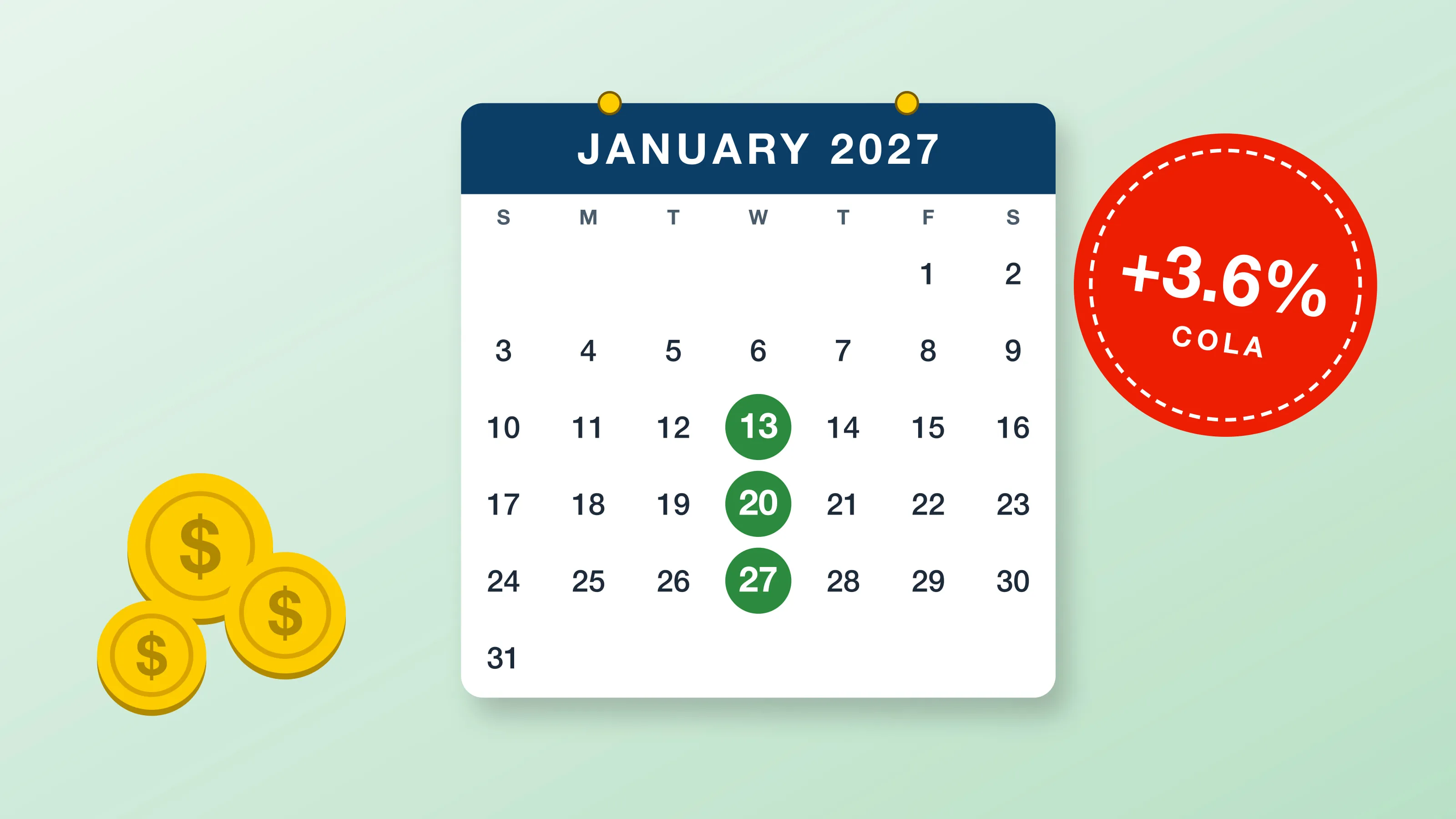 Social Security COLA 2027 Is 3.6%: New Benefit Amounts and the January Payment Dates
-
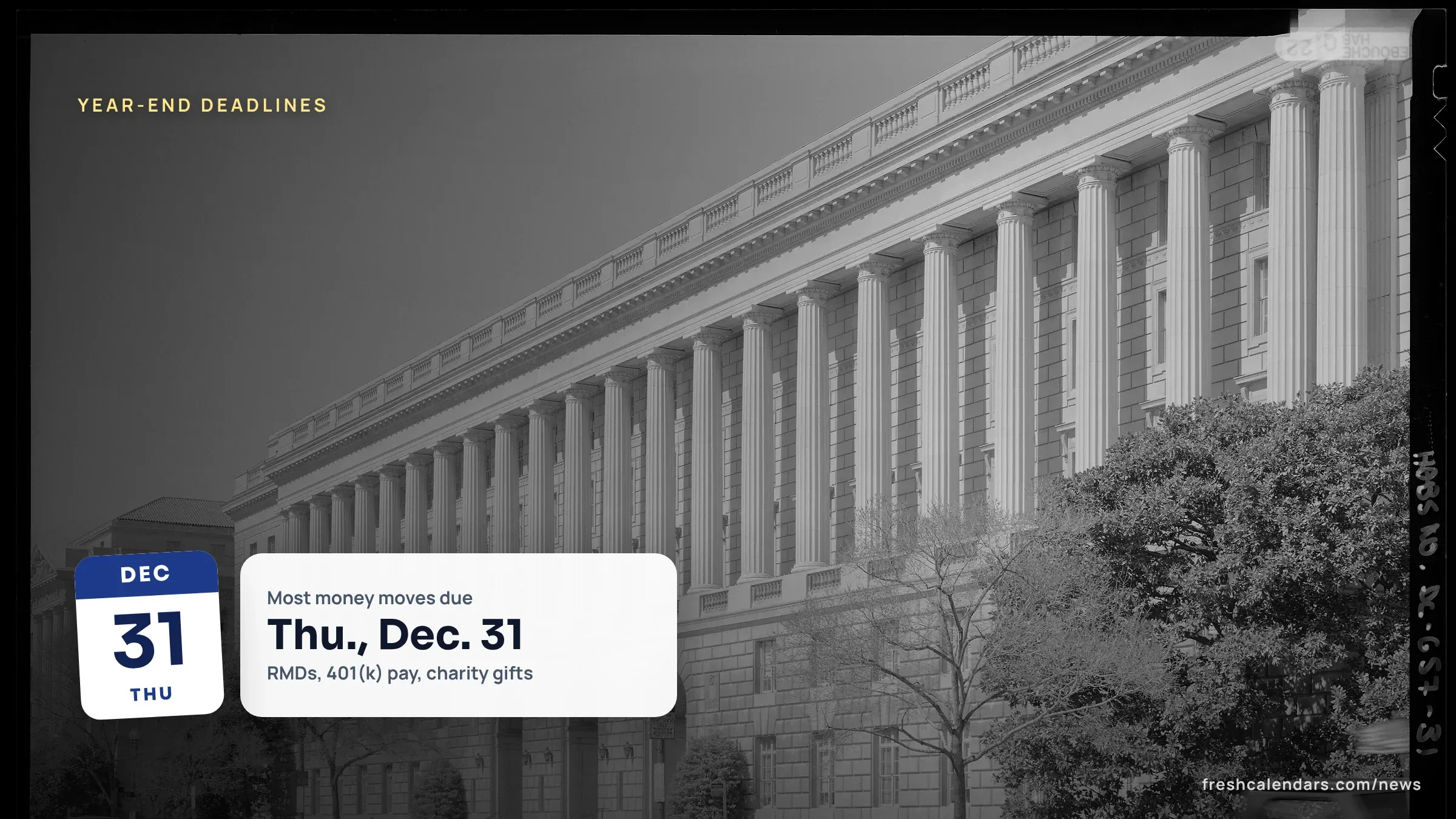 Year-End Money Deadlines 2026: What Must Be Done by December 31 and What Can Wait
-
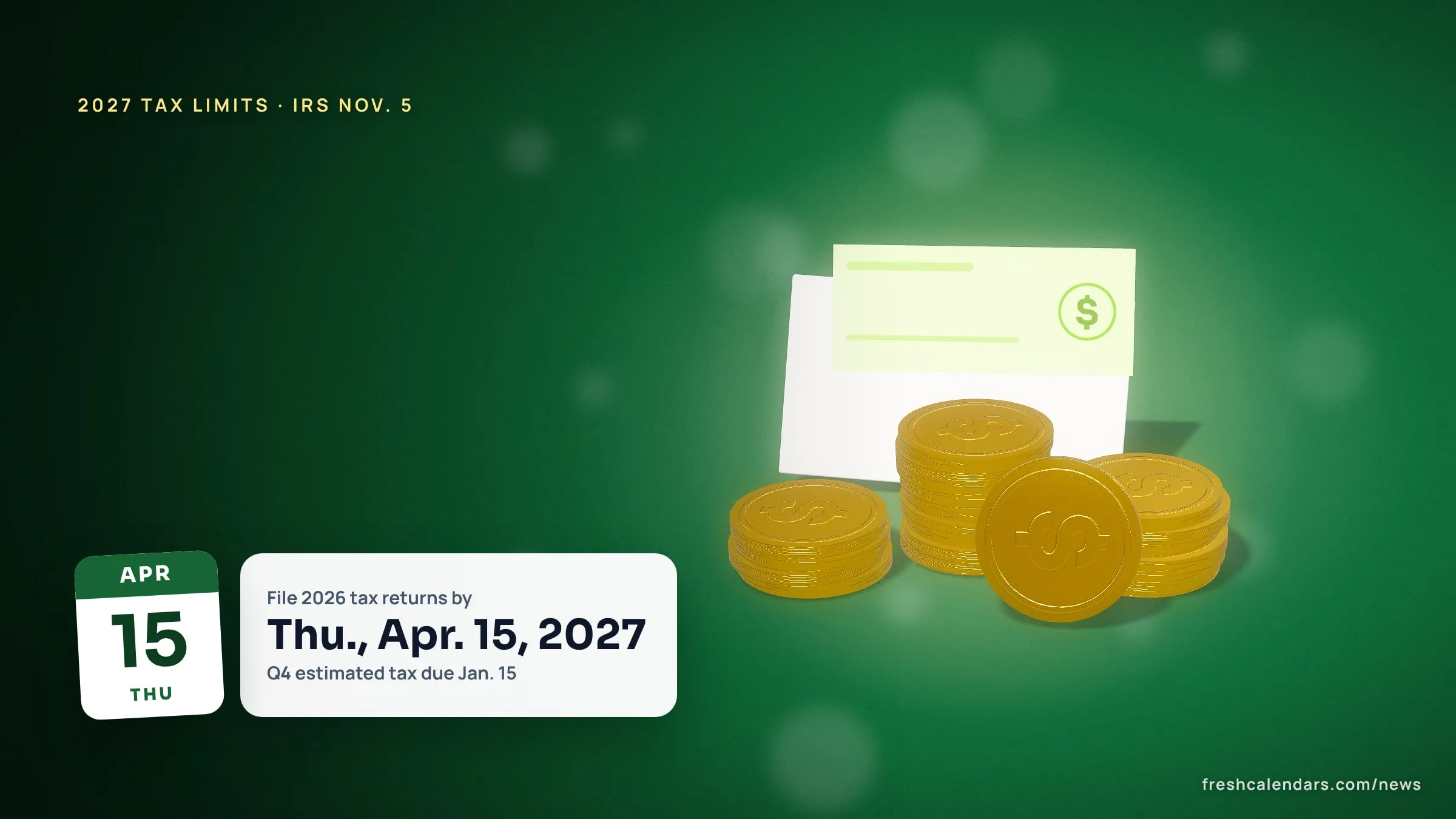 2027 Tax Brackets Are Out: IRS Sets the Standard Deduction; 401(k) Limits Still Pending
-
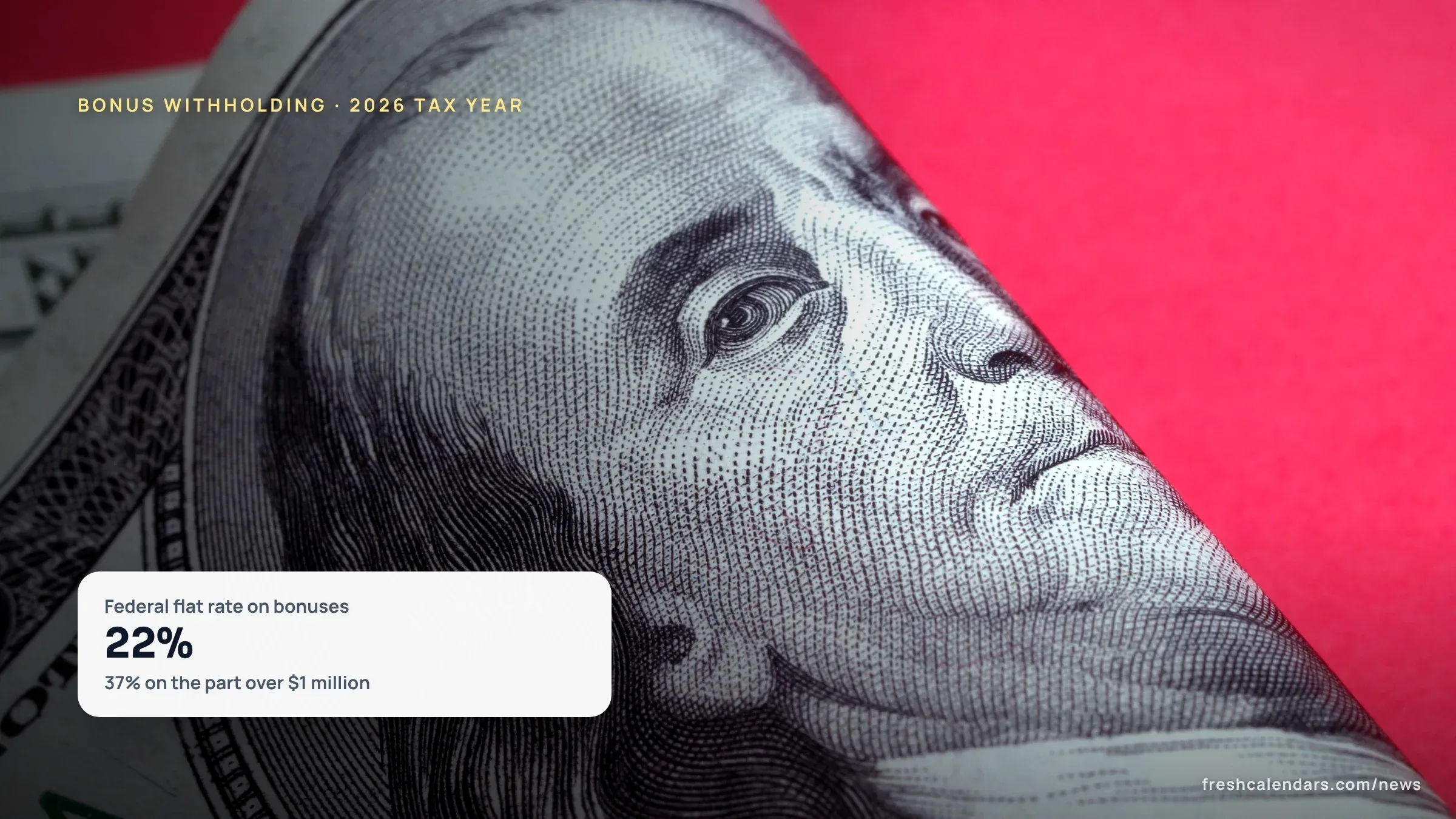 Bonus Tax Rate 2026: The 22% Flat Rate, the 37% Rule and a Take-Home Table
More in Money & Benefits
All Money & Benefits stories →- Form 1099-K Threshold for 2026: $20,000 and 200 Transactions, and When the Form Arrives
- IRS Employer Tax Deadlines November 2026: Form 941, Deposits and Tip Reports
- SAVE Plan Deadline: You Have 90 Days From Your Notice to Pick a New Repayment Plan
- Car Loan Interest Deduction 2026: Up to $10,000, Who Qualifies and a Phase-Out Table
- Medicaid Work Requirements Start Jan. 1, 2027: The 80-Hour Rule and Who Is Exempt
Trending now
- Black Friday 2026 Canada: Nov. 27 Sale Dates by Store, From Canadian Tire to Amazon.ca
- Black Friday 2026 Deals: Date Is Friday, Nov. 27, Live Countdown and Ad Tracker
- Veterans Day Free Meals 2026: 44 Chains Confirmed, 13 Discounts and a Printable List
- Holiday Menus 2026: Every Chain's Christmas Drinks and Treats, With Launch Dates
- Pokémon GO Events November 2026: Pawniard Community Day on Nov. 21, Halloween Part II, Wild Area