Senior Deduction 2026: The $6,000 Deduction at 65, Who Qualifies and a Phase-Out Table
The Internal Revenue Service (IRS) allows a $6,000 deduction at age 65 for 2025 to 2028, shrinking above $75,000 of modified adjusted gross income (MAGI).

Published 5 min read


In this article
The Internal Revenue Service (IRS) says individuals age 65 and older may claim an additional $6,000 deduction for 2025 through 2028, and the deduction phases out for modified adjusted gross income (MAGI) over $75,000, or $150,000 for joint filers. The rule comes from Public Law 119-21 (the One Big Beautiful Bill Act), section 70103, and the IRS page “Check your eligibility for the new enhanced deduction for seniors” (published Feb. 27, 2026, updated Sept. 21, 2026). Below is a table we computed from the 6% phase-out rule, a worked example and a printable to keep with your tax papers.
Who qualifies for the senior deduction in 2026?
The statute allows the deduction for each “qualified individual”: the taxpayer “if the taxpayer has attained age 65 before the close of the taxable year,” and on a joint return the spouse likewise. IRS Tax Tip 2026-14 (Feb. 19, 2026) puts it plainly: “To be eligible, the person must be 65 on or before the last day of the tax year.”
| Requirement | What the source says |
|---|---|
| Tax years | “Effective 2025 through 2028” (IRS); the statute covers taxable years beginning before Jan. 1, 2029 |
| Amount | $6,000 for each qualified individual |
| Couples | “$12,000 for a married couple if both spouses qualify” (IRS) |
| Age | 65 on or before the last day of the tax year (IRS Tax Tip 2026-14) |
| Married filers | Only if the taxpayer and spouse file a joint return (statute) |
| Social Security number (SSN) | The return must include each qualified person’s SSN (statute) |
| Itemizing | Open to itemizing and non-itemizing taxpayers (IRS Tax Tip 2026-12) |
The IRS also says the deduction is “in addition to the standard deduction for seniors available under existing law.” It is a deduction from income. It does not exempt Social Security benefits, and the IRS pages we used do not say it does.
How does the senior deduction phase-out work?
The law reduces each $6,000 amount “(but not below zero) by 6 percent of so much of the taxpayer’s modified adjusted gross income as exceeds $75,000 ($150,000 in the case of a joint return).” MAGI is adjusted gross income (AGI) increased by any amount excluded under sections 911, 931 or 933 of the tax code, which cover foreign earned income, income from Guam, American Samoa and the Northern Mariana Islands, and Puerto Rico income.
The reduction applies to each $6,000. On a joint return where both spouses are 65 or older, each spouse’s $6,000 shrinks by 6% of the joint excess. Schedule 1-A (Form 1040) for 2025 computes that figure once: line 34 reads “Multiply line 33 by 6% (0.06),” and the result is used for both spouses.
The table is our calculation from that rule, not a figure the IRS published. Deduction left = $6,000 minus 6% of (MAGI minus the line), never below zero, for each qualifying person.
| MAGI | Single, one person 65+ | Joint, one spouse 65+ | Joint, both 65+ |
|---|---|---|---|
| $75,000 | $6,000 | $6,000 | $12,000 |
| $90,000 | $5,100 | $6,000 | $12,000 |
| $100,000 | $4,500 | $6,000 | $12,000 |
| $125,000 | $3,000 | $6,000 | $12,000 |
| $150,000 | $1,500 | $6,000 | $12,000 |
| $175,000 | $0 | $4,500 | $9,000 |
| $200,000 | $0 | $3,000 | $6,000 |
| $225,000 | $0 | $1,500 | $3,000 |
| $250,000 | $0 | $0 | $0 |
By this calculation the deduction is fully gone at $175,000 of MAGI for a single filer and $250,000 for joint filers. Take a single filer at $100,000: the excess is $25,000, 6% of that is $1,500, and $6,000 minus $1,500 leaves $4,500.
What does the senior deduction add to a 2026 standard deduction?
IRS release IR-2025-103 (Oct. 9, 2025) sets the 2026 standard deduction at $16,100 for single filers and married filing separately, $32,200 for married filing jointly and $24,150 for head of household. For 2025 the amounts were $15,750, $31,500 and $23,625. Revenue Procedure 2025-32 adds $1,650 for the aged or blind, or $2,050 if the individual is also unmarried and not a surviving spouse.
A worked example, computed by us: a couple filing jointly, both 65 or older, with $100,000 of MAGI. Their standard deduction is $32,200, plus 2 x $1,650 for age, plus the full $12,000 senior deduction (their MAGI is under $150,000), for $47,500. A single filer 65 or older at $100,000 gets $16,100 plus $2,050 plus $4,500, which is $22,650.
Where does the senior deduction go on the return?
The 2025 Schedule 1-A, “Additional Deductions,” carries it in Part V. The form’s caution says “You and/or your spouse must have a valid social security number. If married, you must file jointly to claim this deduction.” Line 37 is the “Enhanced deduction for seniors,” and the total goes to line 13b of Form 1040 or 1040-SR. As of Nov. 7, 2026, the IRS has not released the 2026 form or its instructions. The 2025 form shows how the deduction works, and the lines may change.
IRS Tax Tip 2026-12 (Feb. 12, 2026) says all new or enhanced deductions are available for both itemizing and non-itemizing taxpayers, so you do not give up the standard deduction to claim it. Another deduction under the same law is covered in our car loan interest deduction guide.
Senior deduction checklist before you file
- Everyone claiming it reaches 65 on or before the last day of the tax year.
- Each qualifying person has a valid SSN to enter on the return.
- If you are married, you plan to file jointly.
- You have worked out MAGI, including any excluded foreign or territory income.
- You compared MAGI with $75,000 (single) or $150,000 (joint).
- You have the 2026 Schedule 1-A once the IRS releases it.
For other 2027 tax figures see our guide to 2027 tax brackets and retirement limits, and for deadlines the 2027 IRS tax calendar. Mark your own dates on the 2027 printable yearly calendar, the April 2027 printable calendar and the December 2026 printable calendar. The one-page 2026 senior deduction rules sheet below lists the rules and the phase-out for your tax folder. Birth date is the age test: check it against the last day of the year. Added on top of your standard deduction, the extra amount for age and the $6,000 senior deduction both count.
Free printable downloads
Every template is free, needs no sign-up and prints on US Letter paper. Choose PDF for printing or PNG for screens and documents.
2026 Senior Deduction Rules and Phase-Out printables
-
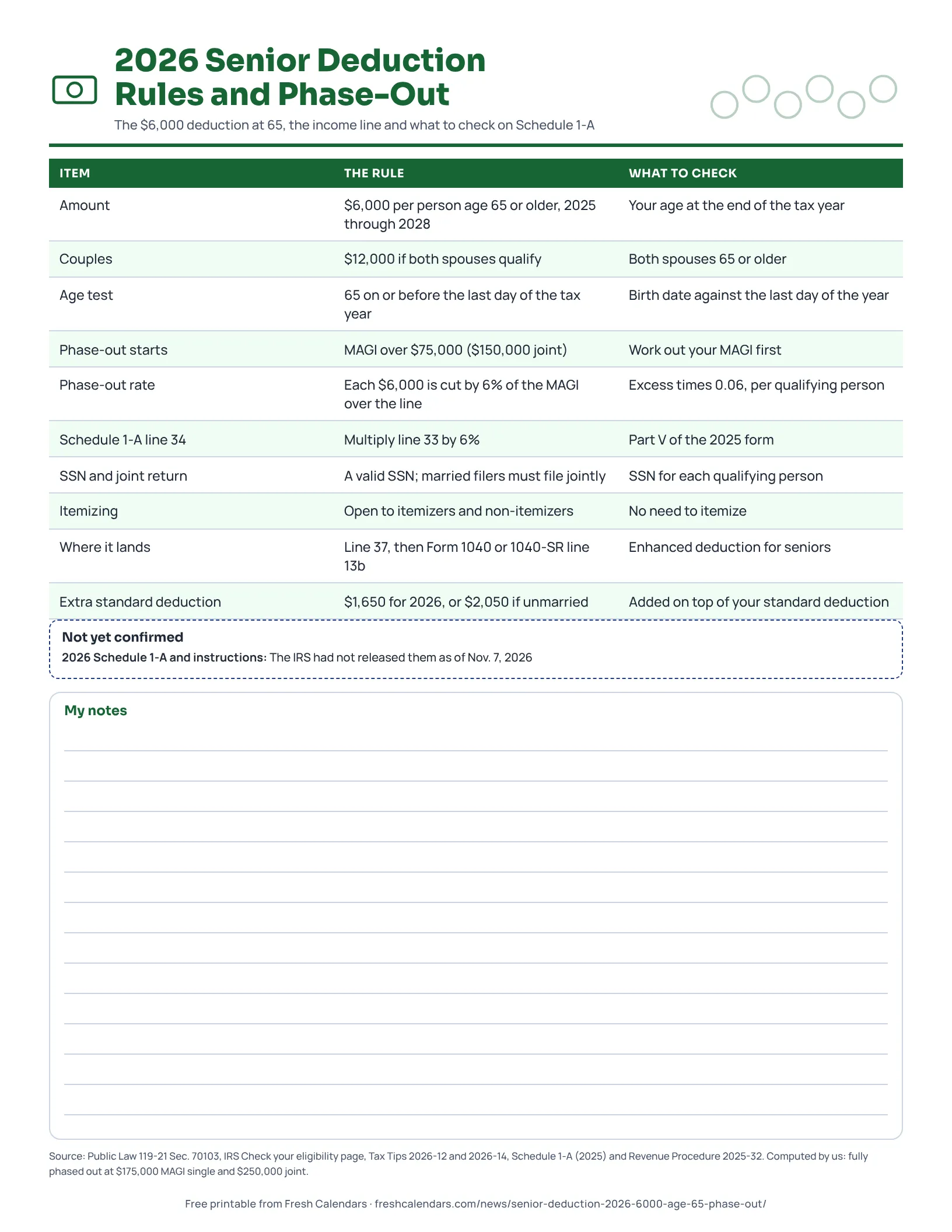
2026 Senior Deduction Rules and Phase-Out
A one-page sheet of the $6,000 senior deduction for 2025 to 2028: who qualifies, the MAGI phase-out and the Schedule 1-A Part V steps.
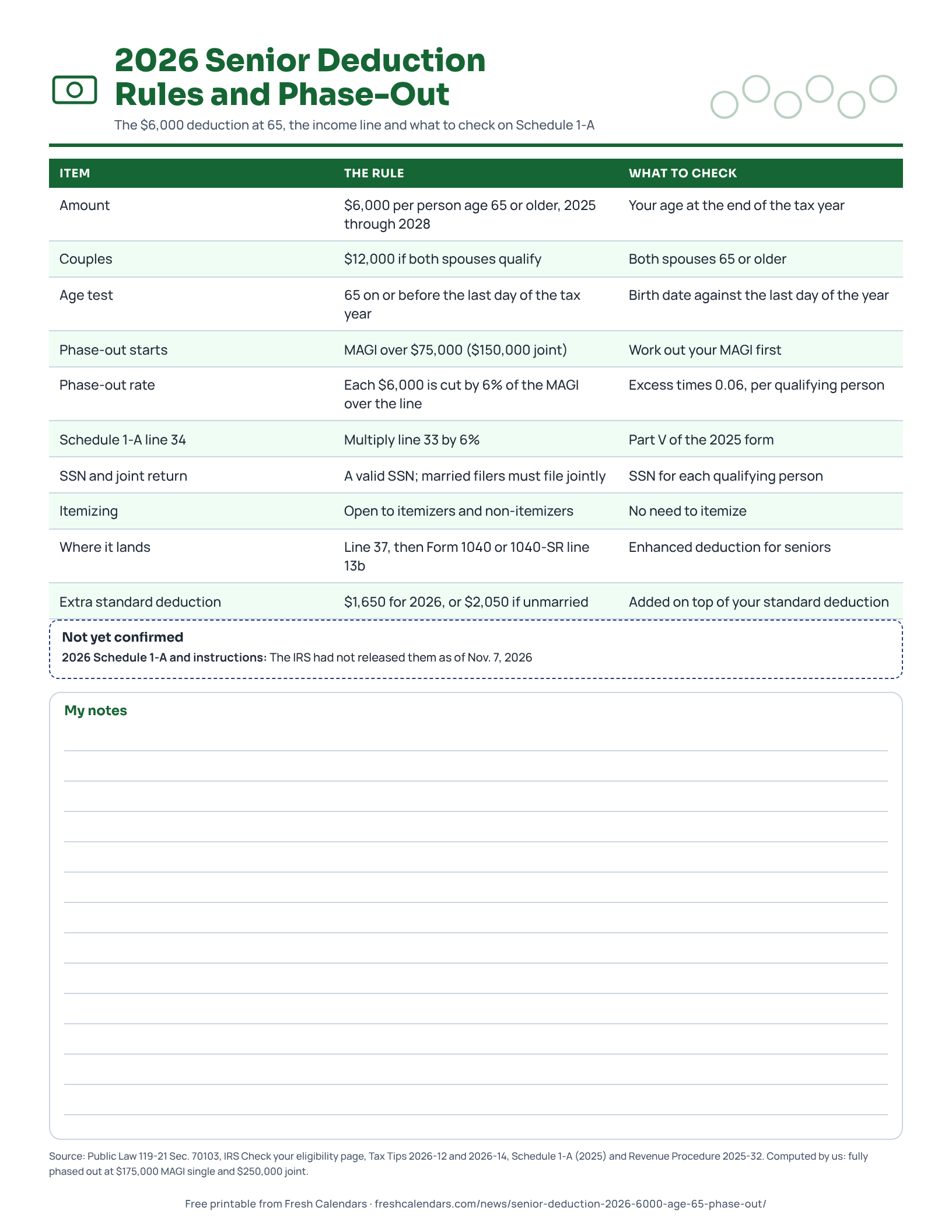
Frequently asked questions
Who gets the $6,000 senior deduction?
Individuals age 65 and older, according to the IRS. Tax Tip 2026-14 says the person must be 65 on or before the last day of the tax year.
Is it the same as the extra standard deduction for people 65 and older?
No. The IRS says it is in addition to the standard deduction for seniors available under existing law. For 2026 the additional standard deduction for the aged is $1,650, or $2,050 if the individual is unmarried and not a surviving spouse (Revenue Procedure 2025-32).
Do I have to itemize to claim it?
No. IRS Tax Tip 2026-12 says all new or enhanced deductions are available for both itemizing and non-itemizing taxpayers.
Does it make Social Security benefits tax-free?
The IRS pages we used do not say that. The senior deduction is a deduction from income and does not exempt benefits.
What if only one spouse is 65?
The deduction is $6,000 for that spouse, and the statute requires the couple to file a joint return. The phase-out line for a joint return is $150,000.
Is there a 2026 Schedule 1-A yet?
Not yet. The IRS has not released the 2026 form or its instructions. The 2025 form shows how the deduction is worked out.
Sources
- Public Law 119-21, Sec. 70103 (One Big Beautiful Bill Act) (U.S. Government Publishing Office)
- Check your eligibility for the new enhanced deduction for seniors (Internal Revenue Service, 2026-09-21)
- 2026 filing season updates and resources for seniors (Tax Tip 2026-14) (Internal Revenue Service, 2026-02-19)
- New and enhanced deductions for individuals (Tax Tip 2026-12) (Internal Revenue Service, 2026-02-12)
- Schedule 1-A (Form 1040) 2025, Additional Deductions (Internal Revenue Service)
- IRS releases tax inflation adjustments for tax year 2026 (IR-2025-103) (Internal Revenue Service, 2025-10-09)
- Revenue Procedure 2025-32 (Internal Revenue Service)
Related news
-
 2027 Tax Brackets Are Out: IRS Sets the Standard Deduction; 401(k) Limits Still Pending
-
 Car Loan Interest Deduction 2026: Up to $10,000, Who Qualifies and a Phase-Out Table
-
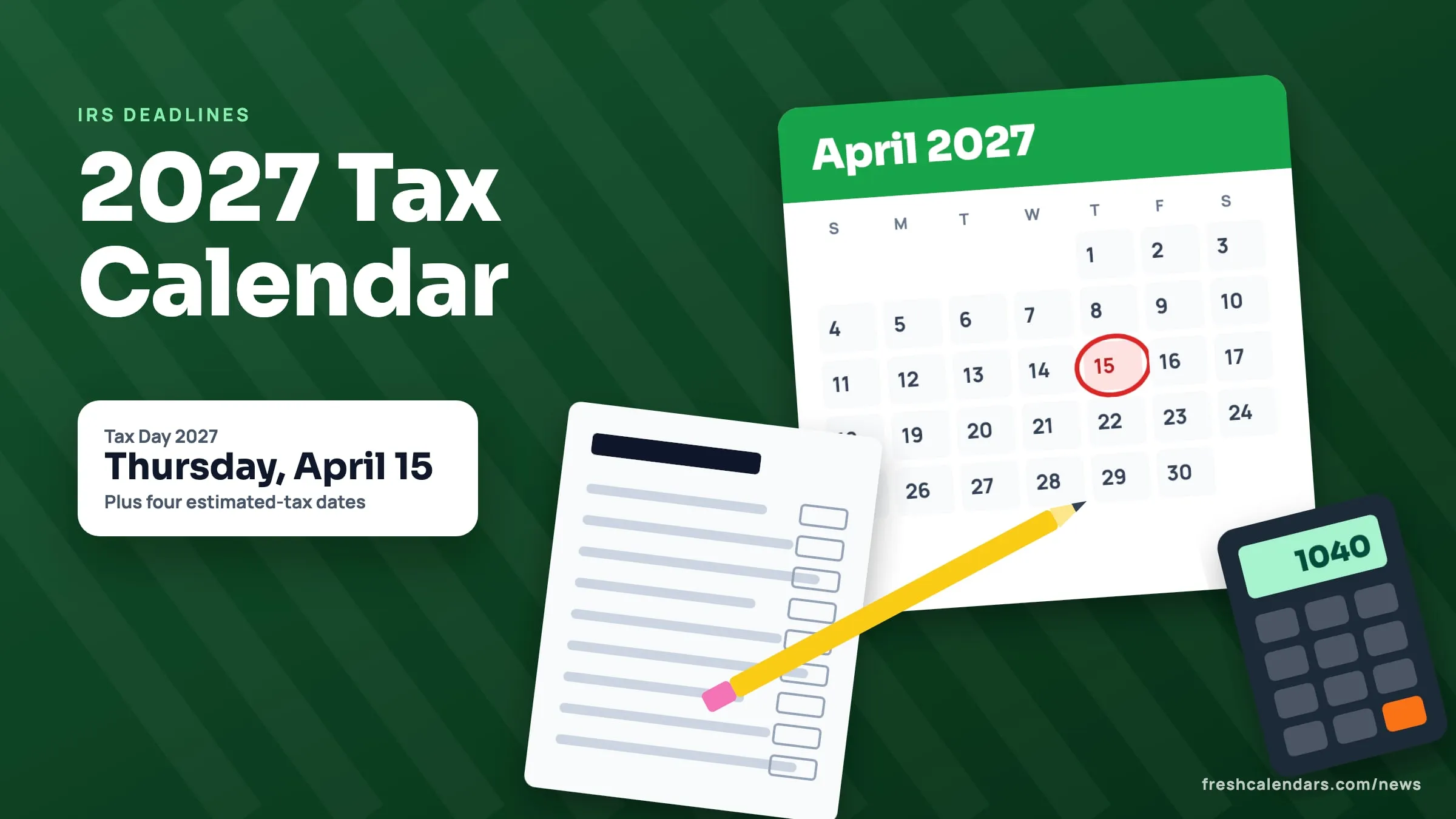 Tax Deadline 2027: Thursday, April 15, Every IRS Due Date and a Live Countdown
-
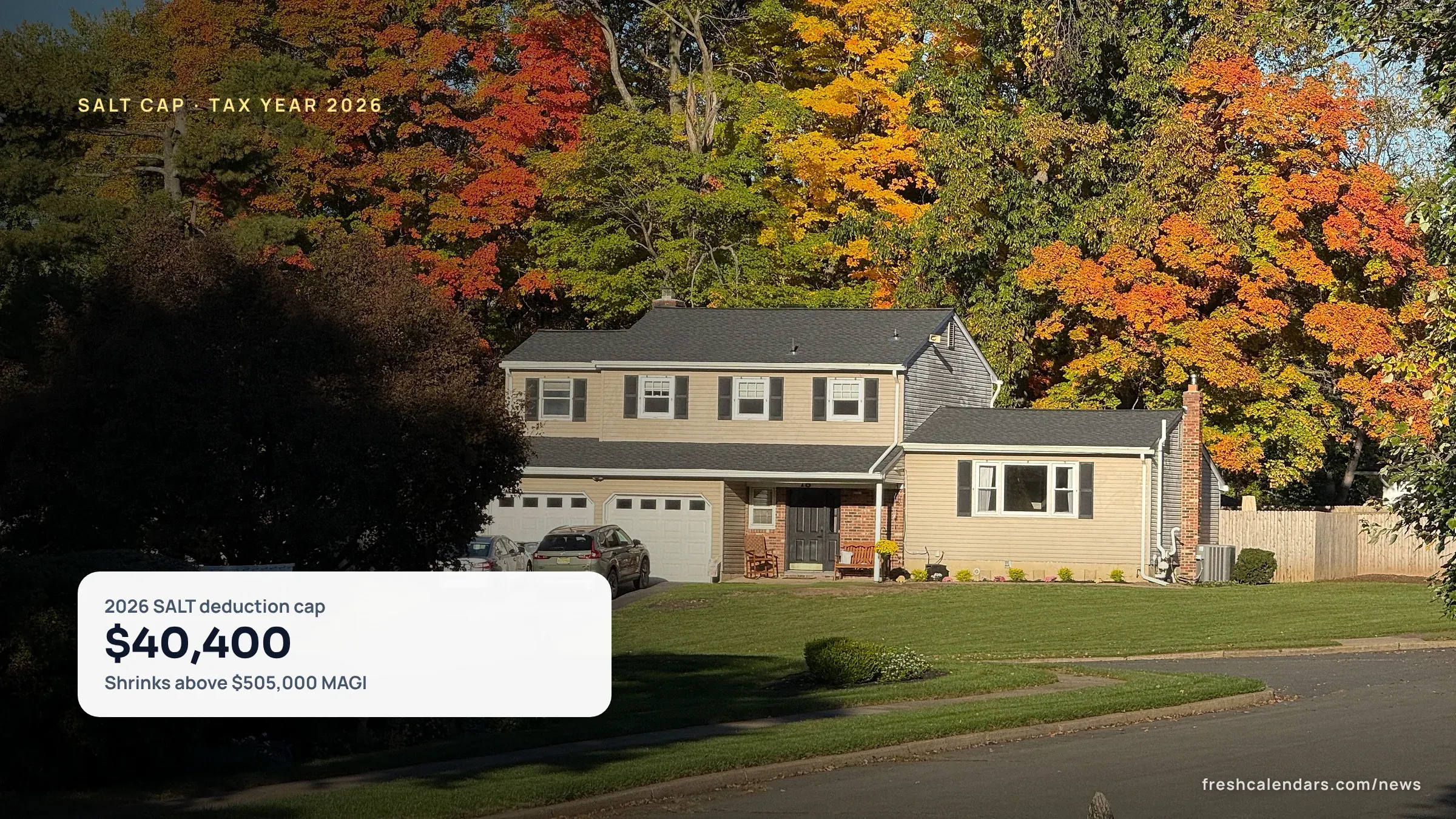 SALT Deduction Cap 2026: $40,400, the $505,000 Phase-Out and a Table by Income
More in Money & Benefits
All Money & Benefits stories →- Saver's Match 2027: $1,000 Federal Retirement Match, Income Limits and When It Pays
- Form 1099-K Threshold for 2026: $20,000 and 200 Transactions, and When the Form Arrives
- IRS Employer Tax Deadlines November 2026: Form 941, Deposits and Tip Reports
- SAVE Plan Deadline: You Have 90 Days From Your Notice to Pick a New Repayment Plan
- Bonus Tax Rate 2026: The 22% Flat Rate, the 37% Rule and a Take-Home Table
Trending now
- Veterans Day Free Meals 2026: 48 Chains, Freebies and a Printable List
- Black Friday 2026 Deals: Date Is Friday, Nov. 27, Live Countdown and Ad Tracker
- Holiday Menus 2026: Every Chain's Christmas Drinks and Treats, With Launch Dates
- Diwali 2026 in the USA Is Sunday, Nov. 8: Lakshmi Puja Time in Your Time Zone
- Planets Visible in November 2026: Night Sky Calendar With the Moon, Venus and Uranus Opposition