Halloween on a Saturday After 2026: Next Time Is 2037
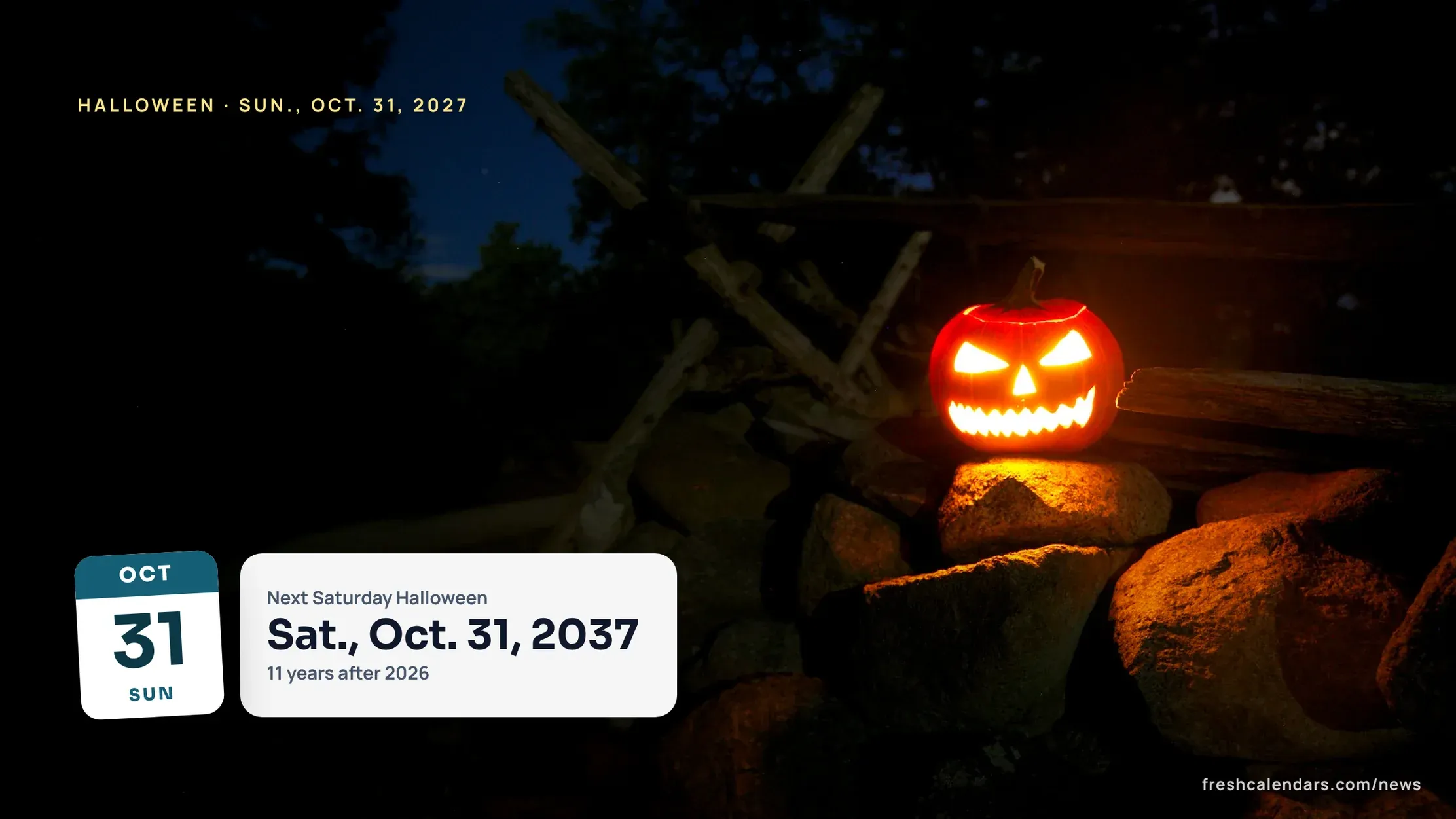
Halloween next falls on a Saturday in 2037, after 2026. Clocks fell back the night after in 2026; earlier Saturday years were 2009, 2015 and 2020.

Published Updated 4 min read
In this article
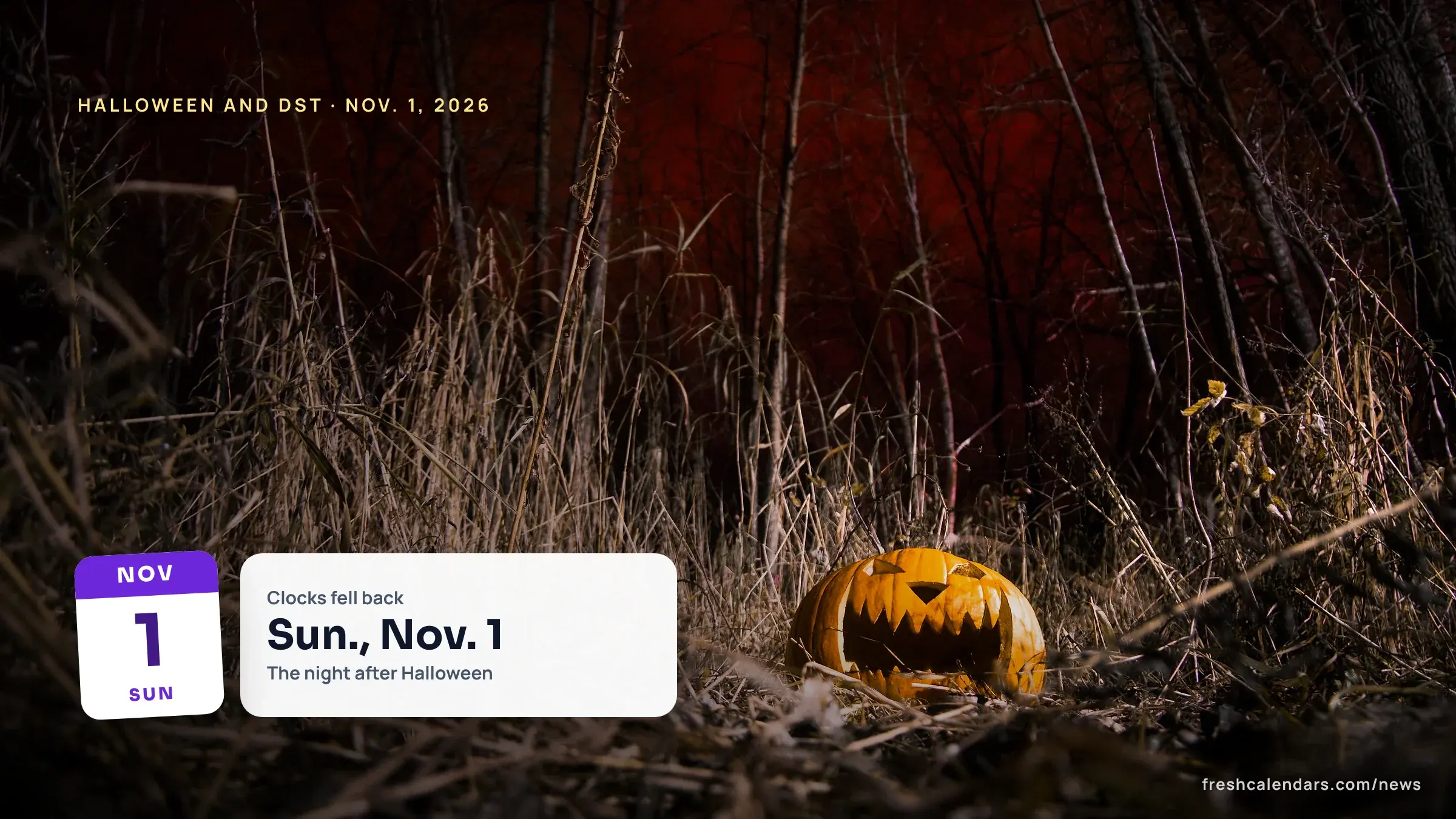
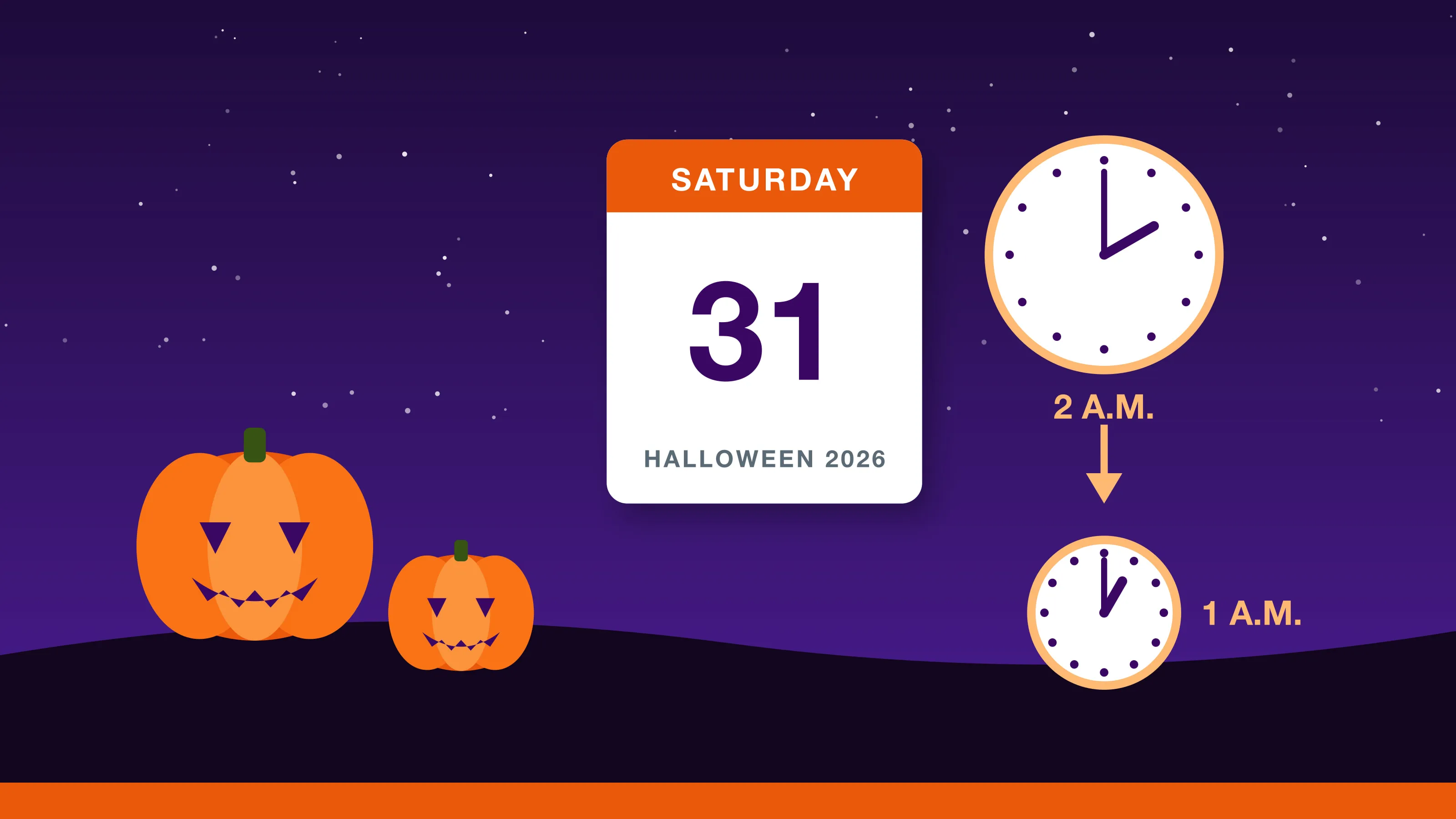
Daylight saving time (DST) ended at 2 a.m. local time on Sunday, Nov. 1, 2026, the night after Halloween, because 15 U.S. Code § 260a, the federal statute published by Cornell Law School’s Legal Information Institute, ends it at “2 o’clock antemeridian on the first Sunday of November.” Halloween was Saturday, Oct. 31, so the clocks did not change on Halloween itself. The Halloween angle and the history of the rule are here; the full 2026 guide, with time zones and the Senate bill, is in our daylight saving time ends Nov. 1 story.
Did clocks change on Halloween 2026?
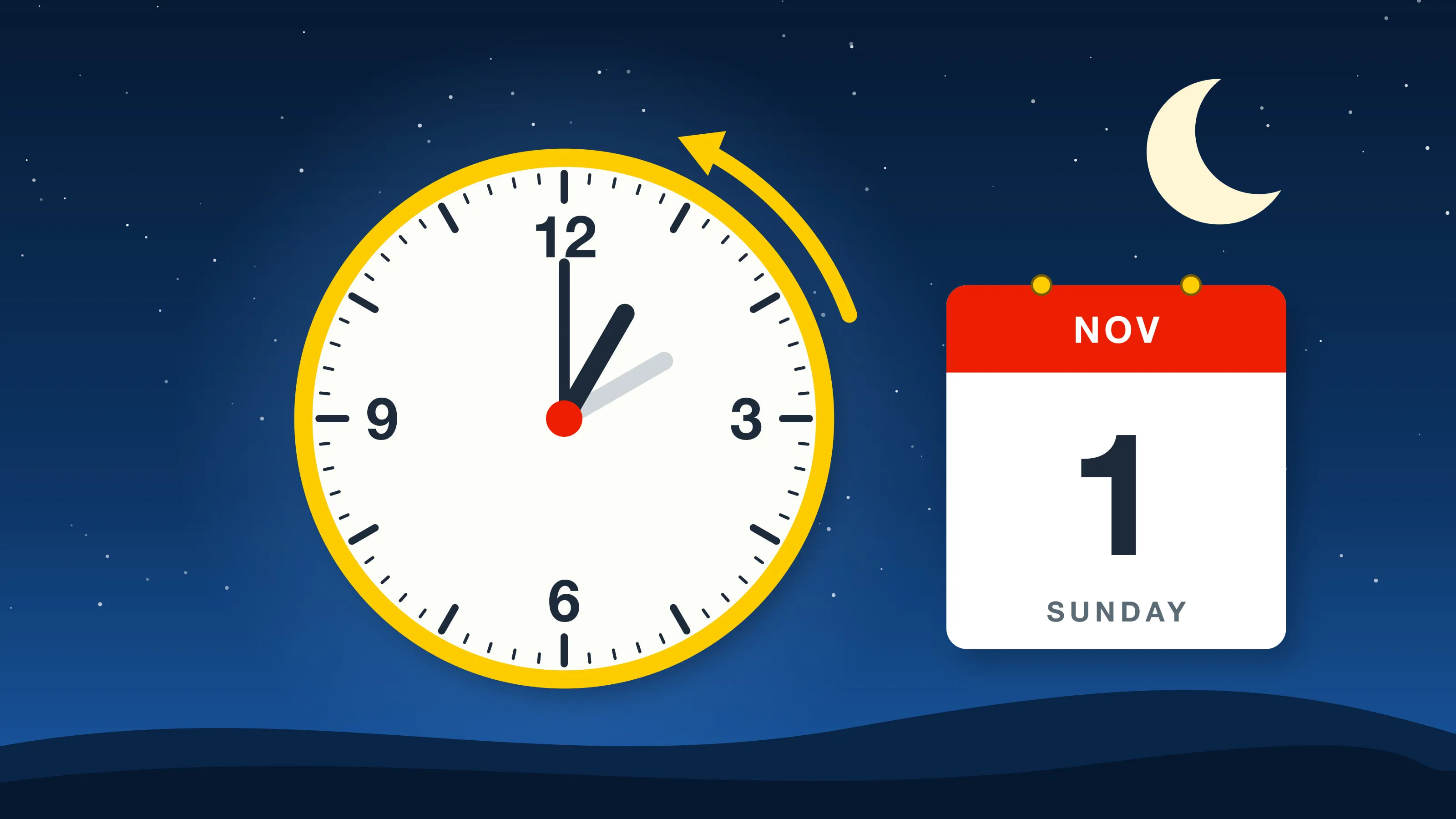
No. Halloween fell on Saturday, Oct. 31, and the change came at 2 a.m. the next morning, Sunday, Nov. 1. Trick-or-treating happened in daylight saving time, and at 2 a.m. Sunday the time became 1 a.m. An oven, car or wall clock that still shows the old time needs to be set back one hour. Sunset times for the night are in our Halloween 2026 trick-or-treat story, and both dates sit on the October 2026 printable calendar and the November 2026 printable calendar.
Why does daylight saving time end after Halloween?
Because the statute says the first Sunday of November, and the earliest that Sunday can be is Nov. 1. Under the current rule, Oct. 31 is always still in daylight saving time. The statute and its amendment notes do not give a reason for choosing November, so this story does not offer one.
The law has had two relevant versions in this period, according to the amendment notes on the same Cornell page:
| Period | DST ends | Where it comes from |
|---|---|---|
| 1987 to 2006 | 2 a.m. on the last Sunday of October | Wording replaced in 2005 |
| 2007 onward | 2 a.m. on the first Sunday of November | Pub. L. 109-58, Energy Policy Act of 2005 |
Pub. L. 109-58 substituted “second Sunday of March” for “first Sunday of April” and “first Sunday of November” for “last Sunday of October.” Its effective-date section, title I, § 110(b), signed Aug. 8, 2005, says the change takes effect one year after enactment “or March 1, 2007, whichever is later.” The November end date therefore began in 2007. An earlier amendment, Pub. L. 99-359 in 1986, had moved the spring start from the last Sunday of April to the first Sunday of April.
How did Halloween compare with the clock change from 1987 to 2006?
Under the old rule the change came on the last Sunday of October, which is Oct. 25 at the earliest and Oct. 31 at the latest. Fresh Calendars computed every year from 1987 to 2006: Halloween fell on or after the change in all 20 of them, so Halloween evening was always in standard time.
| Relation to Halloween | Years | Count |
|---|---|---|
| Clocks changed before Halloween (Oct. 25 to 30) | 1987-1992, 1994-1998, 2000-2003, 2005-2006 | 17 |
| Clocks changed at 2 a.m. on Halloween itself (Oct. 31) | 1993, 1999, 2004 | 3 |
In each of those three years Halloween fell on a Sunday, so the change landed on the holiday morning, and trick-or-treating followed it.
Which years does the clock change fall the night after Halloween?
When Nov. 1 is the first Sunday of November, Halloween is a Saturday and the clocks fall back the next night. Computed from the statute’s rule, that happened in 2009, 2015, 2020 and 2026, and returns in 2037. The gaps between those years are 6, 5, 6 and 11 years. In 2027, Halloween is a Sunday and the change comes a week later, on Nov. 7; our 2027 clock changes story covers the spring date.
The table lists every year from 2007, when the November rule began, through 2040. Bold rows are the years the change comes the night after Halloween.
| Year | Halloween (Oct. 31) | Clocks fall back (2 a.m.) | Days after Halloween |
|---|---|---|---|
| 2007 | Wednesday | Sunday, Nov. 4 | 4 |
| 2008 | Friday | Sunday, Nov. 2 | 2 |
| 2009 | Saturday | Sunday, Nov. 1 | 1 |
| 2010 | Sunday | Sunday, Nov. 7 | 7 |
| 2011 | Monday | Sunday, Nov. 6 | 6 |
| 2012 | Wednesday | Sunday, Nov. 4 | 4 |
| 2013 | Thursday | Sunday, Nov. 3 | 3 |
| 2014 | Friday | Sunday, Nov. 2 | 2 |
| 2015 | Saturday | Sunday, Nov. 1 | 1 |
| 2016 | Monday | Sunday, Nov. 6 | 6 |
| 2017 | Tuesday | Sunday, Nov. 5 | 5 |
| 2018 | Wednesday | Sunday, Nov. 4 | 4 |
| 2019 | Thursday | Sunday, Nov. 3 | 3 |
| 2020 | Saturday | Sunday, Nov. 1 | 1 |
| 2021 | Sunday | Sunday, Nov. 7 | 7 |
| 2022 | Monday | Sunday, Nov. 6 | 6 |
| 2023 | Tuesday | Sunday, Nov. 5 | 5 |
| 2024 | Thursday | Sunday, Nov. 3 | 3 |
| 2025 | Friday | Sunday, Nov. 2 | 2 |
| 2026 | Saturday | Sunday, Nov. 1 | 1 |
| 2027 | Sunday | Sunday, Nov. 7 | 7 |
| 2028 | Tuesday | Sunday, Nov. 5 | 5 |
| 2029 | Wednesday | Sunday, Nov. 4 | 4 |
| 2030 | Thursday | Sunday, Nov. 3 | 3 |
| 2031 | Friday | Sunday, Nov. 2 | 2 |
| 2032 | Sunday | Sunday, Nov. 7 | 7 |
| 2033 | Monday | Sunday, Nov. 6 | 6 |
| 2034 | Tuesday | Sunday, Nov. 5 | 5 |
| 2035 | Wednesday | Sunday, Nov. 4 | 4 |
| 2036 | Friday | Sunday, Nov. 2 | 2 |
| 2037 | Saturday | Sunday, Nov. 1 | 1 |
| 2038 | Sunday | Sunday, Nov. 7 | 7 |
| 2039 | Monday | Sunday, Nov. 6 | 6 |
| 2040 | Wednesday | Sunday, Nov. 4 | 4 |
Source: 15 U.S. Code § 260a, Legal Information Institute, Cornell Law School; weekdays and dates computed by Fresh Calendars.
What to check after the Nov. 1, 2026 change
- Trick-or-treating on Saturday, Oct. 31, was the last evening on daylight saving time.
- Set manual clocks, such as ovens, car dashboards and wall clocks, back one hour if they still show the old time.
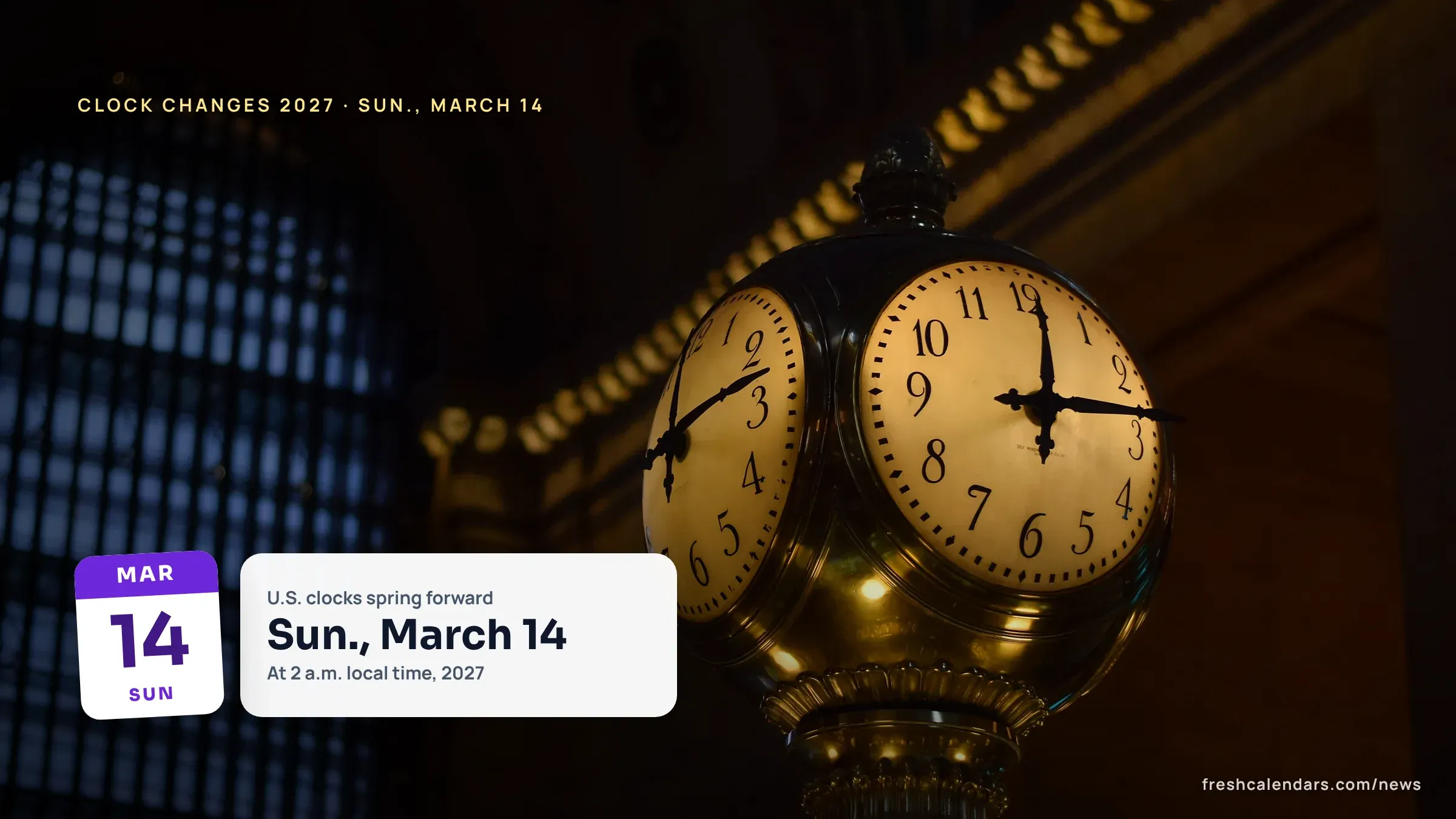
- Note the next two changes: clocks spring forward on Sunday, March 14, 2027, and fall back on Sunday, Nov. 7, 2027, a week after that year’s Halloween.
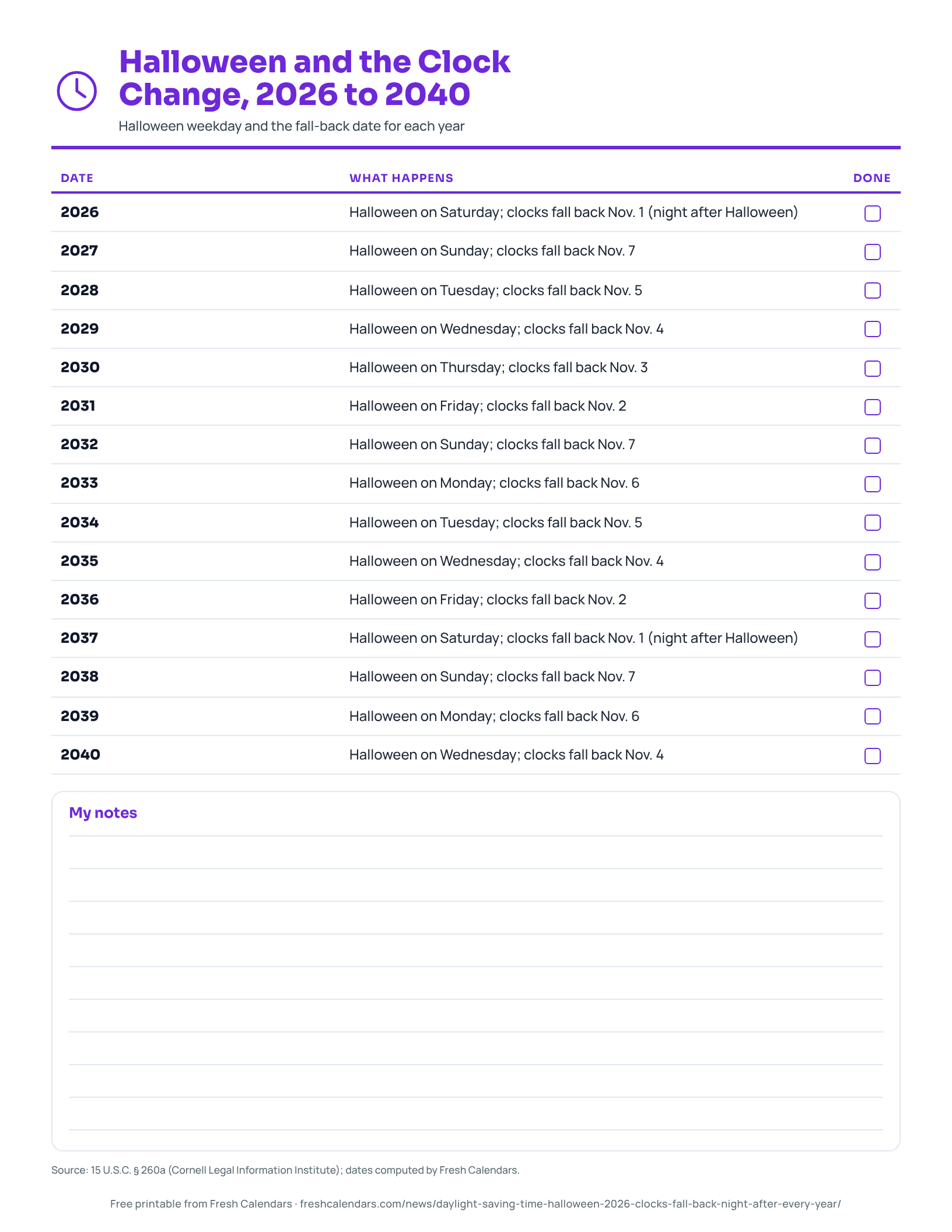
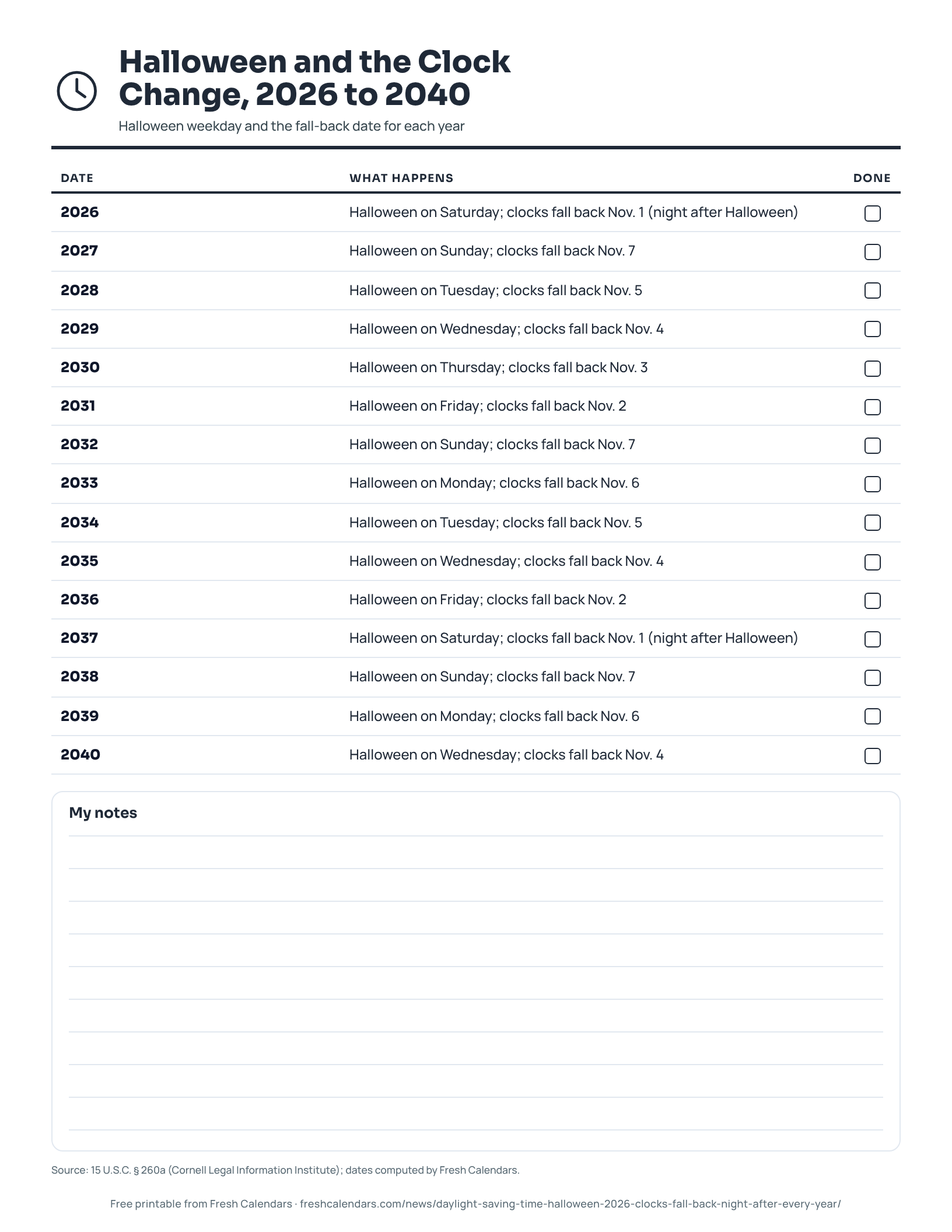
- Keep the printable for the years ahead; it lists the Halloween weekday and the fall-back date for 2026 through 2040.
Free printable downloads
Every template is free, needs no sign-up and prints on US Letter paper. Choose PDF for printing or PNG for screens and documents.
Halloween and the Clock Change printables
-
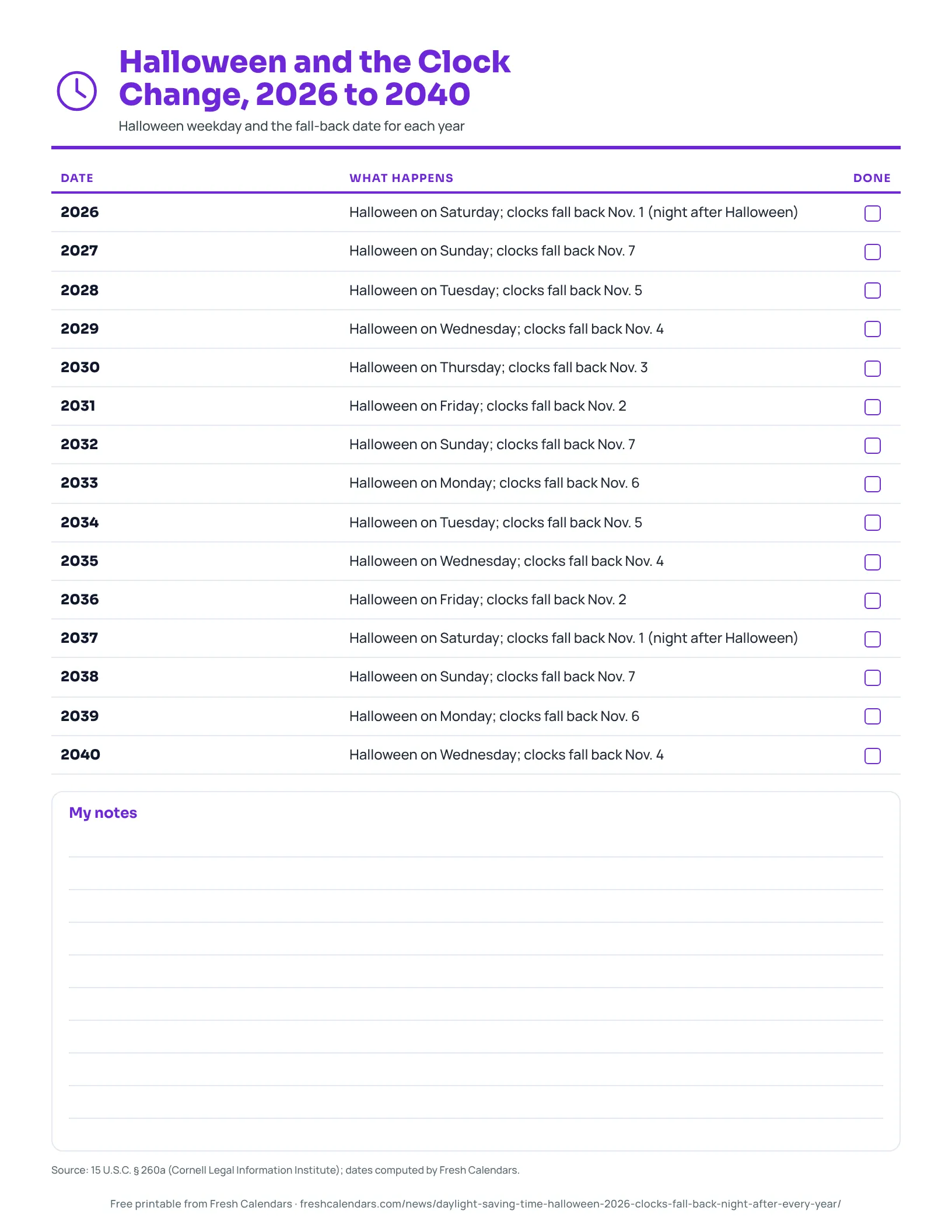
Halloween and the Clock Change, 2026 to 2040
Halloween weekday and the date clocks fall back for each year from 2026 to 2040, computed from the first Sunday of November rule.
-
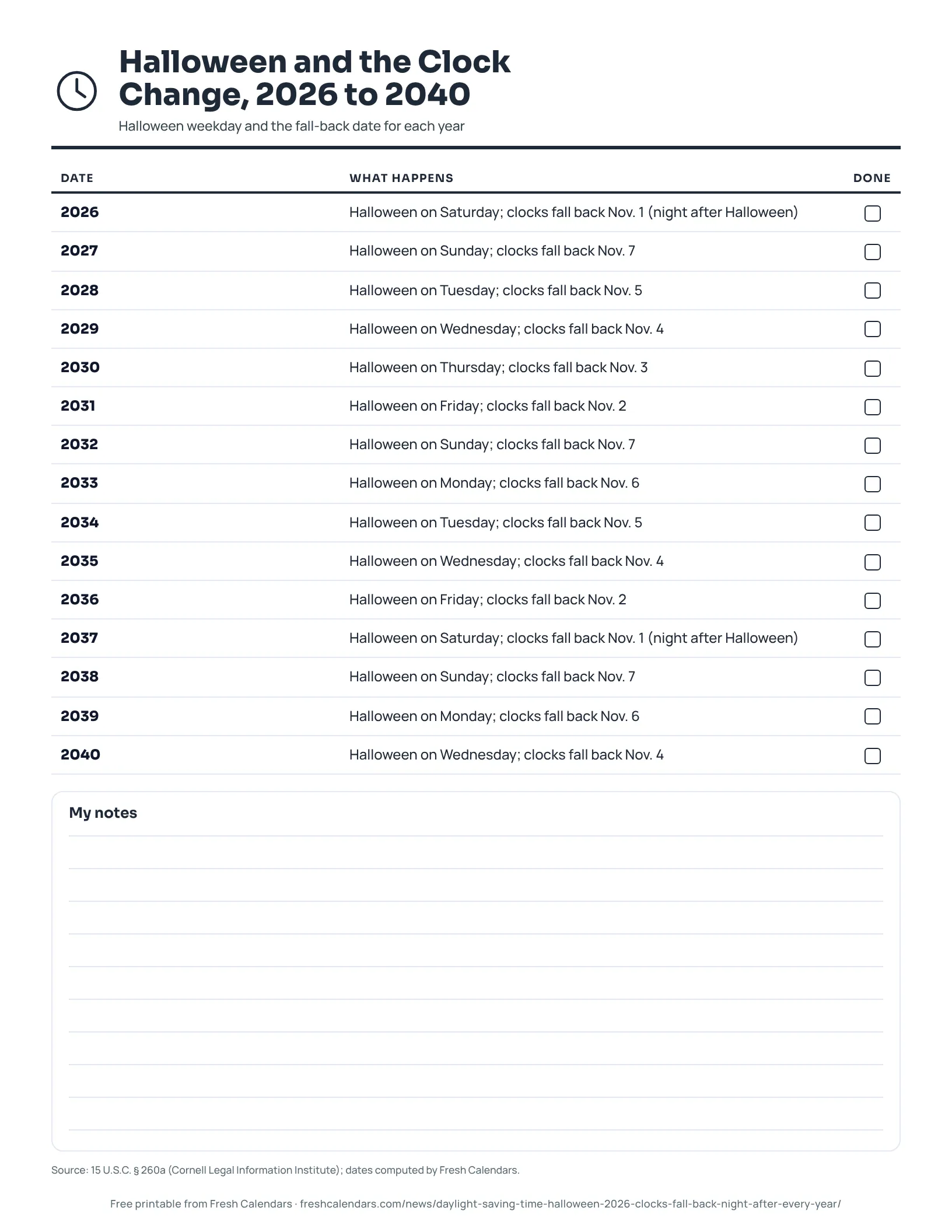
Halloween and the Clock Change, 2026 to 2040 (ink saver)
Halloween weekday and the date clocks fall back for each year from 2026 to 2040, computed from the first Sunday of November rule. Ink-saver version.
Frequently asked questions
Did clocks change on Halloween 2026?
No. Halloween was Saturday, Oct. 31, 2026. Clocks went back at 2 a.m. local time on Sunday, Nov. 1, the morning after.
Is Halloween always in daylight saving time?
Yes, under the current rule. Daylight saving time ends on the first Sunday of November, and the earliest that Sunday can be is Nov. 1, so Oct. 31 always falls before the change.
When did the law move the end of daylight saving time to November?
Pub. L. 109-58, the Energy Policy Act of 2005, replaced the last Sunday of October with the first Sunday of November. Its effective-date section says it takes effect one year after enactment on Aug. 8, 2005, or March 1, 2007, whichever is later, so the November end date began in 2007.
Why did Congress pick November?
The statute and its amendment notes do not give a reason, so this story does not offer one.
When does the clock change fall the night after Halloween again?
In 2037. Nov. 1 is the first Sunday of November in 2009, 2015, 2020, 2026 and 2037, so Halloween is the Saturday before the change in each of those years.
What time did the change happen on Nov. 1, 2026?
At 2 a.m. local time, when clocks went back to 1 a.m.
Sources
- 15 U.S. Code § 260a - Advancement of time or changeover dates (Legal Information Institute, Cornell Law School)
Related news

More in Time Change
All Time Change stories →- US-UK Time Difference, Winter 2026-27: New York 5 Hours Behind London
- US Time Zones 2026-27: Noon ET Is 7 a.m. in Hawaii
- Clocks Go Forward 2027: Sunday 28 March at 1am GMT, to 2am BST
- BC Sunrise Time: Vancouver 8:01 a.m. Nov. 1, Latest 9:08 a.m.
- Smoke Alarm Check: Test Monthly, Replace Every 10 Years, Printable
Trending now
- Black Friday Ads 2026: Date Is Nov. 27, Walmart Deals Nov. 23-29
- Thanksgiving Travel 2026: Best Days to Fly and Drive, Nov. 21 to 30
- CPKC Holiday Train 2026 Schedule: 182 Stops, Nov. 19 to Dec. 20
- Pumpkin Carving Templates PDF: 18 Free Printable Stencils
- Thanksgiving 2026 School Break: 52 of 81 Districts Off Nov. 23-27