US Time Zones 2026-27: Noon ET Is 7 a.m. in Hawaii
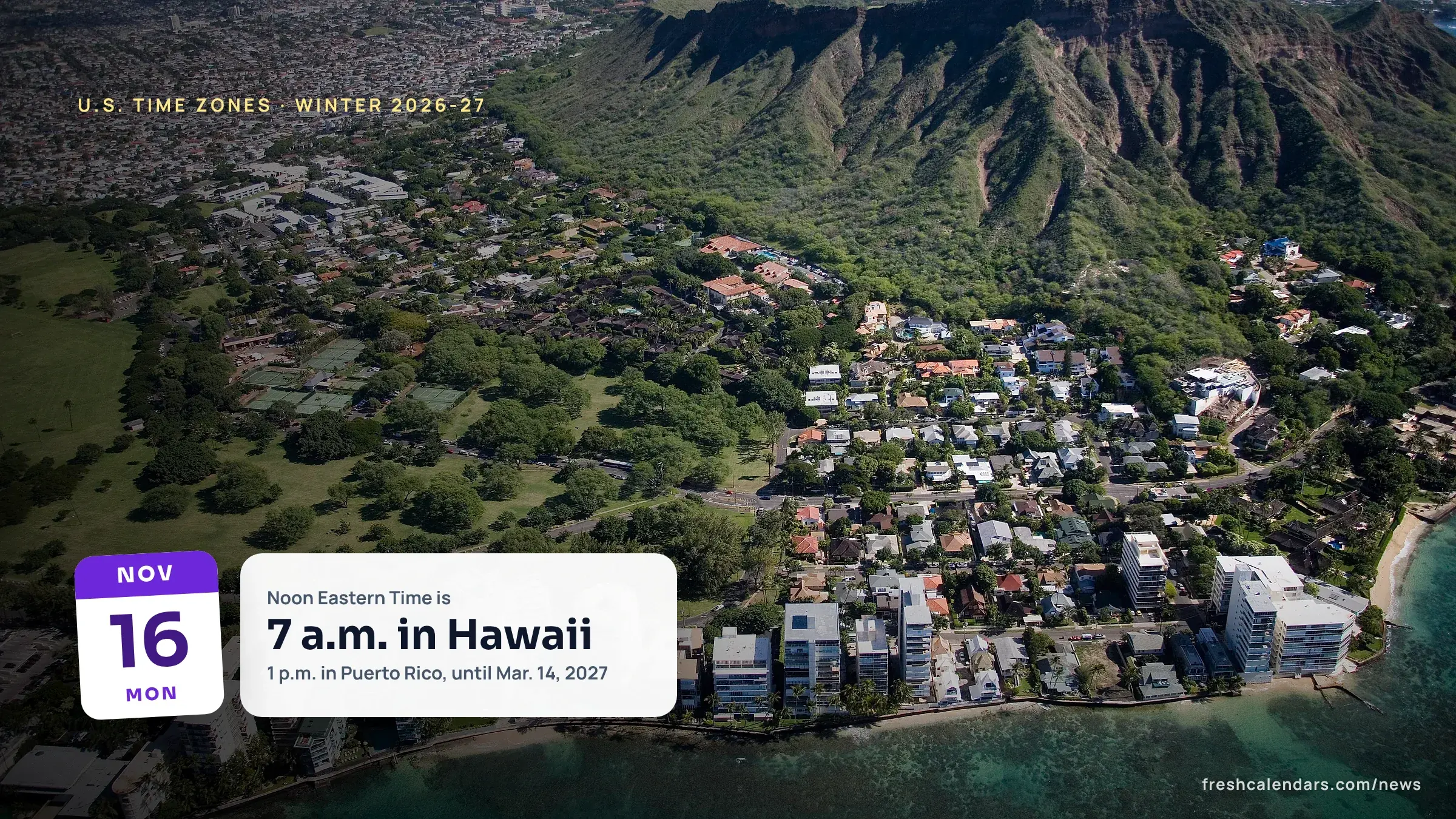
From Nov. 1, 2026, noon ET is 9 a.m. Pacific, 8 a.m. in Alaska and 7 a.m. in Hawaii. An hour-by-hour chart for all nine U.S. zones, plus a free printable.

Published 5 min read
In this article
From Nov. 1, 2026 to March 14, 2027, when it is noon Eastern Time (ET) it is 11 a.m. Central Time (CT), 10 a.m. Mountain Time (MT) and in Arizona, 9 a.m. Pacific Time (PT), 8 a.m. in Alaska, 7 a.m. in Hawaii and 1 p.m. in Puerto Rico, under the nine zones set by federal law, 15 U.S.C. 263, as published by Cornell Law School’s Legal Information Institute. The conversions are computed with the Internet Assigned Numbers Authority (IANA) Time Zone Database. Below are the winter and summer rows side by side, an hour-by-hour chart and what changes on March 14, 2027.
Noon ET in every U.S. time zone, winter and summer
The table converts one fixed moment, noon ET. Winter is Nov. 1, 2026 to March 14, 2027. Summer is March 14 to Nov. 7, 2027, the stretch in which 15 U.S.C. 260a runs daylight saving time, from 2 a.m. on the second Sunday of March to the first Sunday of November.
| Place | When it is noon ET, winter | When it is noon ET, summer |
|---|---|---|
| Puerto Rico and U.S. Virgin Islands | 1 p.m. | noon |
| Central | 11 a.m. | 11 a.m. |
| Mountain | 10 a.m. | 10 a.m. |
| Arizona | 10 a.m. | 9 a.m. |
| Pacific | 9 a.m. | 9 a.m. |
| Alaska | 8 a.m. | 8 a.m. |
| Adak, Aleutian Islands | 7 a.m. | 7 a.m. |
| Hawaii | 7 a.m. | 6 a.m. |
| American Samoa | 6 a.m. | 5 a.m. |
| Guam and Northern Mariana Islands | 3 a.m. the next day | 2 a.m. the next day |
All values are computed with the IANA database. Adak, in the Aleutians, uses daylight time, so it keeps the same gap to ET in both seasons. Hawaii, Arizona, Puerto Rico, the U.S. Virgin Islands, Guam, the Northern Mariana Islands and American Samoa keep the same clock time all year in the IANA database.
Which nine zones does federal law name?
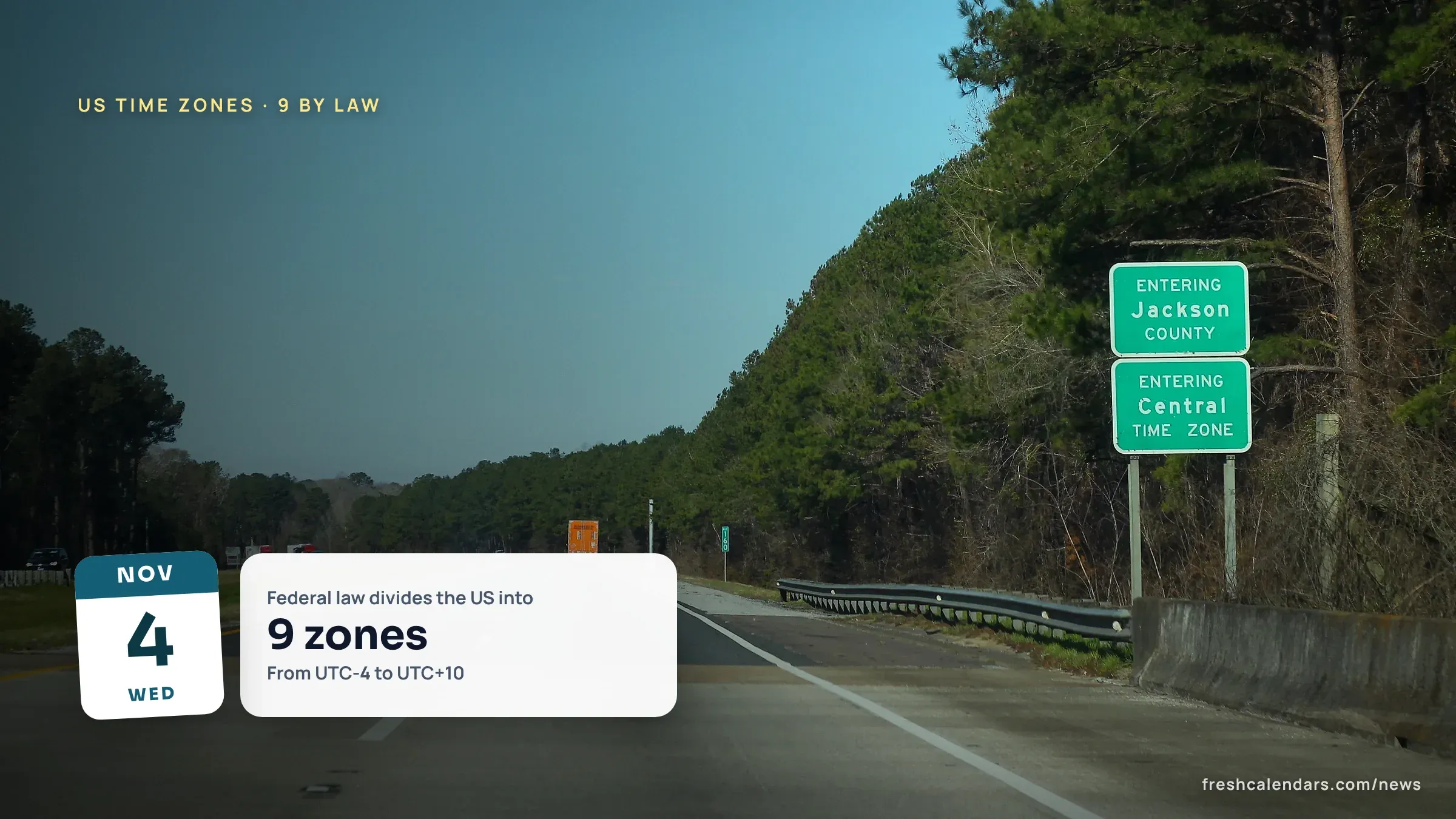
Section 263 lists the standard time zones of the United States. The names below are the statute’s; the places are from the IANA database.
| Zone in 15 U.S.C. 263 | Places in this story |
|---|---|
| Atlantic standard time | Puerto Rico, U.S. Virgin Islands |
| Eastern standard time | The ET reference for every row here |
| Central standard time | CT rows |
| Mountain standard time | MT rows; Arizona uses the same winter clock |
| Pacific standard time | PT rows |
| Alaska standard time | Alaska rows |
| Hawaii-Aleutian standard time | Hawaii, Adak |
| Samoa standard time | American Samoa, UTC minus 11 |
| Chamorro standard time | Guam, Northern Mariana Islands, UTC plus 10 |
Atlantic Standard Time (AST) appears first in the statute’s list. Samoa Standard Time (SST) is Coordinated Universal Time (UTC) minus 11 hours, and Chamorro Standard Time (ChST) is UTC plus 10 hours, according to the IANA database. Chamorro was added by Public Law 106-564 on Dec. 23, 2000. A 1983 law renamed “Yukon” to Alaska, “Alaska-Hawaii” to Hawaii-Aleutian and “Bering” to Samoa.
Hour-by-hour converter chart for winter 2026-27
Read across from the ET hour. “Next day” marks a zone that has already passed midnight. The chart holds from Nov. 1, 2026 to March 14, 2027; in that stretch Arizona shows the same hour as Mountain.
| ET | Puerto Rico | CT | MT and Arizona | PT | Alaska | Hawaii | Samoa | Guam |
|---|---|---|---|---|---|---|---|---|
| 6 a.m. | 7 a.m. | 5 a.m. | 4 a.m. | 3 a.m. | 2 a.m. | 1 a.m. | 12 a.m. | 9 p.m. |
| 7 a.m. | 8 a.m. | 6 a.m. | 5 a.m. | 4 a.m. | 3 a.m. | 2 a.m. | 1 a.m. | 10 p.m. |
| 8 a.m. | 9 a.m. | 7 a.m. | 6 a.m. | 5 a.m. | 4 a.m. | 3 a.m. | 2 a.m. | 11 p.m. |
| 9 a.m. | 10 a.m. | 8 a.m. | 7 a.m. | 6 a.m. | 5 a.m. | 4 a.m. | 3 a.m. | 12 a.m. next day |
| 10 a.m. | 11 a.m. | 9 a.m. | 8 a.m. | 7 a.m. | 6 a.m. | 5 a.m. | 4 a.m. | 1 a.m. next day |
| 11 a.m. | noon | 10 a.m. | 9 a.m. | 8 a.m. | 7 a.m. | 6 a.m. | 5 a.m. | 2 a.m. next day |
| noon | 1 p.m. | 11 a.m. | 10 a.m. | 9 a.m. | 8 a.m. | 7 a.m. | 6 a.m. | 3 a.m. next day |
| 1 p.m. | 2 p.m. | noon | 11 a.m. | 10 a.m. | 9 a.m. | 8 a.m. | 7 a.m. | 4 a.m. next day |
| 2 p.m. | 3 p.m. | 1 p.m. | noon | 11 a.m. | 10 a.m. | 9 a.m. | 8 a.m. | 5 a.m. next day |
| 3 p.m. | 4 p.m. | 2 p.m. | 1 p.m. | noon | 11 a.m. | 10 a.m. | 9 a.m. | 6 a.m. next day |
| 4 p.m. | 5 p.m. | 3 p.m. | 2 p.m. | 1 p.m. | noon | 11 a.m. | 10 a.m. | 7 a.m. next day |
| 5 p.m. | 6 p.m. | 4 p.m. | 3 p.m. | 2 p.m. | 1 p.m. | noon | 11 a.m. | 8 a.m. next day |
| 6 p.m. | 7 p.m. | 5 p.m. | 4 p.m. | 3 p.m. | 2 p.m. | 1 p.m. | noon | 9 a.m. next day |
| 7 p.m. | 8 p.m. | 6 p.m. | 5 p.m. | 4 p.m. | 3 p.m. | 2 p.m. | 1 p.m. | 10 a.m. next day |
| 8 p.m. | 9 p.m. | 7 p.m. | 6 p.m. | 5 p.m. | 4 p.m. | 3 p.m. | 2 p.m. | 11 a.m. next day |
| 9 p.m. | 10 p.m. | 8 p.m. | 7 p.m. | 6 p.m. | 5 p.m. | 4 p.m. | 3 p.m. | noon next day |
| 10 p.m. | 11 p.m. | 9 p.m. | 8 p.m. | 7 p.m. | 6 p.m. | 5 p.m. | 4 p.m. | 1 p.m. next day |
| 11 p.m. | 12 a.m. next day | 10 p.m. | 9 p.m. | 8 p.m. | 7 p.m. | 6 p.m. | 5 p.m. | 2 p.m. +1 |
What changes on March 14, 2027?
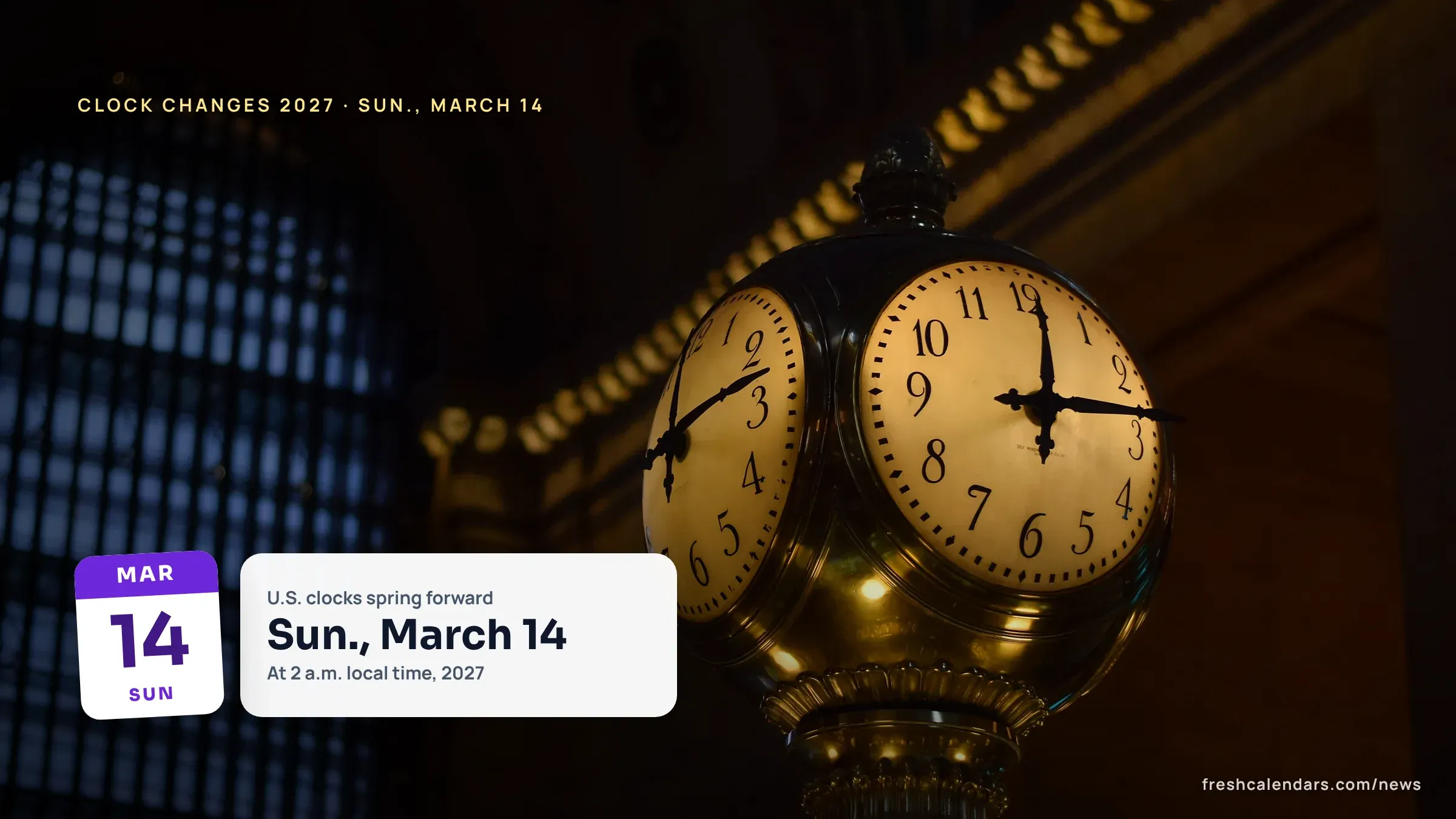
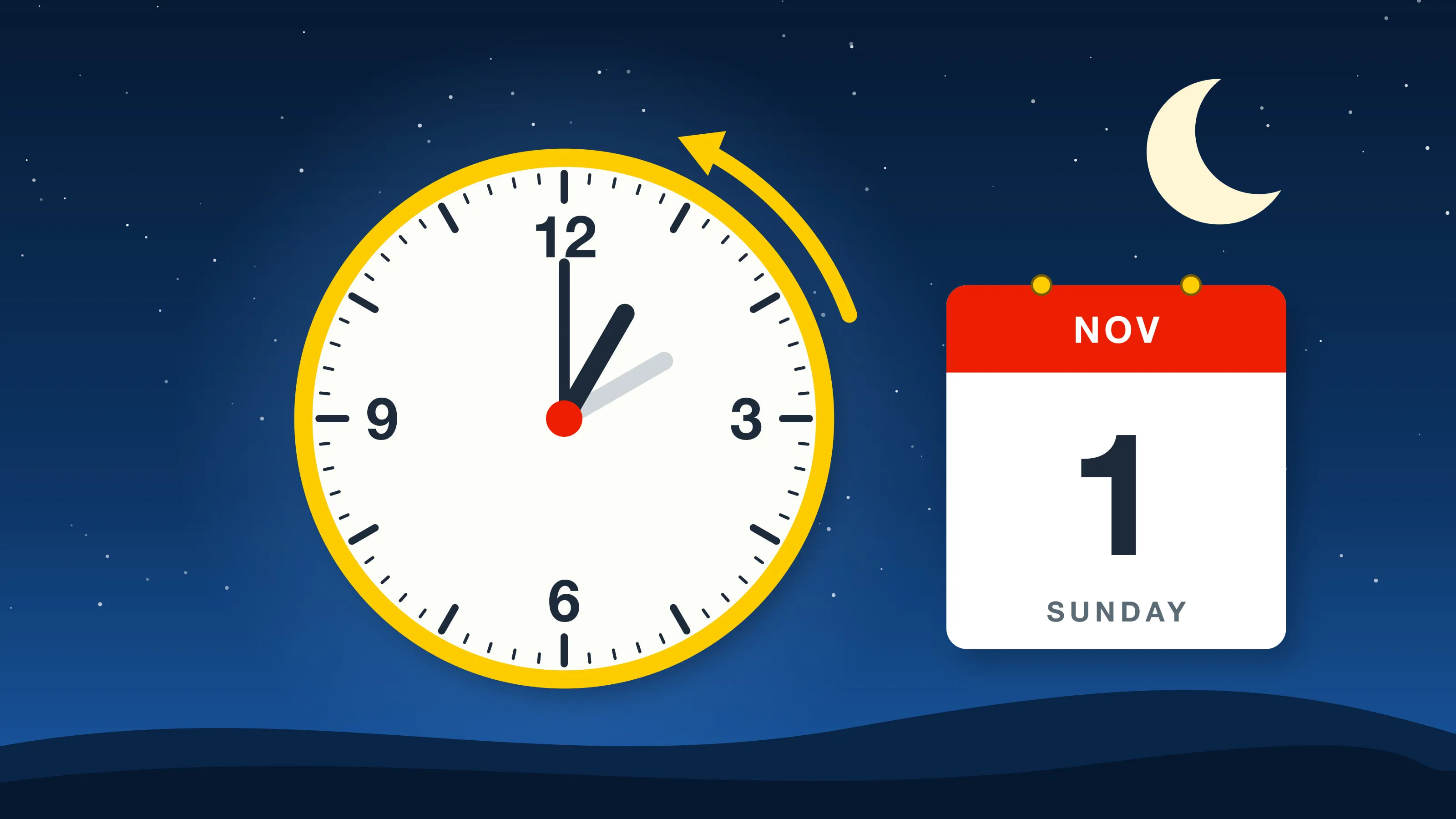
At 2 a.m. on Sunday, March 14, 2027, the second Sunday of March, daylight saving time starts under 15 U.S.C. 260a. Computed with the IANA database, the gap to ET shifts for the zones that do not move.
| Place | Moves on March 14, 2027? | Winter gap to ET | Summer gap to ET |
|---|---|---|---|
| Eastern, Central, Mountain, Pacific, Alaska, Adak | Yes, forward 1 hour | Unchanged within the group | Unchanged within the group |
| Puerto Rico, U.S. Virgin Islands | No | 1 hour ahead | Same time |
| Arizona | No | 2 hours behind | 3 hours behind |
| Hawaii | No | 5 hours behind | 6 hours behind |
| American Samoa | No | 6 hours behind | 7 hours behind |
| Guam, Northern Mariana Islands | No | 15 hours ahead | 14 hours ahead |
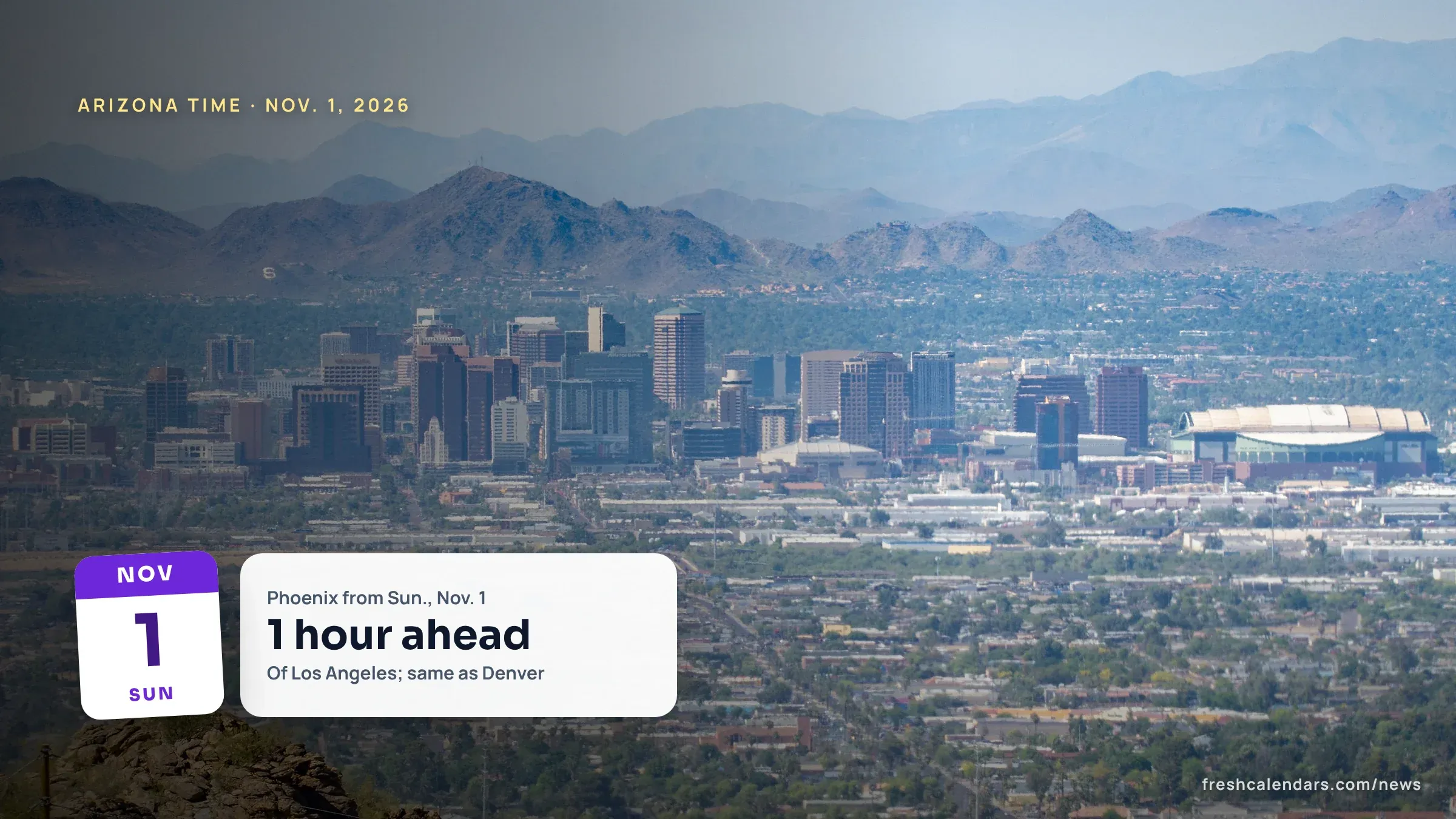
Arizona’s entry covers the state except the Navajo Nation, which the IANA database lists separately. For how Phoenix compares with California, see the Arizona time story. The date itself is covered in clock changes in 2027, and the fall change in daylight saving time ends Nov. 1, 2026. Mark Nov. 1 on the November 2026 printable calendar and March 14 on the March 2027 printable calendar.
Which states can skip daylight saving time?
Under section 260a a State “may by law exempt itself” if the entire State observes standard time, and it has a separate rule for states in more than one zone. The statute describes the mechanism only; the clocks that stay fixed in the tables above come from the IANA database.
U.S. time zone converter chart to print
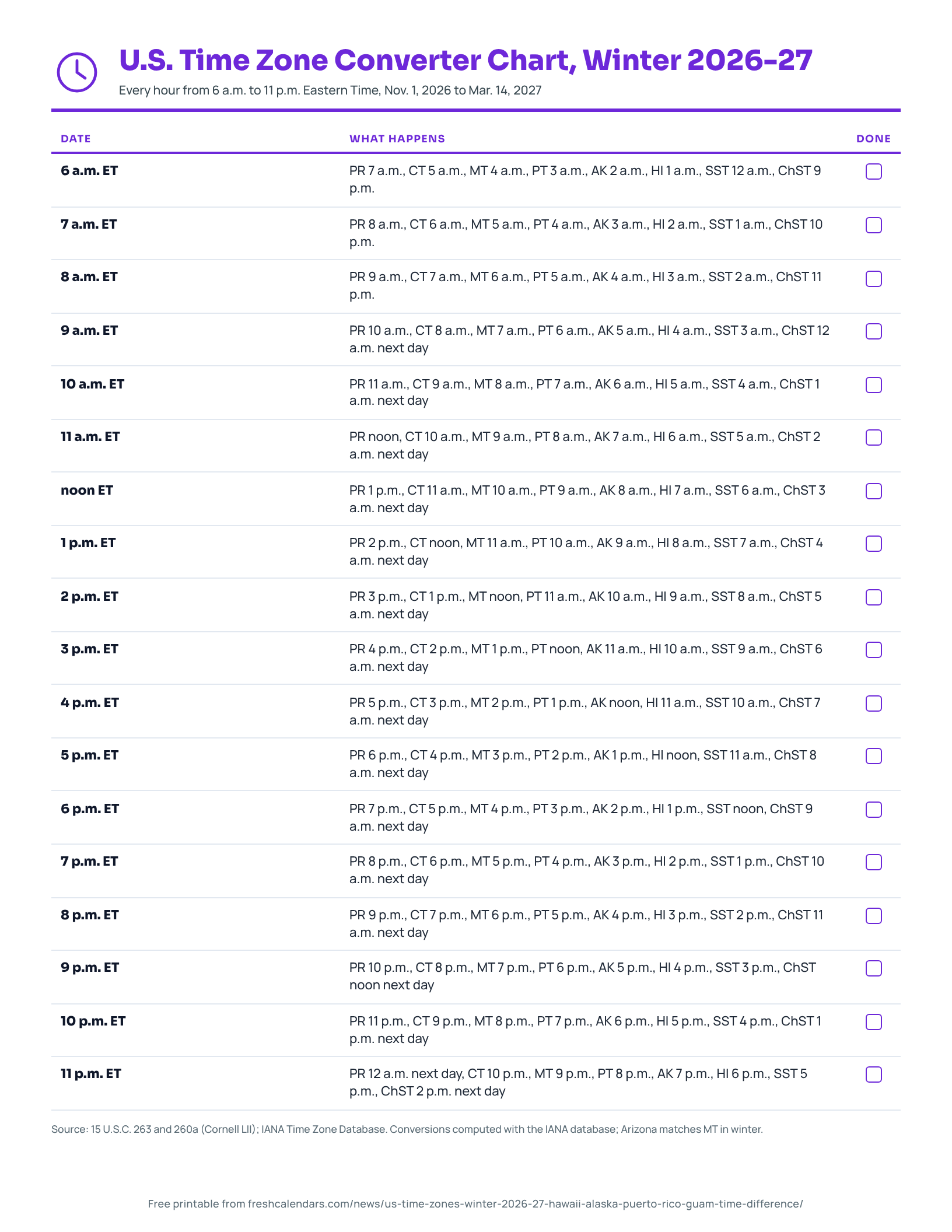
The free printable lists the same 18 ET hours with every zone’s winter time on one Letter page. It covers Nov. 1, 2026 to March 14, 2027 only; summer values differ for Puerto Rico, Arizona, Hawaii, Samoa and Guam, as the tables above show.
Free printable downloads
Every template is free, needs no sign-up and prints on US Letter paper. Choose PDF for printing or PNG for screens and documents.
U.S. Time Zone Converter Chart printables
-
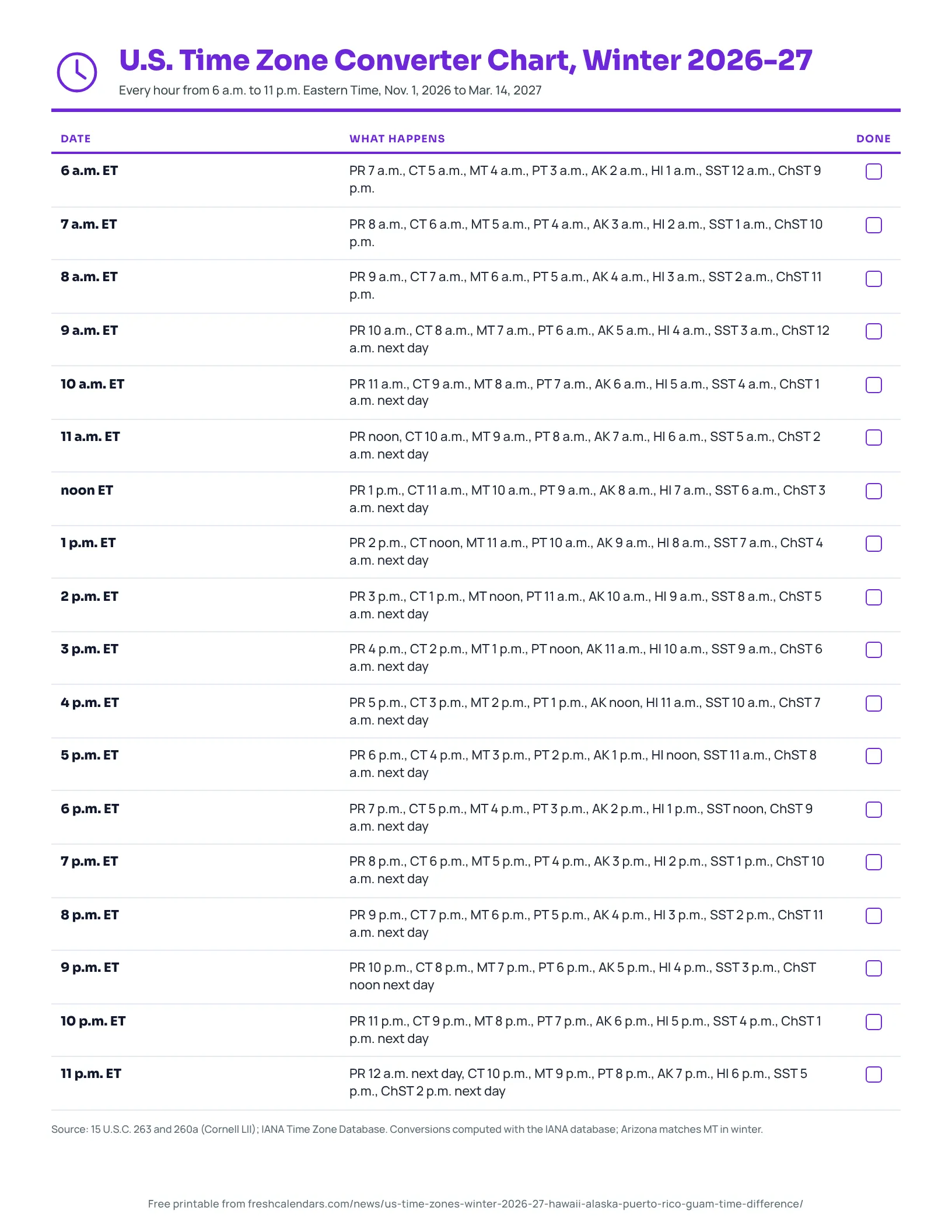
U.S. Time Zone Converter Chart, Winter 2026-27
One-page chart converting every hour from 6 a.m. to 11 p.m. Eastern Time to Puerto Rico, Central, Mountain, Pacific, Alaska, Hawaii, Samoa and Guam, winter 2026-27.
Frequently asked questions
Is Hawaii always 5 hours behind New York?
No. Hawaii is 5 hours behind New York in winter and 6 hours behind from March 14 to Nov. 7, 2027, because New York changes its clocks and Hawaii does not, computed with the IANA Time Zone Database.
Does Alaska change its clocks?
Yes. Alaska is 4 hours behind ET in both winter and summer, so the gap to New York stays the same, computed with the IANA database.
What time is it in Guam when it is evening in New York?
Guam is already into the next day. At 8 p.m. ET it is 11 a.m. the next day in Guam in winter, and 10 a.m. the next day in summer.
Sources
- 15 U.S. Code 263 - Time zones (Legal Information Institute, Cornell Law School, 2026-11-16)
- 15 U.S. Code 260a - Advancement of time or changes in time within time belts (Legal Information Institute, Cornell Law School, 2026-11-16)
- Time Zone Database (Internet Assigned Numbers Authority (IANA), 2026-11-16)
Related news
More in Time Change
All Time Change stories →- US-UK Time Difference, Winter 2026-27: New York 5 Hours Behind London
- Clocks Go Forward 2027: Sunday 28 March at 1am GMT, to 2am BST
- BC Sunrise Time: Vancouver 8:01 a.m. Nov. 1, Latest 9:08 a.m.
- Smoke Alarm Check: Test Monthly, Replace Every 10 Years, Printable
- Halloween on a Saturday After 2026: Next Time Is 2037
Trending now
- Black Friday Ads 2026: Date Is Nov. 27, Walmart Deals Nov. 23-29
- Thanksgiving Travel 2026: Best Days to Fly and Drive, Nov. 21 to 30
- November 2026 Meteor Showers: Leonids Nov. 16-17, Taurids Nov. 4-5
- New Movies in Theaters November 2026: Hunger Games on Nov. 20
- Costco Black Friday 2026: Nov. 27-30 Savings, Deals From Nov. 16