
Federal Funding Runs Out Dec. 11: The Next Shutdown Deadline Lands Five Weeks After the Midterms
A stopgap law signed Sept. 2 funds federal agencies through Friday, Dec. 11, 2026. What the deadline means and the calendar Congress faces after Nov. 3.
In this article
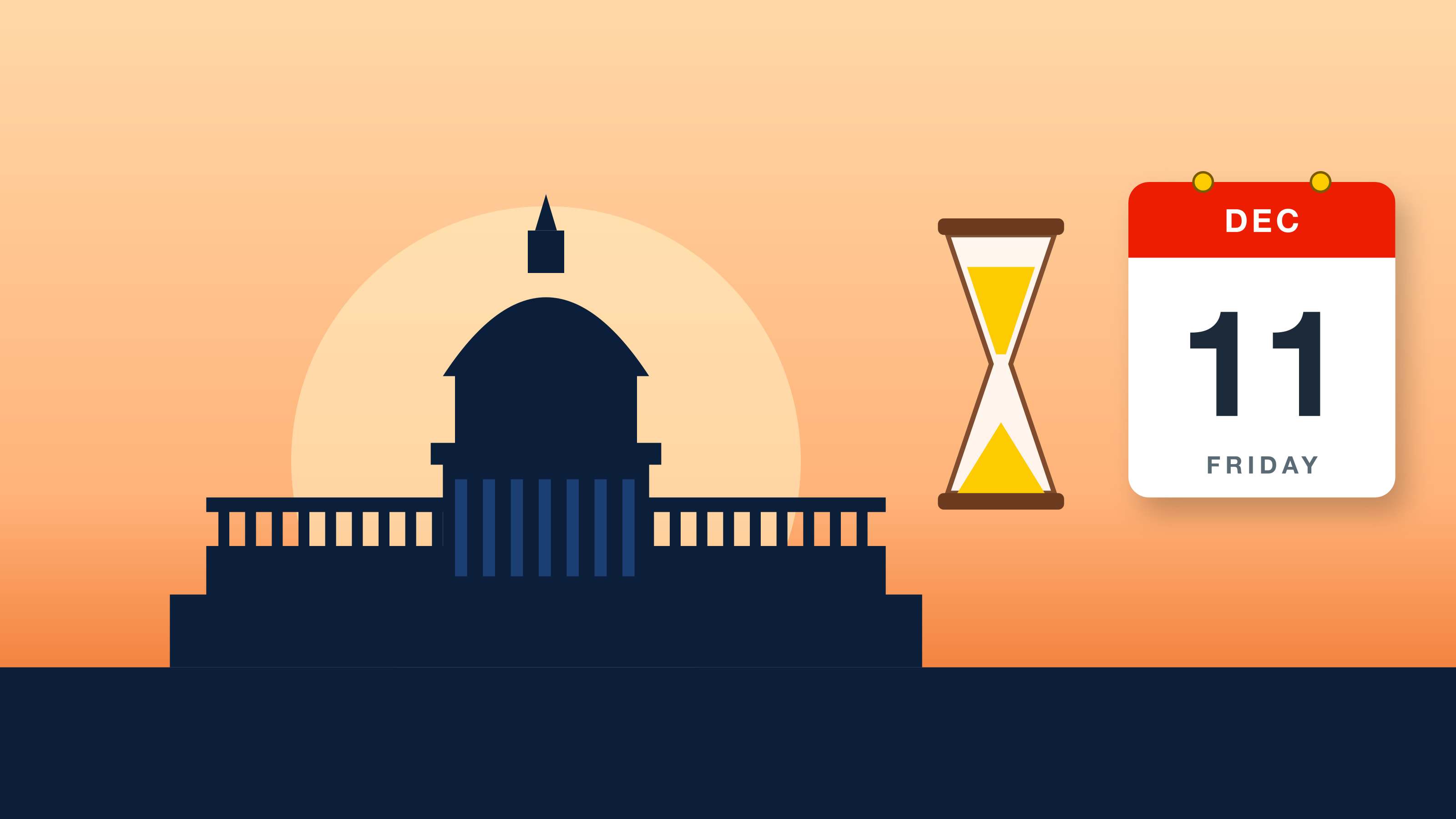
The federal government is funded through Friday, Dec. 11, 2026, under a stopgap spending law President Donald Trump signed on Sept. 2. That makes Dec. 11 the next shutdown deadline. It falls five weeks after the Nov. 3 midterm election, in the lame-duck session, when a Congress whose members may already have lost their seats has to finish the year’s spending bills.
What Congress passed
The law is H.R. 6500, the Continuing Appropriations and Extensions Act, 2027. The House agreed to the Senate’s version on Sept. 1 by a vote of 370 to 48, according to the House Clerk’s roll call. Republicans voted 193 to 19 in favor and Democrats 176 to 29, with one independent voting yes. The White House announced the signing the next day.
According to the White House notice, the law:
- funds federal agencies through Dec. 11, 2026, with a continuing resolution, and
- extends authorities for a range of programs, including surface transportation and veterans programs.
A continuing resolution generally keeps agencies operating at the previous year’s spending levels. The Association of State and Territorial Health Officials’ summary says this one holds fiscal 2026 levels. Fiscal year 2027 began on Oct. 1, and the stopgap meant there was no lapse that day.
The deadline in detail
| Item | Date |
|---|---|
| Stopgap law signed | Wednesday, Sept. 2, 2026 |
| Fiscal year 2027 began | Thursday, Oct. 1, 2026 |
| Election Day | Tuesday, Nov. 3, 2026 |
| Thanksgiving | Thursday, Nov. 26, 2026 |
| Current funding ends | Friday, Dec. 11, 2026, at the end of the day |
| 119th Congress ends | Sunday, Jan. 3, 2027 |
If neither full-year spending bills nor another stopgap become law by the end of Dec. 11, agencies without funding would start shutting down at 12:01 a.m. on Saturday, Dec. 12.
A short lame-duck calendar
Between the election and Dec. 11 there are about five working weeks, and Thanksgiving week falls in the middle. House Appropriations Committee Chairman Tom Cole of Oklahoma has said the time before the deadline is not enough to finish full-year bills, Fox News reported, which raises the odds of another stopgap.
Spending is not the only item waiting. The Senate has also not voted on the House-passed bill to make daylight saving time permanent; our daylight saving time report covers that bill. Any bill not passed by Jan. 3, 2027 dies with the 119th Congress.
What a lapse would affect
Each agency publishes a contingency plan listing which work continues during a lapse in funding. In past shutdowns:
- Social Security and Supplemental Security Income payments continued.
- The U.S. Postal Service, which is funded by its own revenue, kept delivering mail.
- Many federal employees were furloughed, and others worked without pay until funding returned.
The most recent full shutdown, from Oct. 1 to Nov. 12, 2025, lasted 43 days, the longest on record.
Dates to watch
- Tuesday, Nov. 3: Election Day. The results shape the lame-duck negotiations.
- Thursday, Nov. 26: Thanksgiving; Congress typically recesses that week.
- Friday, Dec. 11: Funding deadline.
- Sunday, Jan. 3, 2027: The 119th Congress ends and the 120th begins.
Frequently asked questions
When is the next government shutdown deadline?
Friday, Dec. 11, 2026. A continuing resolution signed on Sept. 2, 2026 funds federal agencies through that date.
What law is funding the government now?
H.R. 6500, the Continuing Appropriations and Extensions Act, 2027. President Trump signed it on Sept. 2, 2026, after the House agreed to the Senate's changes 370-48 on Sept. 1.
Is the government open right now?
Yes. The new fiscal year began on Oct. 1, 2026, and the stopgap law kept agencies funded without a lapse.
What happens if Congress misses Dec. 11?
Agencies without funding would begin a shutdown under their contingency plans. In past shutdowns, Social Security payments continued and the Postal Service, which runs on its own revenue, kept delivering mail.
Sources
- Congressional Bill H.R. 6500 Signed into Law (The White House, 2026-09-02)
- Roll Call 286, H.R. 6500, 119th Congress (Office of the Clerk, U.S. House of Representatives, 2026-09-01)
- House Sends Bill to President Trump's Desk, Averts Partisan October Shutdown (House Committee on Appropriations)
- Trump signs government funding bill, avoiding a shutdown ahead of midterms (Fox News)
- Summary of FY27 Continuing Resolution (Association of State and Territorial Health Officials)
Related news
 Julian Date Calendar 2027 and 2026: Free Printable Day-of-Year Charts, Date Codes and Julian Day Numbers
 Medicare Open Enrollment Runs Through Dec. 7: Key 2027 Dates and Who Gets the One-Time $90 Part B Rebate
 Oct. 19 Is the Last Day to Register in California, Pennsylvania and Michigan; Early Voting Opens in Texas