2026 Midterm Elections: 35 Senate Seats, 435 House Seats, Tracker
The Nov. 3, 2026 midterm ballot had 35 Senate seats, all 435 House seats and 36 governors. Results dates by state and a printable tracker.

Published Updated 5 min read
In this article
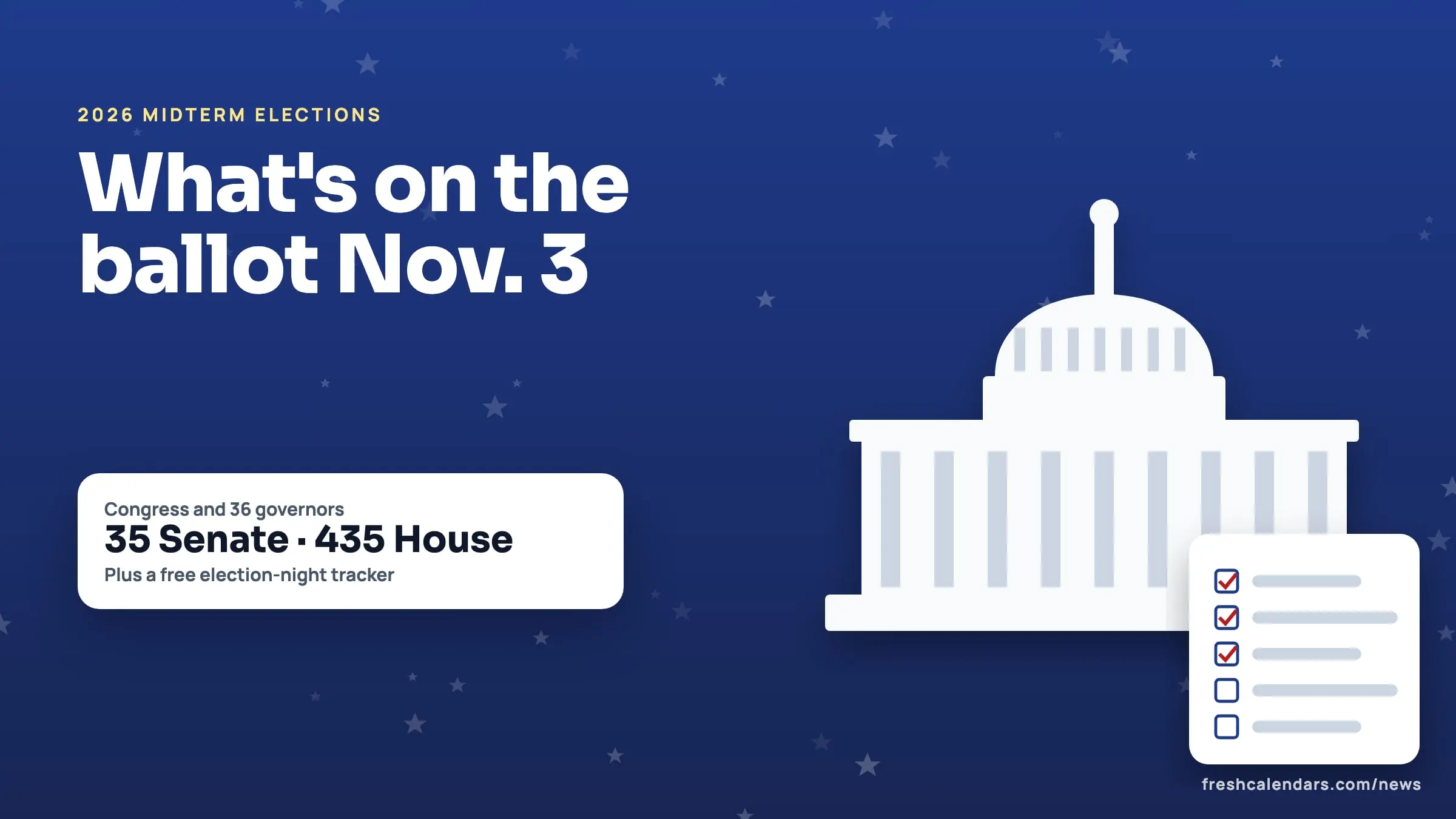
The 2026 midterm elections on Tuesday, Nov. 3 will decide 35 of the 100 seats in the U.S. Senate, all 435 seats in the House of Representatives and 36 governorships. Voters will also elect thousands of state legislators and decide 145 statewide ballot measures. Here is what is on the ballot nationwide, when the results become official and a free printable tracker for election night.
As polls close, follow the results on our Election Night 2026 live blog, which carries a map, a scoreboard and tables for all 35 Senate and 36 governor races.
The Senate: 35 seats
Thirty-three seats are up on the regular six-year schedule (the Class 2 seats), and two more are special elections:
- Ohio: JD Vance resigned in January 2025 to become vice president.
- Florida: Marco Rubio resigned in January 2025 to become secretary of state.
In both states the governor appointed a senator to serve until voters choose someone for the rest of the term, which ends in January 2029.
The full list of states with a Senate race: Alabama, Alaska, Arkansas, Colorado, Delaware, Florida (special), Georgia, Idaho, Illinois, Iowa, Kansas, Kentucky, Louisiana, Maine, Massachusetts, Michigan, Minnesota, Mississippi, Montana, Nebraska, New Hampshire, New Jersey, New Mexico, North Carolina, Ohio (special), Oklahoma, Oregon, Rhode Island, South Carolina, South Dakota, Tennessee, Texas, Virginia, West Virginia and Wyoming.
The Senate now has 53 Republicans and 47 members who are Democrats or independents who caucus with Democrats, according to the Senate’s party division page. Some large states have no Senate race this year, including California, Pennsylvania, Arizona and New York.
The House: 435 seats
Every House seat is elected every two years. Voters in the District of Columbia and five territories also elect nonvoting delegates. Party counts in the House shift during a term as members resign or die, so check the Clerk of the House for the current breakdown.
Ten states have changed their congressional maps since summer 2025, according to the redistricting tracker of the National Conference of State Legislatures (NCSL): Alabama, California, Florida, Louisiana, Missouri, North Carolina, Ohio, Tennessee, Texas and Utah. California’s new districts came from Proposition 50, approved by voters in a special election in November 2025, and Missouri’s new map faces a veto referendum on the November 2026 ballot.
Governors: 36 states
The states electing a governor are Alabama, Alaska, Arizona, Arkansas, California, Colorado, Connecticut, Florida, Georgia, Hawaii, Idaho, Illinois, Iowa, Kansas, Maine, Maryland, Massachusetts, Michigan, Minnesota, Nebraska, Nevada, New Hampshire, New Mexico, New York, Ohio, Oklahoma, Oregon, Pennsylvania, Rhode Island, South Carolina, South Dakota, Tennessee, Texas, Vermont, Wisconsin and Wyoming. Several, including California, Michigan, Florida, Georgia and Ohio, have open seats because the governor is term-limited.
Down the ballot
- State legislatures: 88 of 99 chambers in 46 states, about 6,100 seats, according to NCSL. Louisiana, Mississippi, New Jersey and Virginia hold legislative elections in odd years.
- Ballot measures: 145 statewide measures are on Nov. 3 ballots, out of 164 certified in 2026, according to Ballotpedia.
- State offices and courts: attorneys general, secretaries of state and state supreme court seats are on many ballots.
For what is on specific state ballots, see our guides to California’s 14 propositions, Florida’s amendments and Senate special, Georgia, Michigan, Pennsylvania and Arizona. To see your own ballot, use our guide to finding your sample ballot by ZIP code.
Election night and after
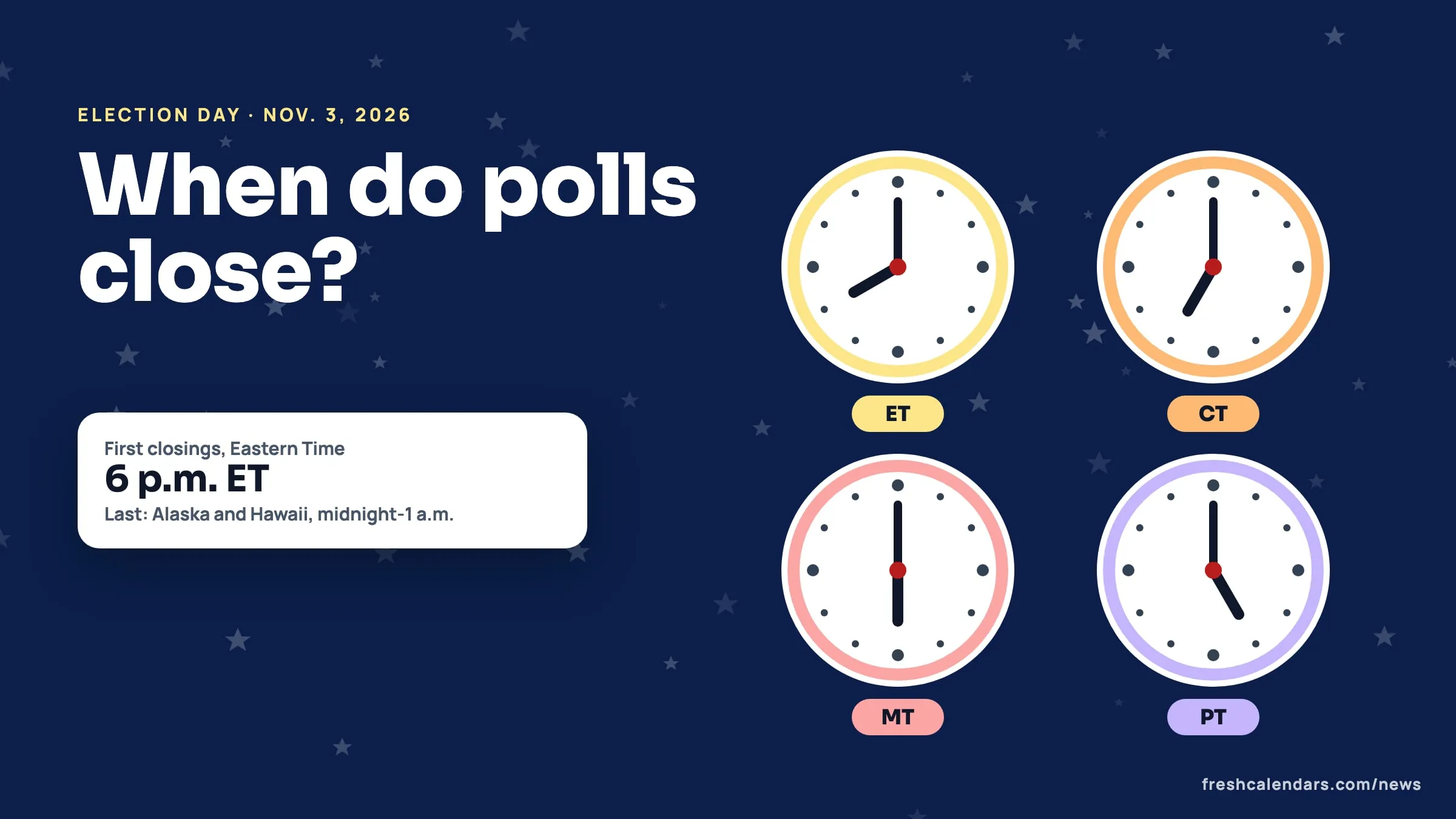
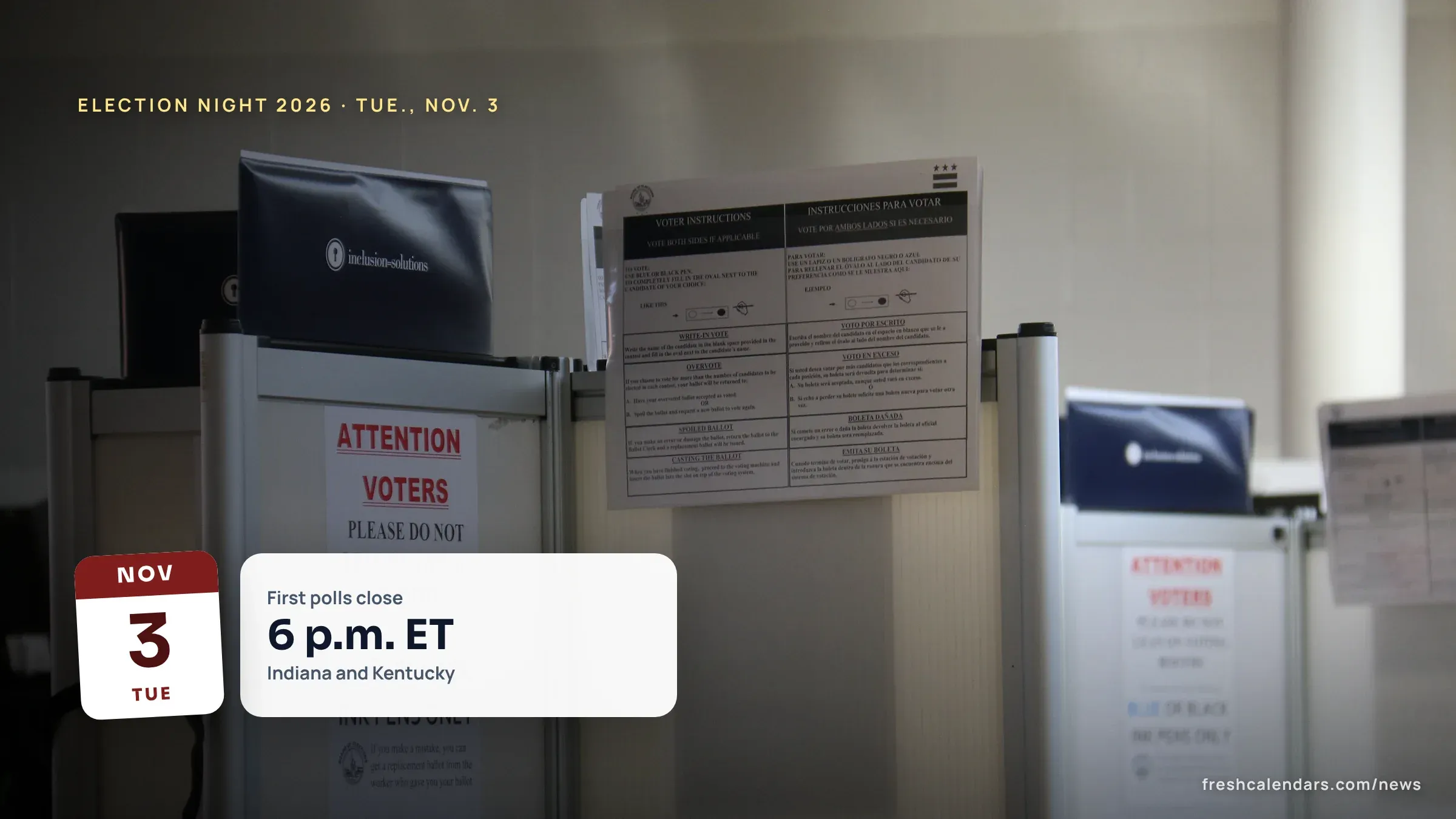
Polls close from 6 p.m. Eastern in parts of Indiana and Kentucky to 1 a.m. Eastern in Alaska’s Aleutian Islands; see poll closing times by state. Some states count faster than others. Pennsylvania may not begin processing mail ballots until 7 a.m. on Election Day, and California counties have up to 30 days to complete their count, with the state certifying results after that. For the two largest states, see our guides to Texas election results and California election results. New to this? Read what a midterm election is and what it decides.
| Date | What happens |
|---|---|
| Tue., Nov. 3 | Election Day |
| Nov. 4-17 | Late-arriving postmarked ballots counted in grace-period states |
| Late November-December | States certify results |
| Tue., Dec. 1 | Georgia runoffs, if no candidate won a majority |
| Sun., Jan. 3, 2027 | 120th Congress convenes, unless Congress sets another day by law |
| January 2027 | Most new governors take office |
Official results and certification dates by state
Results posted on election night are unofficial until each state certifies them. The table links the official results page for six states and lists certification dates; the sources and rules behind each date are in our certification deadlines by state story.
| State | Official results page | State certification |
|---|---|---|
| Florida | Florida Department of State | Counties file official results by noon Mon., Nov. 16 |
| Georgia | Georgia Secretary of State | Check the Secretary of State |
| Minnesota | Minnesota Secretary of State | Thu., Nov. 19 (State Canvassing Board) |
| Texas | State election office | State canvass Sat., Nov. 21 to Sun., Dec. 6 |
| Michigan | State election office | Mon., Nov. 23 |
| Arizona | State election office | Mon., Nov. 23 |
| Pennsylvania | Pennsylvania Department of State | Counties certify by Mon., Nov. 23; state date not on the department’s calendar |
| North Carolina | North Carolina State Board of Elections | Tue., Nov. 24 (state canvass scheduled) |
| Nevada | State election office | Tue., Nov. 24 |
| Wisconsin | State election office | Tue., Dec. 1 |
| Washington | State election office | Thu., Dec. 3 |
| Virginia | Virginia Department of Elections | Mon., Dec. 7 (State Board meets by) |
| Oregon | State election office | Thu., Dec. 10 |
| California | State election office | Fri., Dec. 11 |
Use the tracker
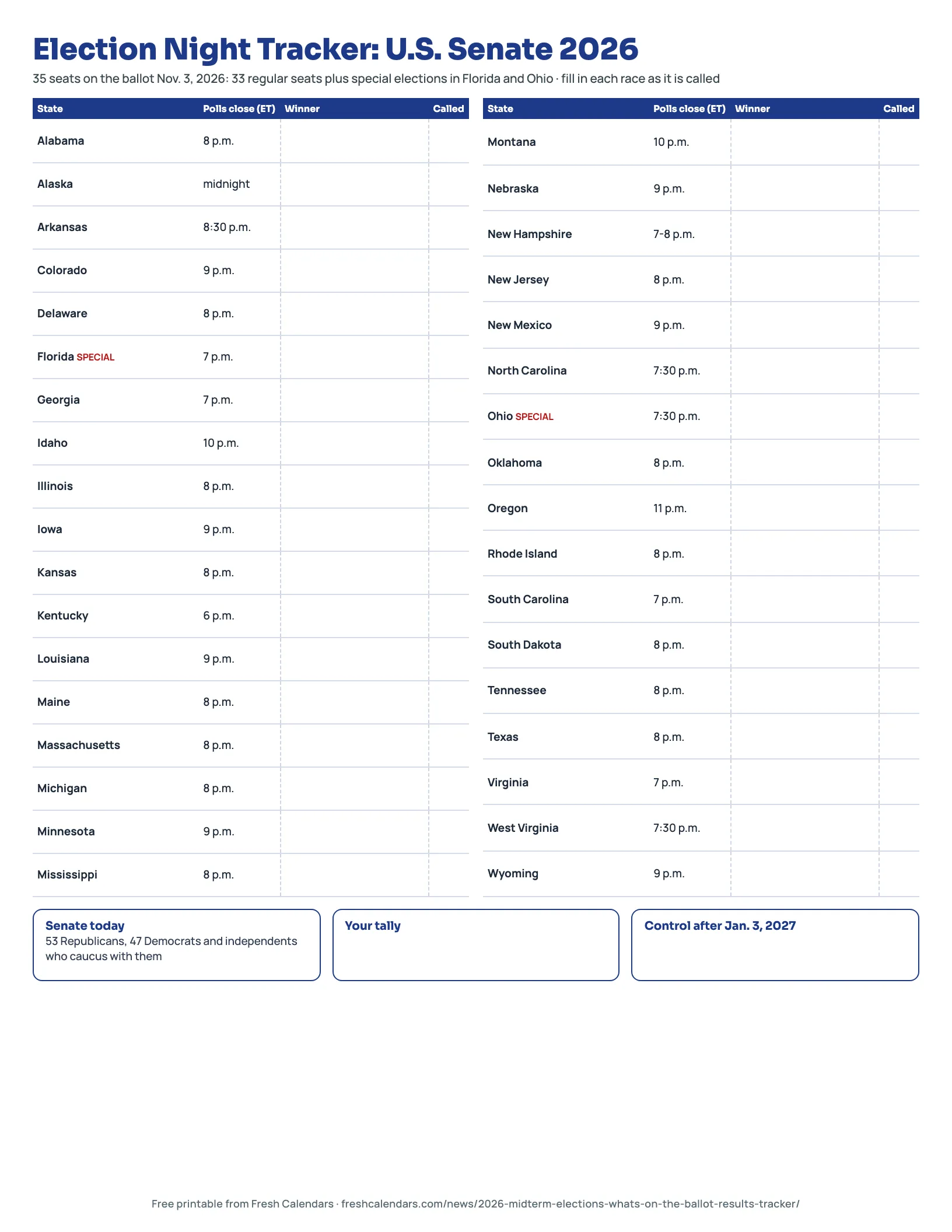
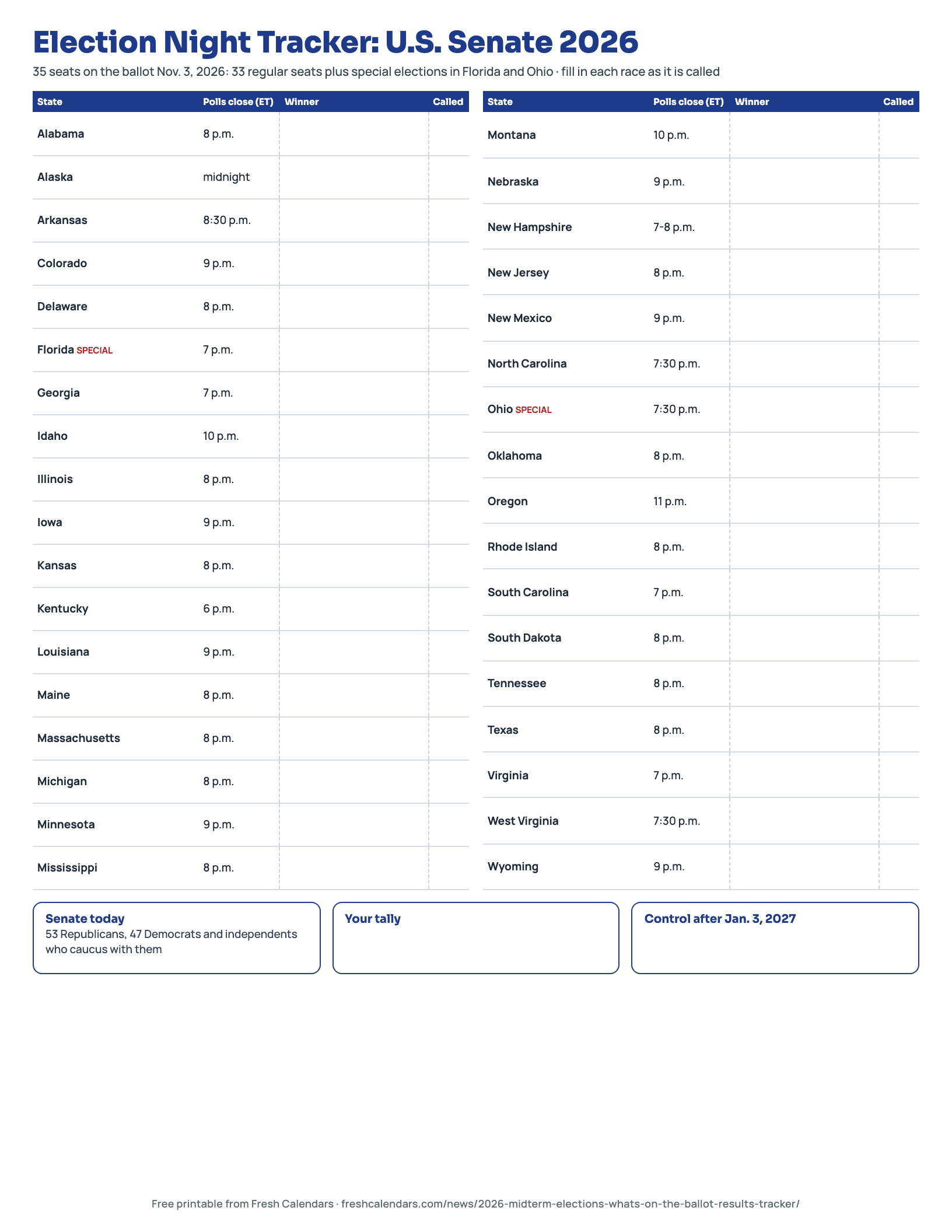
The free two-page printable below lists every Senate and governor’s race with the time the state’s polls close in Eastern Time, plus blank columns to write in the winner and when the race was called. Keep it next to the TV or your phone on election night, and read when results are expected in each state before you settle in; and use our November and December printable calendars for the dates that follow.
Not registered yet? California and Michigan, among other states, still allow registration in person through Election Day; see the voter registration deadline report. Early in-person voting has ended in Texas, Connecticut and North Carolina; see the early voting windows by state. If you need a way to get there, our list of free and discounted rides to the polls covers Lyft, Uber and transit.
Free printable downloads
Every template is free, needs no sign-up and prints on US Letter paper. Choose PDF for printing or PNG for screens and documents.
Election 2026 printables
-
Election Night Tracker 2026
Two pages: all 35 Senate races and all 36 governor's races with poll closing times in Eastern Time and space to note each winner.
Frequently asked questions
When is the 2026 midterm election?
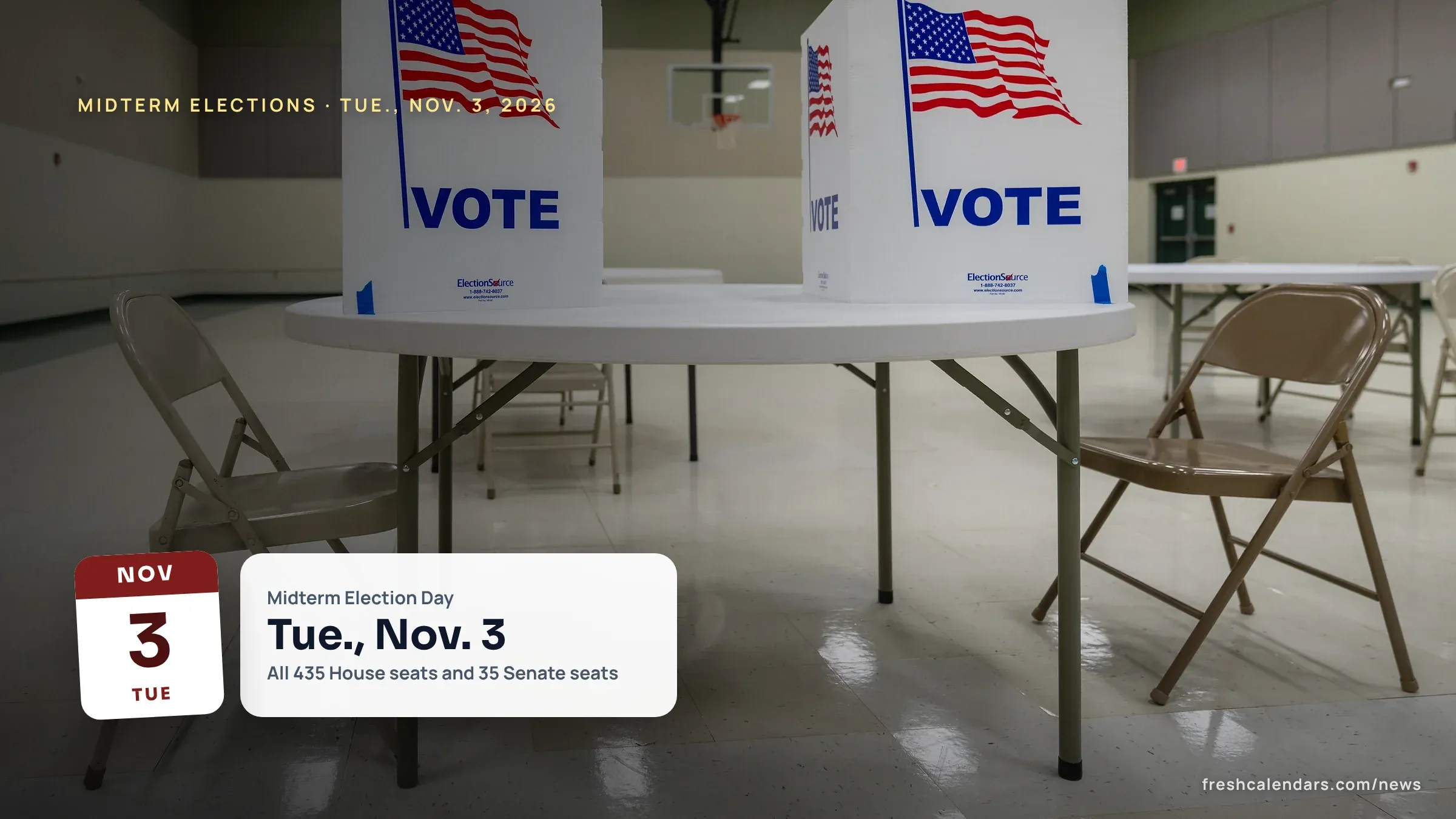
Tuesday, Nov. 3, 2026, which is tomorrow. Early in-person voting has ended in Texas, Connecticut and North Carolina.
How many Senate seats are up in 2026?
Thirty-five: the 33 regularly scheduled Class 2 seats plus special elections in Ohio and Florida. The Senate currently has 53 Republicans and 47 Democrats and independents who caucus with them.
Which states have governor races in 2026?
Thirty-six: Alabama, Alaska, Arizona, Arkansas, California, Colorado, Connecticut, Florida, Georgia, Hawaii, Idaho, Illinois, Iowa, Kansas, Maine, Maryland, Massachusetts, Michigan, Minnesota, Nebraska, Nevada, New Hampshire, New Mexico, New York, Ohio, Oklahoma, Oregon, Pennsylvania, Rhode Island, South Carolina, South Dakota, Tennessee, Texas, Vermont, Wisconsin and Wyoming.
Why are there special Senate elections in Ohio and Florida?
JD Vance resigned his Ohio seat to become vice president, and Marco Rubio resigned his Florida seat to become secretary of state, both in January 2025. Appointed senators hold the seats until voters choose someone to serve the rest of each term, which ends in January 2029.
When will we know who won?
Many races are called on election night, but close races and states with slow mail-ballot counts can take days. California counties have up to 30 days to finish counting, and Pennsylvania cannot start processing mail ballots until Election Day morning.
When does the new Congress start?
The 20th Amendment sets noon on Jan. 3 for the new Congress to convene unless Congress picks another day by law; Jan. 3, 2027 is a Sunday. Most new governors take office in January 2027, on dates set by each state.
Sources
- Party Division (U.S. Senate)
- 2026 State Legislative Races by State and Chamber (National Conference of State Legislatures)
- Changing the Maps: Tracking Mid-Decade Redistricting (National Conference of State Legislatures)
- Three measures certified, bringing the 2026 statewide total to 164 (Ballotpedia News)
- California's vote counting process (California Secretary of State)
- Election Results (Minnesota Secretary of State)
- Results (Virginia Department of Elections)
- 2026 General Election Calendar (Pennsylvania Department of State)
Related news
More in Elections
All Elections stories →- Virginia General Assembly 2027: Session Opens Wed., Jan. 13
- Florida Legislative Session 2027: March 2 to April 30, Committee Weeks
- Texas Legislative Session 2027: Jan. 12 to May 31 and Key Deadlines
- 2027 Governor Elections: Kentucky May 18, Mississippi Aug. 3
- Recount Rules 2026: Margins That Trigger One in 6 States
Trending now
- Closed for Veterans Day 2026: Post Offices Shut, Stocks Trade
- Veterans Day Free Meals 2026: 101 Chains and a Printable List
- King Tides Schedule 2026: California Nov. 24-26, Dec. 23-25
- BLS CPI Release Schedule: Nov. 10, 2026 at 8:30 a.m. ET
- Black Friday Ads 2026: Date Is Nov. 27, Walmart Deals Nov. 23-29