Planets in 2027: Jupiter Opposition Feb. 10, Mars Feb. 19, Saturn Oct. 17 in Eastern Time
Jupiter is at opposition Feb. 10, 2027, Mars Feb. 19 and Saturn Oct. 17 in Eastern Time (ET), per the National Astronomical Observatory of Japan (NAOJ).

Published 6 min read
In this article
- Planet events in 2027 by date, in Eastern Time
- When do the five planet oppositions of 2027 fall?
- How close is Mars at its Feb. 19, 2027 opposition?
- Jupiter and Mars: the February 2027 window
- Venus and Mercury in 2027: greatest elongation dates
- Why does another site list a different date for the same event?
Jupiter reaches opposition on Wednesday, Feb. 10, 2027, at 7:29 p.m. Eastern Standard Time (EST), Mars follows on Friday, Feb. 19, at 10:51 a.m. EST and Saturn on Sunday, Oct. 17, at 8:36 p.m. Eastern Daylight Time (EDT), according to the National Astronomical Observatory of Japan (NAOJ) table “Celestial Phenomena in 2027.” NAOJ lists its times in Japan Standard Time (JST), so we converted each one to Eastern Time (ET).
Of the 24 oppositions, greatest elongations and conjunctions with the Sun in NAOJ’s 2027 list, 14 fall on an earlier calendar date in the United States than in Japan. Print the 12 main dates on one page with the Planet Events 2027 printable, and mark them on a 2027 printable yearly calendar.
Planet events in 2027 by date, in Eastern Time
Eastern Time is EST until Sunday, March 14, 2027, EDT from March 14 to Nov. 7, and EST again after that. The conversion is JST minus 14 hours in EST and minus 13 hours in EDT. NAOJ gives some events only to the hour (“03h”); those rows say “about.”
| Date (Eastern) | Time (Eastern) | Planet | Event | NAOJ date and time (JST) |
|---|---|---|---|---|
| Fri., Jan. 1 | 12:08 p.m. EST | Mercury | Superior conjunction | Jan. 2, 02:08 |
| Sun., Jan. 3 | about 1 p.m. EST | Venus | Greatest elongation west, 46° 57’ | Jan. 4, 03h |
| Wed., Feb. 3 | about 1 a.m. EST | Mercury | Greatest elongation east, 18° 19’ | Feb. 3, 15h |
| Wed., Feb. 10 | 7:29 p.m. EST | Jupiter | Opposition | Feb. 11, 09:29 |
| Thu., Feb. 18 | 11:39 a.m. EST | Mercury | Inferior conjunction | Feb. 19, 01:39 |
| Fri., Feb. 19 | 10:51 a.m. EST | Mars | Opposition | Feb. 20, 00:51 |
| Wed., March 17 | about 3 a.m. EDT | Mercury | Greatest elongation west, 27° 38’ | March 17, 16h |
| Wed., March 24 | 7:13 p.m. EDT | Neptune | Conjunction with the Sun | March 25, 08:13 |
| Wed., April 7 | 1:18 p.m. EDT | Saturn | Conjunction with the Sun | April 8, 02:18 |
| Wed., April 28 | 5:22 p.m. EDT | Mercury | Superior conjunction | April 29, 06:22 |
| Thu., May 27 | 2:12 a.m. EDT | Uranus | Conjunction with the Sun | May 27, 15:12 |
| Fri., May 28 | about 6 a.m. EDT | Mercury | Greatest elongation east, 22° 55’ | May 28, 19h |
| Wed., June 23 | 4:00 a.m. EDT | Mercury | Inferior conjunction | June 23, 17:00 |
| Thu., July 15 | about 3 p.m. EDT | Mercury | Greatest elongation west, 20° 42’ | July 16, 04h |
| Wed., Aug. 11 | 7:02 a.m. EDT | Mercury | Superior conjunction | Aug. 11, 20:02 |
| Wed., Aug. 11 | 8:21 p.m. EDT | Venus | Superior conjunction | Aug. 12, 09:21 |
| Tue., Aug. 31 | 3:30 a.m. EDT | Jupiter | Conjunction with the Sun | Aug. 31, 16:30 |
| Fri., Sept. 24 | about 6 p.m. EDT | Mercury | Greatest elongation east, 26° 16’ | Sept. 25, 07h |
| Tue., Sept. 28 | 10:19 a.m. EDT | Neptune | Opposition | Sept. 28, 23:19 |
| Sun., Oct. 17 | 8:36 p.m. EDT | Saturn | Opposition | Oct. 18, 09:36 |
| Tue., Oct. 19 | 11:31 a.m. EDT | Mercury | Inferior conjunction | Oct. 20, 00:31 |
| Thu., Nov. 4 | about 5 a.m. EDT | Mercury | Greatest elongation west, 18° 46’ | Nov. 4, 18h |
| Tue., Nov. 30 | 4:22 a.m. EST | Uranus | Opposition | Nov. 30, 18:22 |
| Sat., Dec. 11 | 5:17 p.m. EST | Mercury | Superior conjunction | Dec. 12, 07:17 |
At opposition a planet sits opposite the Sun in the sky; NAOJ lists the angle between them as 180°. At a conjunction with the Sun the planet lines up with it, and NAOJ lists 0°. For Mercury and Venus, “inferior” means the planet passes between Earth and the Sun and “superior” means it passes behind the Sun. Greatest elongation is the widest angle between Mercury or Venus and the Sun, shown here as NAOJ gives it. “East” is the Sun’s evening side and “west” its morning side. NAOJ’s list also has stationary points and quadratures, which we left out.
When do the five planet oppositions of 2027 fall?
NAOJ lists one opposition for each of the five planets beyond Earth’s orbit: Mars, Jupiter, Saturn, Uranus and Neptune. The Moon column uses the New Moon and Full Moon times in our moon phases 2027 calendar, which come from the U.S. Naval Observatory (USNO).
| Planet | Opposition (Eastern) | Nearest New Moon or Full Moon |
|---|---|---|
| Jupiter | Wed., Feb. 10, 7:29 p.m. EST | New Moon Sat., Feb. 6, 10:56 a.m. EST, about four days earlier |
| Mars | Fri., Feb. 19, 10:51 a.m. EST | Full Moon Sat., Feb. 20, 6:23 p.m. EST, about 31 hours later |
| Neptune | Tue., Sept. 28, 10:19 a.m. EDT | New Moon Wed., Sept. 29, 10:36 p.m. EDT, about 36 hours later |
| Saturn | Sun., Oct. 17, 8:36 p.m. EDT | Full Moon Fri., Oct. 15, 9:47 a.m. EDT, about two and a half days earlier |
| Uranus | Tue., Nov. 30, 4:22 a.m. EST | New Moon Sat., Nov. 27, 10:24 p.m. EST, about two days earlier |
The Moon intervals are our arithmetic from the NAOJ and USNO times. Mercury and Venus have elongations and conjunctions in NAOJ’s list but no opposition.
How close is Mars at its Feb. 19, 2027 opposition?
NAOJ puts Mars at opposition at 00:51 JST on Feb. 20, which is 10:51 a.m. EST on Friday, Feb. 19, in the United States.
This opposition is a less favorable one. EarthSky calls the 2025, 2027 and 2029 oppositions “not favorable” because Mars is near aphelion, the farthest point from the Sun in its orbit. The Flandrau Science Center & Planetarium at the University of Arizona says the same in its 2025 guide: the last opposition was “a little closer, and the next one will be a little farther.”
The Flandrau guide lists the January 2025 approach at 59.7 million miles and an apparent size of 14.6 arcseconds. The 2027 figures are not in NAOJ’s table, so we do not print them.
Jupiter and Mars: the February 2027 window
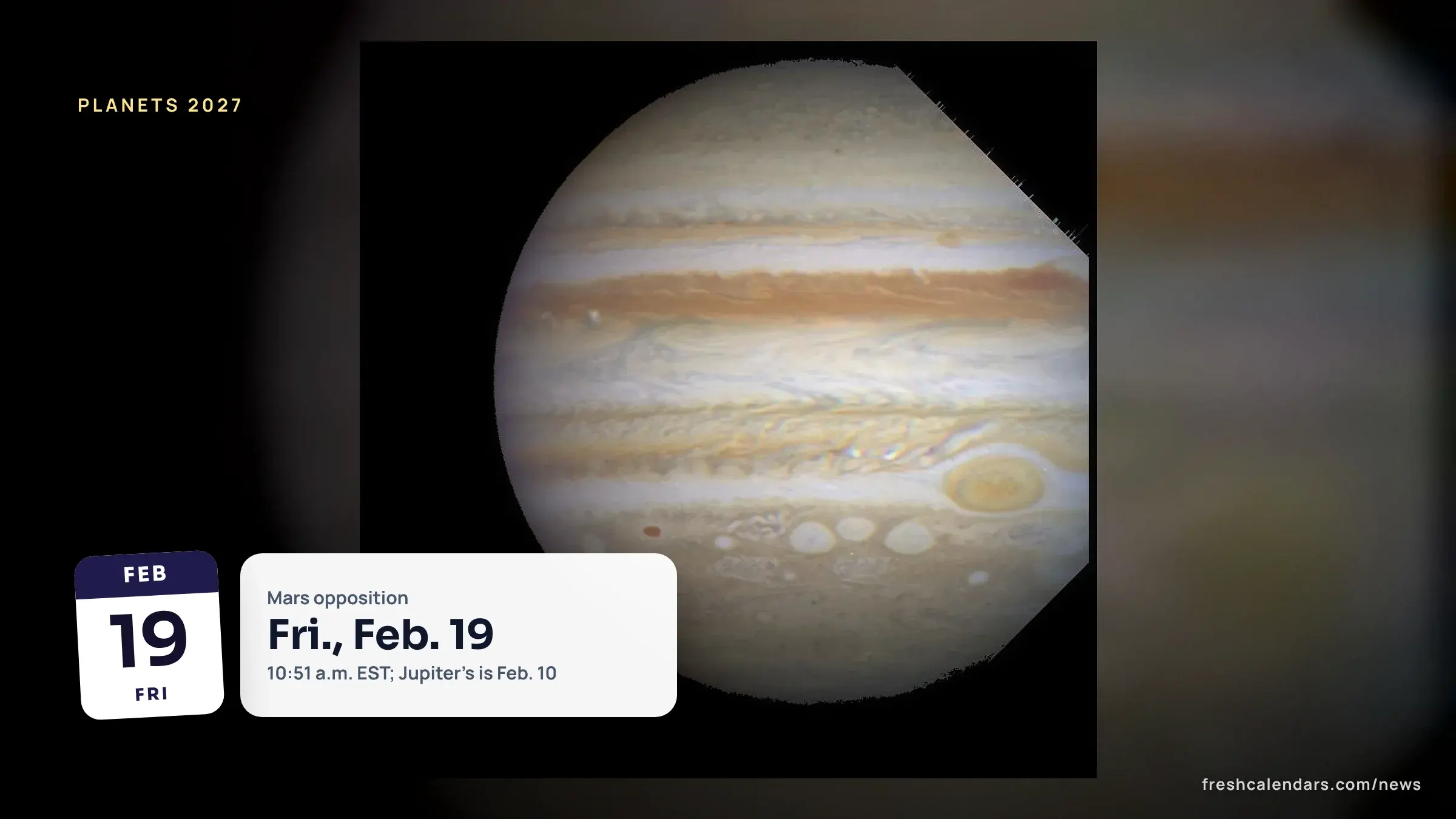
Jupiter’s opposition (Wed., Feb. 10, 7:29 p.m. EST) and Mars’s (Fri., Feb. 19, 10:51 a.m. EST) are 8 days 15 hours apart.
- Wed., Feb. 10: Jupiter at opposition, four days after the Feb. 6 New Moon.
- Fri., Feb. 19: Mars at opposition at 10:51 a.m. EST, so the first night after it is the night of Feb. 19.
- Sat., Feb. 20: Full Moon at 6:23 p.m. EST, according to the USNO. NASA lists greatest eclipse of a penumbral lunar eclipse at 6:13 p.m. EST the same day; see our 2027 eclipse dates.
Mark the days on a February 2027 printable calendar.
Venus and Mercury in 2027: greatest elongation dates
Venus has one greatest elongation, west, on Sunday, Jan. 3, at about 1 p.m. EST (Jan. 4, 03h in Japan), at 46° 57’ from the Sun. Our own calculation in the December 2026 night sky calendar put it at 12:56 p.m. EST that day. Venus then passes behind the Sun at its superior conjunction on Wed., Aug. 11, at 8:21 p.m. EDT.
Mercury has six, three on each side of the Sun.
| Date (Eastern) | Side | Angle from the Sun |
|---|---|---|
| Wed., Feb. 3 | East | 18° 19’ |
| Wed., March 17 | West | 27° 38’ |
| Fri., May 28 | East | 22° 55’ |
| Thu., July 15 | West | 20° 42’ |
| Fri., Sept. 24 | East | 26° 16’ |
| Thu., Nov. 4 | West | 18° 46’ |
The widest of the six is 27° 38’ on March 17 and the narrowest is 18° 19’ on Feb. 3, both from NAOJ’s list. Start the year on a January 2027 printable calendar to track Venus’s elongation on Jan. 3.
Why does another site list a different date for the same event?
Because NAOJ’s table runs on JST, which is Universal Time (UT) plus 9 hours. Jupiter’s opposition is 09:29 JST on Feb. 11, which is 00:29 UT on Feb. 11 and 7:29 p.m. EST on Feb. 10. Saturn’s is 09:36 JST on Oct. 18, which is 00:36 UT and 8:36 p.m. EDT on Oct. 17. Each pair is the same moment shown on a different clock.
We use NAOJ’s Koyomi table for every date above, and the only other sources are the ones named in the text. We leave out brightness figures because they are not in NAOJ’s table. Anything not in the table, such as the 2025 Mars figures, names its source in the sentence.
Free printable downloads
Every template is free, needs no sign-up and prints on US Letter paper. Choose PDF for printing or PNG for screens and documents.
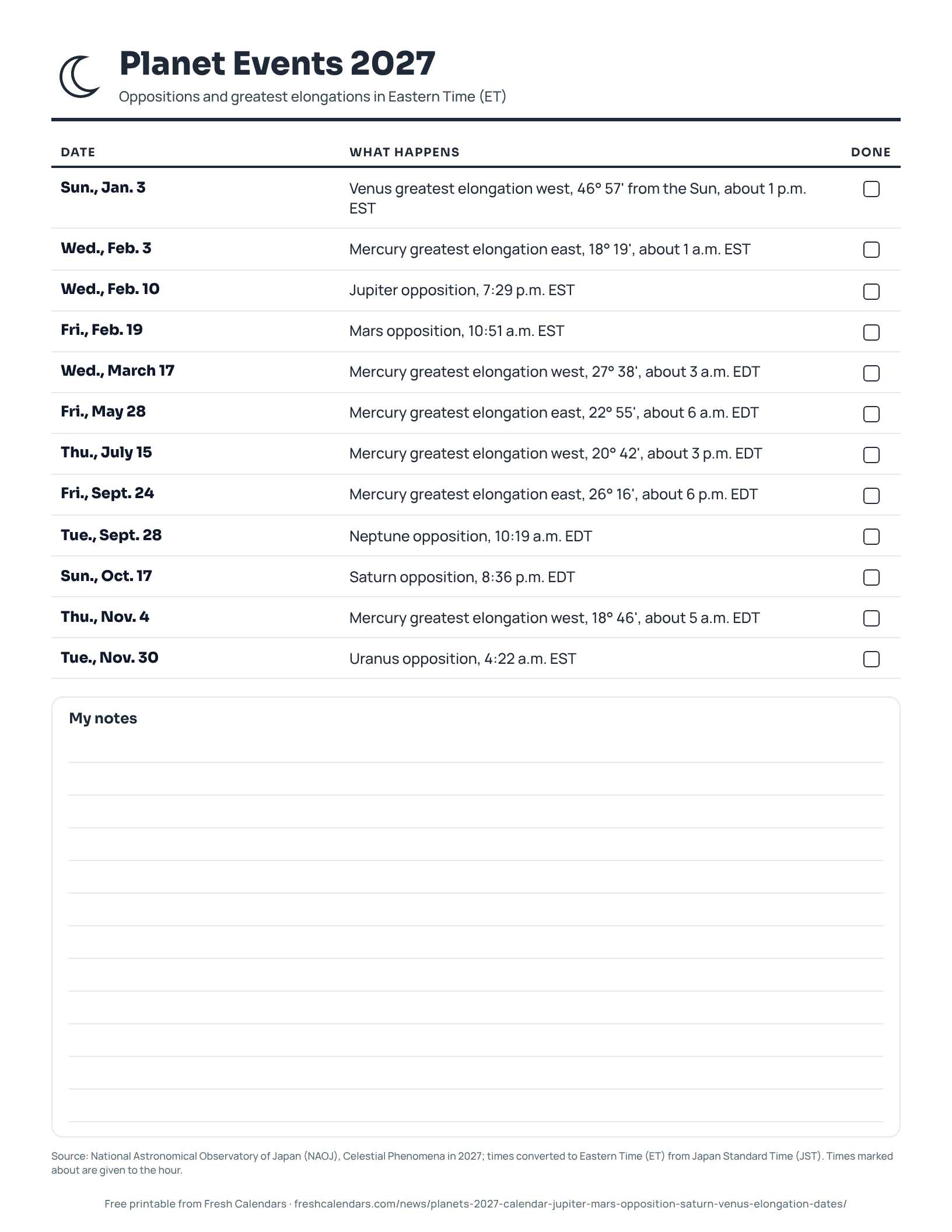
Planet Events 2027 printables
-
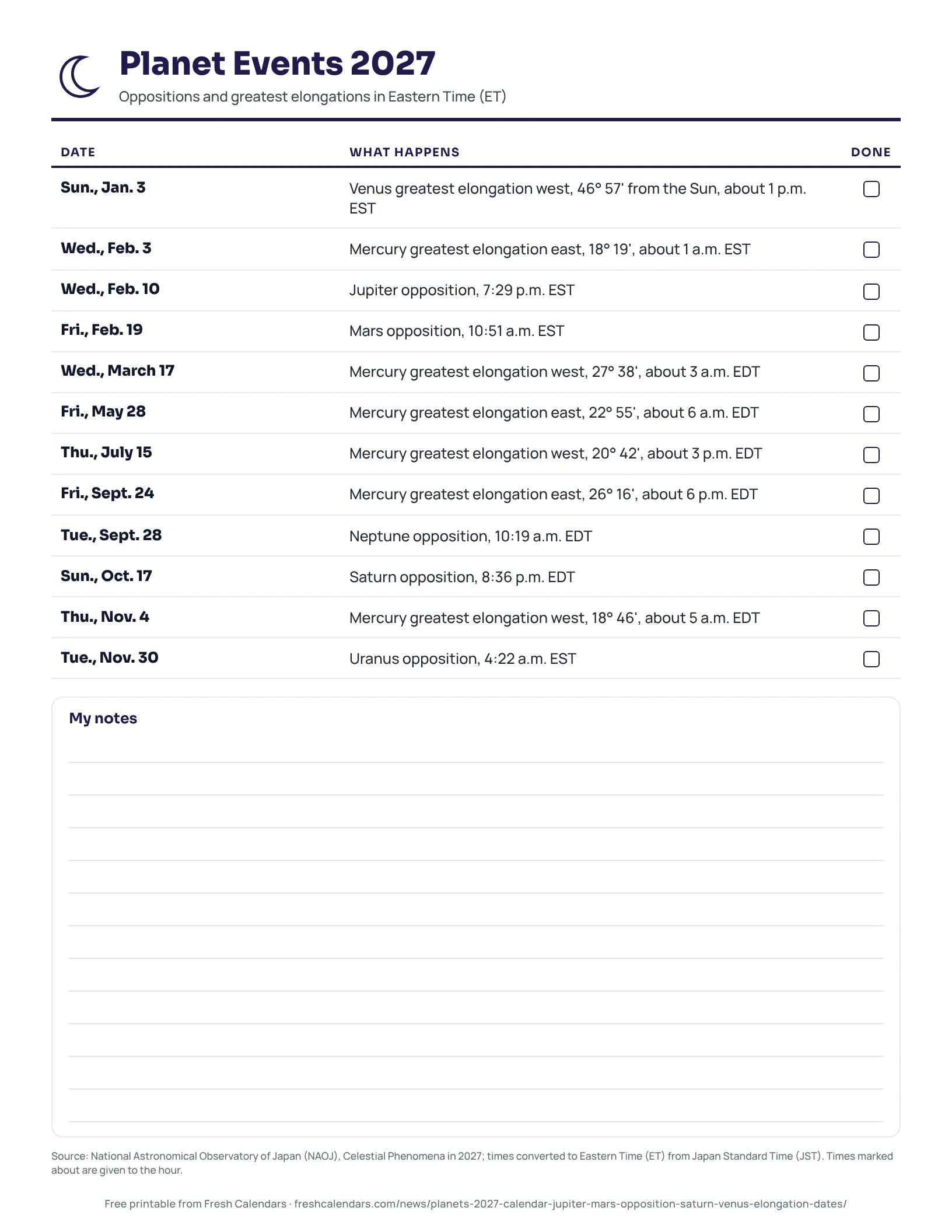
Planet Events 2027
A one-page list of the 2027 planet oppositions and greatest elongations for Venus and Mercury, with dates and times in Eastern Time.
-
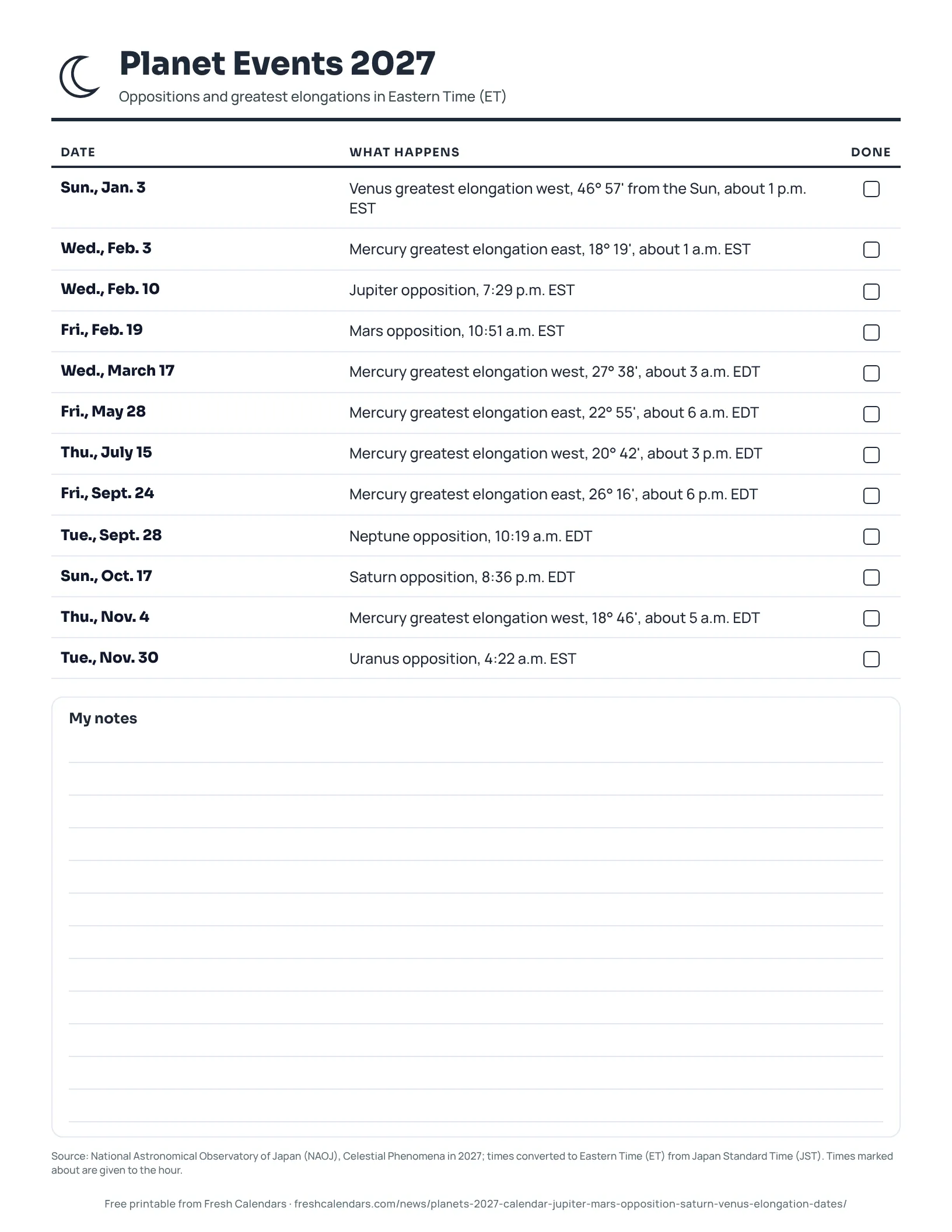
Planet Events 2027 (ink saver)
A one-page list of the 2027 planet oppositions and greatest elongations for Venus and Mercury, with dates and times in Eastern Time. Ink-saver version.
Frequently asked questions
When is Jupiter at opposition in 2027?
Wednesday, Feb. 10, 2027, at 7:29 p.m. Eastern Standard Time (EST), according to the National Astronomical Observatory of Japan (NAOJ). NAOJ prints Feb. 11, 09:29 in Japan Standard Time (JST), which is the same moment.
When is Mars at opposition in 2027?
Friday, Feb. 19, 2027, at 10:51 a.m. EST by NAOJ's table.
Why do some sites list Saturn's opposition on Oct. 18, 2027?
NAOJ gives 09:36 JST on Oct. 18, which is 00:36 Universal Time (UT) on Oct. 18 and 8:36 p.m. Eastern Daylight Time (EDT) on Sunday, Oct. 17 in the United States.
Sources
- Celestial Phenomena in 2027 (National Astronomical Observatory of Japan (NAOJ), Koyomi, 2026-11-02)
- Mars Opposition 2025 (Flandrau Science Center & Planetarium, University of Arizona)
- Chart showing Mars oppositions from 2018 to 2033 (EarthSky, 2023-12-31)
- Moon Phases (U.S. Naval Observatory, Astronomical Applications Department)
- Eclipses During 2027 (NASA Goddard Space Flight Center)
Related news
-
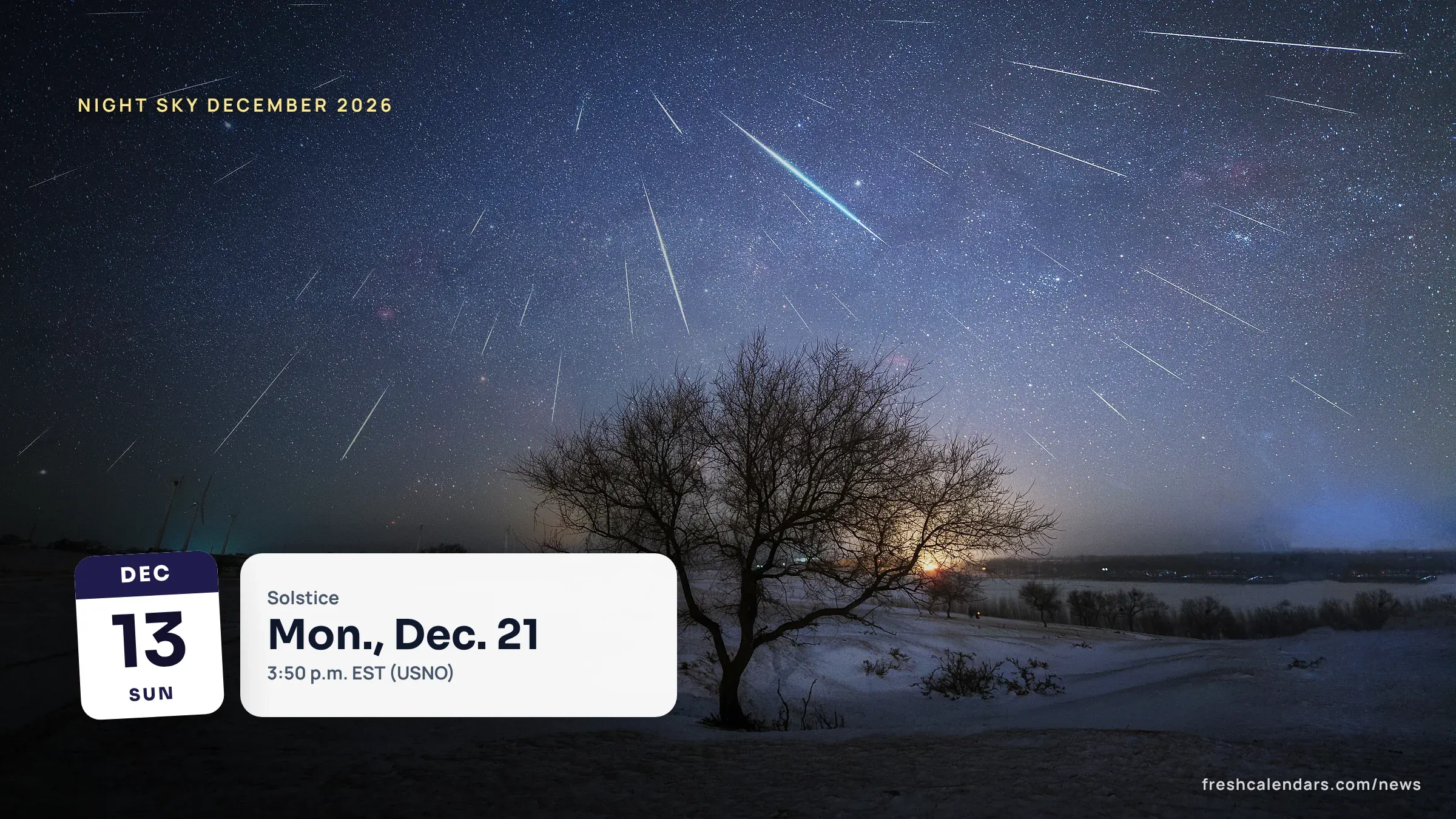 Planets Visible in December 2026: Night Sky Calendar With the Geminids and the Solstice
-
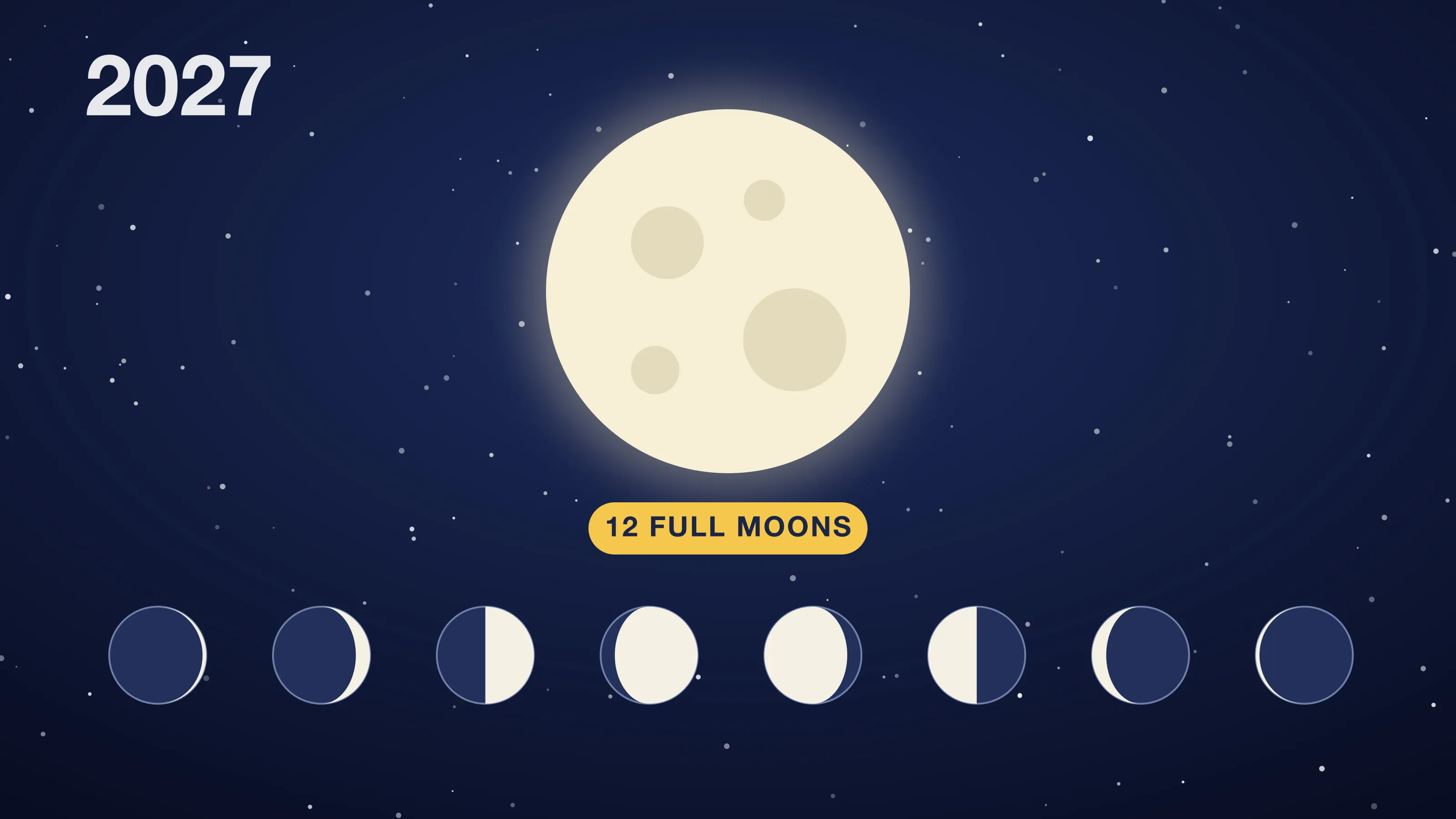 Moon Phases 2027: Full Moon Calendar With Dates, Times, Names and Eclipses, Plus Free Printables
-
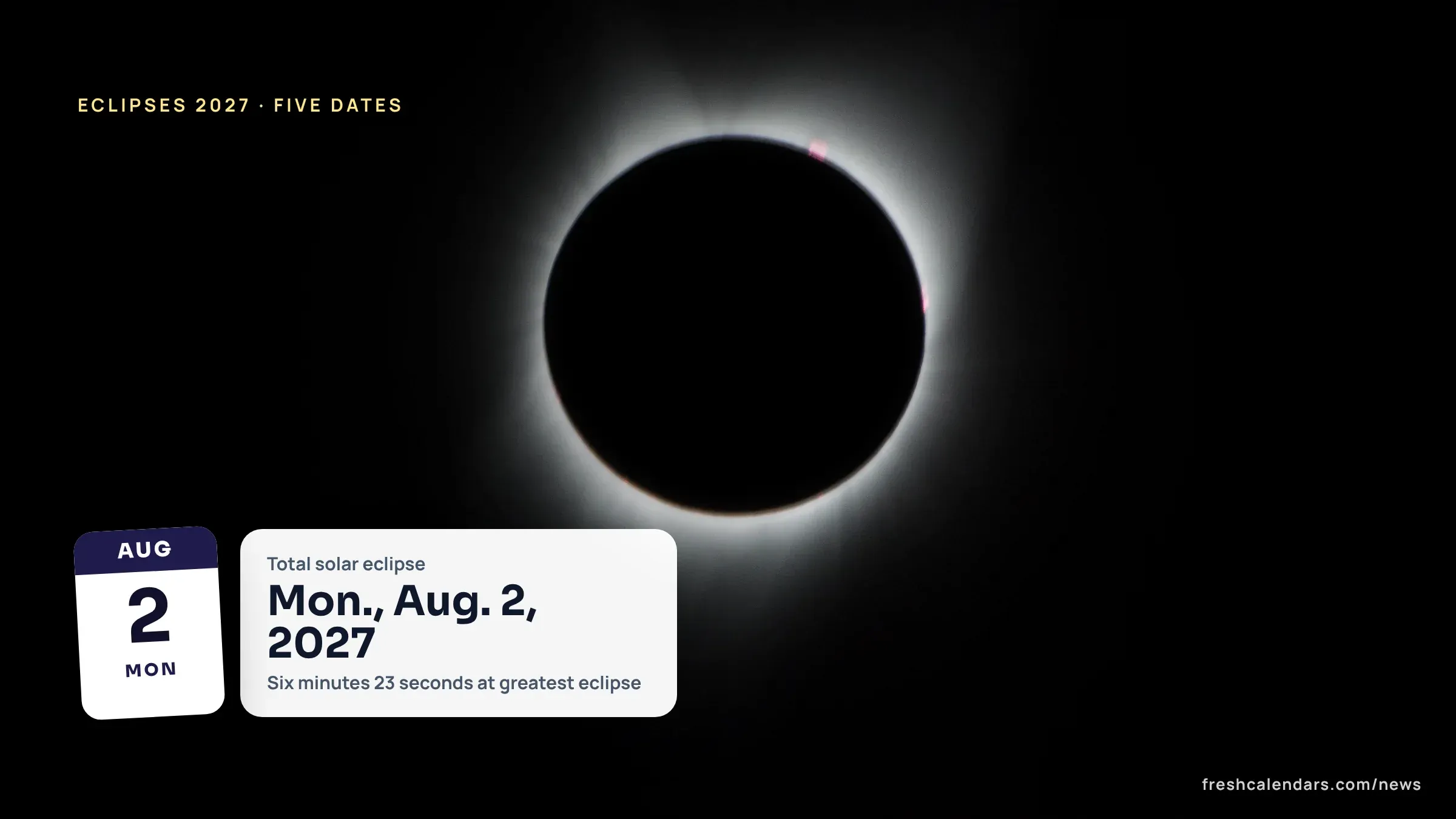 Eclipses 2027: Five Dates and Times, Led by the Total Solar Eclipse on Aug. 2
-
 Mercury Retrograde 2026: Ends Nov. 13 at About 11 a.m. ET, With Every Date and Time Through 2027
More in Sky Events
All Sky Events stories →- Meteor Showers 2027: Peak Dates, Eastern Times and Moon Phase for 12 Showers
- Next Blood Moon in the U.S.: Total Lunar Eclipse June 25, 2029, and Every Eclipse to 2030
- Next Solar Eclipse in the US: Total in Alaska in 2033, Lower 48 on Aug. 22, 2044
- Geminid Meteor Shower 2026 Peaks Dec. 13-14: Moonset Times for 12 U.S. Cities
- Total Solar Eclipse Aug. 2, 2027: Totality Times by City in Spain and Egypt
Trending now
- Black Friday 2026 Deals: Date Is Friday, Nov. 27, Live Countdown and Ad Tracker
- Day of the Dead 2026: Día de los Muertos Dates, Traditions and Events
- Veterans Day Free Meals 2026: 44 Chains Confirmed, 13 Discounts and a Printable List
- Black Friday Canada 2026: Nov. 27 Date, Canadian Tire Deals From Nov. 5, Who Hasn't Announced
- November 2026 Meteor Showers: Taurid Fireballs Under Dark Skies, Then the Leonids on Nov. 16-17