Orionid Meteor Shower Peaks Oct. 21-22, 2026: Best Time to Watch Before the Hunter's Moon
The Orionids, debris from Halley's Comet, peak the night of Oct. 21-22, 2026. Watch after the bright moon sets before dawn. The Hunter's Moon is full Oct. 26.
In this article
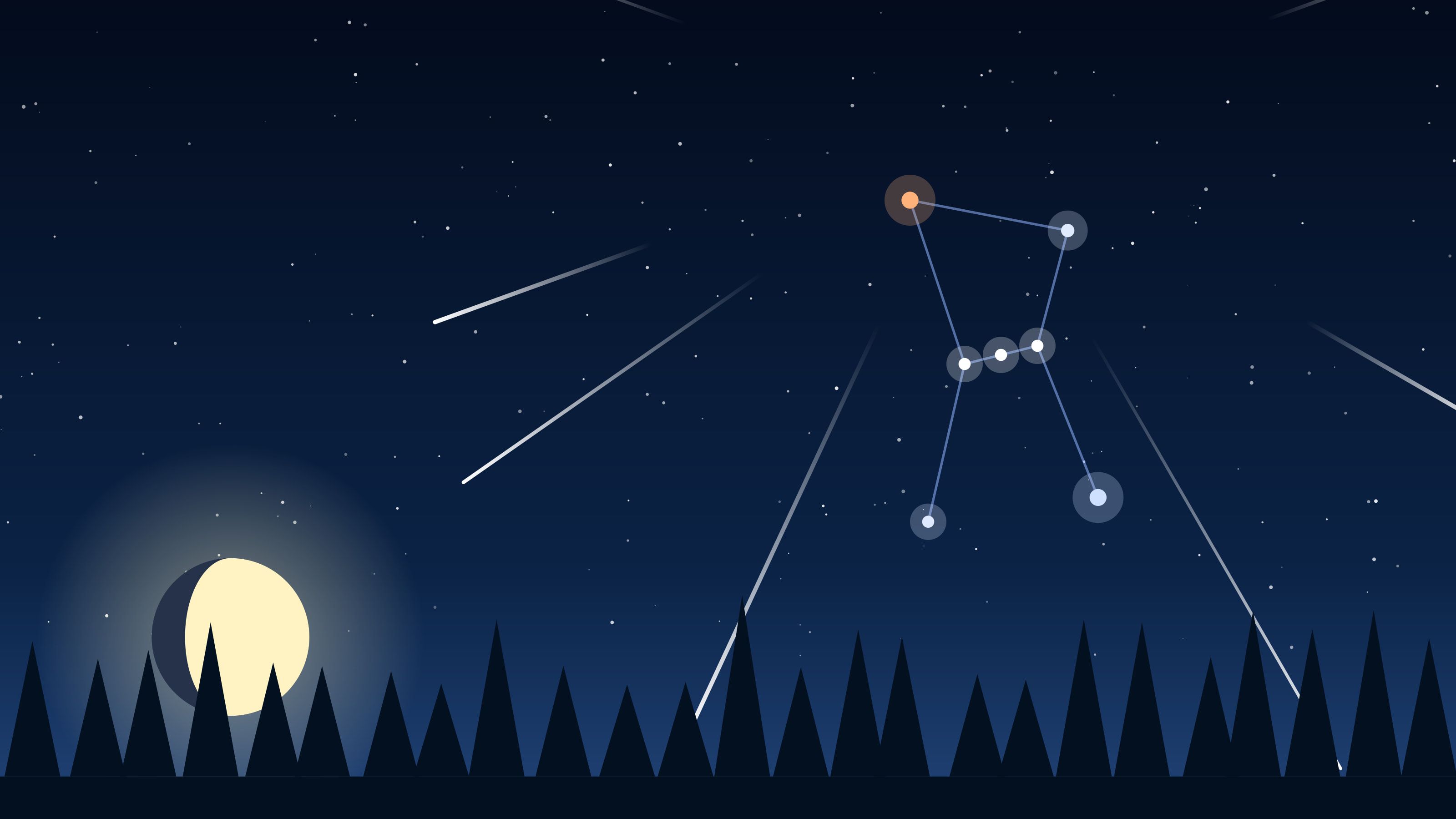
The Orionid meteor shower, made of dust from Halley’s Comet, reaches its peak the night of Wednesday, Oct. 21 into Thursday, Oct. 22, 2026. Under a dark sky you may see up to about 20 meteors an hour, but this year a bright moon lights up much of the night. The darkest stretch comes after the moon sets and before dawn, which is when to go out.
The 2026 peak at a glance
| Detail | 2026 |
|---|---|
| Active period | Oct. 2 to Nov. 7 |
| Peak night | Oct. 21-22 (predicted maximum around 18:00 UTC on Oct. 21) |
| Zenithal hourly rate | 20 (American Meteor Society) |
| Realistic count, dark rural sky | About 10 to 20 an hour |
| Realistic count, suburbs | About 3 to 6 an hour (NASA) |
| Speed | About 41 miles (66 km) per second |
| Parent body | Comet 1P/Halley |
| Moon on peak night | Waxing gibbous, roughly three-quarters lit |
The Orionids have a broad maximum, so the mornings of Oct. 20, 21, 22 and 23 can all produce similar rates. If clouds cover the peak night, try the morning before or after.
Why the moon matters this year
The moon reaches full on Oct. 26, so during peak week it is a bright waxing gibbous, about 74% to 80% lit depending on the night. It is up through the evening and sets a few hours before dawn. Moonlight hides the fainter meteors, which make up most of any shower.
That leaves a short, useful window. Once the moon has set, the sky is dark until morning twilight begins, and the shower’s radiant in Orion is high in the southeast to south. NASA and the American Meteor Society both point to the hours before dawn as the best time this year.
How to watch
- Find a dark spot away from streetlights, with a wide view of the sky.
- Check when the moon sets for your location and plan to be outside from then until dawn begins to brighten the east.
- Lie back and look at a wide area of the sky, about halfway up. Meteors can appear anywhere; they are often easier to see 30 to 40 degrees away from the radiant.
- Give your eyes 20 to 30 minutes to adjust, and avoid looking at your phone screen.
- Dress warmly. Late October mornings are cold in much of North America.
Orionids are fast and often leave a glowing trail, called a train, that lingers for a second or two. Bright fireballs are possible.
Where they come from
Halley’s Comet sheds ice and dust each time it passes the sun. Earth crosses that stream of debris twice a year: in October, producing the Orionids, and in early May, producing the Eta Aquariids. The meteors seem to come from a point near the raised club of the constellation Orion, north of the reddish star Betelgeuse, which is how the shower got its name. Halley itself was last near the sun in 1986 and is expected back in 2061.
The Hunter’s Moon follows on Oct. 26
October’s full moon, traditionally called the Hunter’s Moon, is full at 04:12 UTC on Monday, Oct. 26, 2026. In U.S. time zones that is:
| Time zone | Moment of full moon |
|---|---|
| Eastern | 12:12 a.m. EDT, Monday, Oct. 26 |
| Central | 11:12 p.m. CDT, Sunday, Oct. 25 |
| Mountain | 10:12 p.m. MDT, Sunday, Oct. 25 |
| Pacific | 9:12 p.m. PDT, Sunday, Oct. 25 |
The moon looks full on both the evening of Oct. 25 and Oct. 26, rising in the east around sunset.
Other sky dates this autumn
| Date | Event |
|---|---|
| Night of Oct. 21-22 | Orionid meteor shower peak |
| Oct. 26 | Full Hunter’s Moon |
| Nov. 1 | Daylight saving time ends in the U.S.; evenings get dark an hour earlier by the clock |
If you want the clock change and the full moon on the same page, our November 2026 printable calendar and the daylight saving time story have the dates.
Frequently asked questions
When is the Orionid meteor shower in 2026?
The shower is active from Oct. 2 to Nov. 7, 2026. It peaks the night of Oct. 21-22, and the mornings just before and after are also worth watching because the peak is broad.
What time is best to see the Orionids?
The hours before dawn on Oct. 21 and Oct. 22. The moon sets a few hours before sunrise, leaving the darkest sky of the night, and the radiant in Orion is high by then.
How many meteors will I see?
The American Meteor Society lists a zenithal hourly rate of 20, the most you could see under a perfectly dark sky. From a dark rural site, 10 to 20 an hour is realistic. NASA says suburban viewers may see only 3 to 6 an hour.
Where do the Orionids come from?
They are dust from Halley's Comet. Earth crosses the comet's debris in October and again in May, when it produces the Eta Aquariid shower.
Do I need a telescope?
No. Meteors move too fast and cover too much sky for a telescope or binoculars. Your eyes, a dark site and 20 to 30 minutes to adjust to the dark are all you need.
Sources
- 2026/2027 Meteor Shower Calendar (American Meteor Society)
- Disappearing Planets, Dragon Fireballs, Hunter's Moon Fill October's Spooky Skies (NASA, 2026-10-05)
- Orionids (NASA Science)
- Orionid meteor shower 2026: when and where to see it in the UK (Royal Museums Greenwich)
- Orionid meteor shower 2026: All you need to know (EarthSky)